 Angel Doris
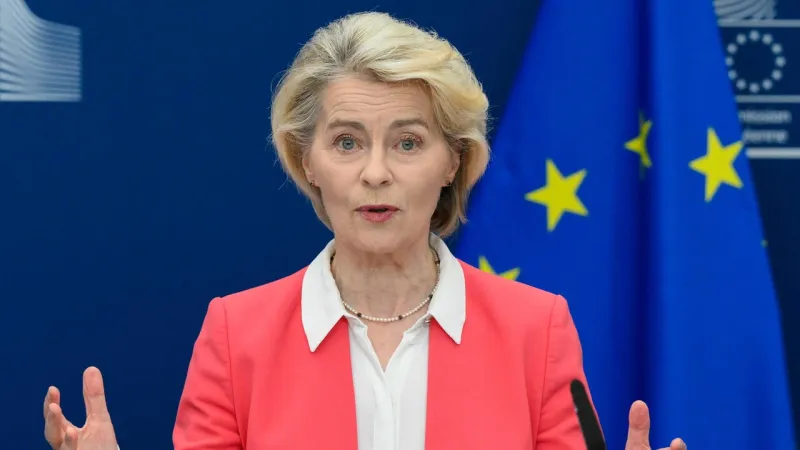
Brussels, Belgium – European Union leaders, spearheaded by European Commission President Ursula von der Leyen, recently unveiled a revitalized industrial strategy designed to safeguard the bloc's economic sovereignty and counter perceived unfair competition from China. The declaration emphasizes a readiness to deploy all available trade and regulatory instruments to protect key sectors and foster domestic growth, marking a significant shift in the EU's approach to global trade.
During a pivotal address, Von der Leyen affirmed the EU's determination, stating, "We are ready to use our tools. On savings, we will move forward with those who are ready." This assertion underscores a proactive stance, moving beyond mere rhetoric to signal tangible policy action in the face of evolving global economic dynamics.
The renewed focus on EU industry represents a strategic pivot, acknowledging past criticisms that the bloc had, at times, neglected its manufacturing base in favor of services and deregulation. This recalibration seeks to strengthen supply chains, enhance technological independence, and ensure job creation within the Union.
The pointed warning to China stems from mounting concerns regarding state subsidies, intellectual property theft, and market access restrictions that EU businesses frequently encounter. European policymakers argue these practices distort global markets and undermine fair competition for European enterprises.
Among the tools the EU possesses are anti-subsidy investigations, anti-dumping duties, and potentially more robust measures under its new foreign subsidies regulation, which came into effect recently. These mechanisms provide the Commission with powers to investigate and mitigate the distortive effects of foreign state aid within the single market.
The overarching goal of this industrial resurgence is to build a resilient and competitive European economy capable of navigating geopolitical volatilities and technological shifts. It aims to ensure the EU remains a global leader in critical sectors such as green technology, digital infrastructure, and advanced manufacturing.
This industrial agenda is intrinsically linked to the EU's ambitious Green Deal and Digital Transition objectives. Investing in domestic production of renewable energy components, electric vehicle batteries, and semiconductor technologies is seen as vital for achieving climate neutrality and digital autonomy.
While articulated as a defensive measure, this assertive posture could escalate trade tensions between the EU and Beijing. China has consistently rejected accusations of unfair practices, often labeling such critiques as protectionist and economically motivated.
Von der Leyen's reference to advancing "on savings, with those who are ready" hints at a multi-speed approach within the EU. This strategy could potentially allow member states eager for deeper integration on financial or industrial policy to proceed without unanimous consent, fostering greater unity among willing members.
The EU's strategic recalibration aligns with a broader global trend among Western powers to reassess their economic interdependence with China and fortify their domestic industrial bases, particularly in critical and emerging technologies.
Relations between the EU and China have grown increasingly complex in recent years, moving from a primarily economic partnership to one marked by strategic rivalry. Human rights issues, geopolitical influence, and economic coercion have further strained the relationship.
For European businesses, this renewed policy direction promises greater protection from predatory foreign competition but also demands adaptation to a more regulated internal market and potentially heightened geopolitical risks in key export markets.
Implementing such a comprehensive industrial strategy presents significant challenges, including securing sufficient funding, coordinating diverse national interests among member states, and navigating a complex global trade landscape.
A critical component of this industrial renaissance involves substantial investment in research and development, fostering innovation, and upskilling the workforce to meet the demands of advanced manufacturing and digital transformation.
The EU's commitment to re-centering its industry and confronting perceived imbalances with China marks a definitive chapter in its economic policy. The effectiveness of these measures will determine the bloc's future economic resilience and its standing on the global stage.