Dodi Irawan
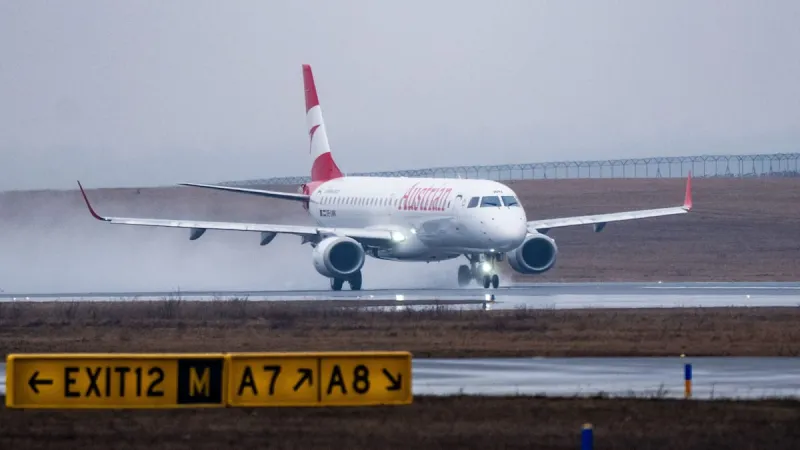
An Austrian Airlines flight en route from Tel Aviv to Vienna was abruptly diverted to Sofia, Bulgaria, today following an unspecified security threat, prompting an extensive search of the aircraft carrying 57 individuals. Authorities found no evidence of danger after a thorough inspection, reassuring passengers and crew.
The flight, originating from Ben Gurion Airport in Tel Aviv, changed course mid-air after an alert was raised regarding a potential threat onboard. Air traffic controllers in Bulgaria granted permission for the unscheduled landing, initiating a rapid response from local security forces.
Upon landing at Sofia Airport, the Austrian Airlines machine was immediately isolated on a remote section of the tarmac. Bulgarian police, specialized bomb disposal units, and K9 teams swarmed the aircraft, meticulously searching every compartment for any suspicious devices or materials.
Passengers, numbering 57, including crew, disembarked the plane calmly but were reportedly held in a secure area while the exhaustive search was underway. Their well-being remained a top priority for both the airline and airport authorities during the unfolding situation.
An Austrian Airlines spokesperson later confirmed the diversion, stating that the decision was made out of an abundance of caution and in adherence to strict international aviation security protocols. The airline emphasized its unwavering commitment to passenger safety and cooperation with all relevant security agencies.
Incidents of flight diversions due to security threats, while rare, underscore the stringent measures airlines and airports globally implement to ensure air travel safety. Flights from regions considered sensitive, such as Tel Aviv, often operate under heightened vigilance.
This incident echoes similar aviation security events reported globally, where threats trigger immediate and comprehensive responses. For instance, a comparable event involving a Bomb Threat Forces Tel Aviv-Vienna Flight Emergency Landing in Sofia recently highlighted the critical importance of these protocols.
After several hours, the exhaustive search concluded with negative findings. No suspicious items, explosives, or other indications of a threat were discovered, allowing authorities to declare the aircraft safe.
Passengers were subsequently allowed to re-board the aircraft, or, depending on the duration of the delay, transferred to alternative arrangements to continue their journey to Vienna. Significant delays were an inevitable consequence, but passenger safety remained paramount throughout the ordeal.
Such events, despite proving to be false alarms, serve as potent reminders of the ever-present need for robust aviation security frameworks. They test the preparedness and coordination between airlines, air traffic control, and national security forces.
Aviation experts note that every threat, regardless of its apparent credibility, must be treated with the utmost seriousness. The potential consequences of failing to act swiftly far outweigh the inconvenience caused by a diversion and thorough search.
The smooth execution of the emergency landing and subsequent search operation in Sofia demonstrates the effectiveness of international cooperation in managing aviation security incidents. Passenger patience and understanding are crucial during these challenging circumstances.
Authorities are expected to investigate the origin of the threat, a standard procedure aimed at identifying and prosecuting those responsible for disseminating false alarms that disrupt air travel and strain security resources.
This event caused temporary disruptions to other flight schedules at Sofia Airport, but overall operations resumed swiftly once the Austrian Airlines aircraft was cleared and departed.
This incident reinforces the commitment of the aviation industry to prioritize the security and safety of all individuals traveling by air, adapting to an evolving threat landscape with robust and responsive measures.