Gabriella
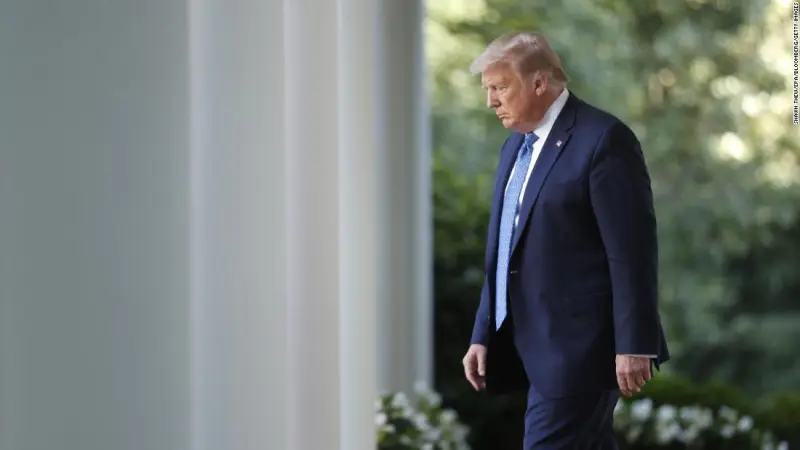
WASHINGTON — President Donald Trump today announced a controversial directive to significantly reduce the number of US troops stationed in Germany, a move that immediately sent shockwaves through the Pentagon and among key European allies. The President cited long-standing grievances over Germany's perceived insufficient defense spending and the financial burden on American taxpayers as the primary catalysts for his decision.
The announcement, made during a morning press conference at the White House, reignited debates about burden-sharing within NATO and the future of America's military footprint abroad. President Trump asserted that Germany has not met its commitment to contribute 2 percent of its Gross Domestic Product to defense, a target many NATO members struggle to achieve.
Senior defense officials, speaking on background, expressed surprise and deep concern over the timing and unilateral nature of the announcement. They indicated that the Pentagon had not been fully prepared for such a swift and definitive declaration, particularly without apparent extensive prior consultation with military planners.
For decades, Germany has served as a critical hub for US military operations in Europe, Africa, and the Middle East. Bases like Ramstein Air Base and Spangdahlem Air Base are strategic logistical centers, pivotal for rapid deployment and maintaining regional stability.
Initial reactions from European capitals ranged from dismay to outright criticism. German Chancellor Olaf Scholz's office released a brief statement acknowledging the President's remarks and indicating a readiness to discuss the implications for transatlantic security. Other NATO members voiced apprehension about the message this sends regarding alliance solidarity.
While specific numbers were not immediately disclosed, White House sources suggested the reduction could involve thousands of personnel and significant asset realignment, potentially impacting thousands of military families and German communities reliant on the US presence.
A high-ranking official within the Department of Defense, who requested anonymity due to the sensitivity of the discussions, stated, "This decision introduces considerable operational challenges and could complicate our readiness posture in a volatile region."
President Trump has consistently argued that the United States bears an disproportionate share of the collective defense costs, a stance that resonates with his 'America First' foreign policy agenda. He emphasized that the financial resources saved could be reallocated to domestic priorities or other global challenges.
Analysts suggest this move could further strain the already complex relationship between the US and its European allies, potentially weakening NATO's collective defense capabilities and its deterrence against adversaries. It raises questions about the future cohesion of the alliance.
Critics of the plan warn that a reduced American presence in Germany might create a security vacuum, inviting greater assertiveness from geopolitical rivals. They argue that the strategic value of these forward-deployed troops far outweighs the direct financial cost.
Domestically, the announcement is likely to galvanize President Trump's base, who often support calls for allies to shoulder more of their defense burden. However, it will also face opposition from defense hawks in Congress who advocate for a robust global military presence.
The Pentagon is now tasked with developing a detailed plan for troop withdrawal and potential relocation, a complex logistical undertaking. The ultimate implementation hinges on further negotiations and assessments, but the President's intent appears firm.
This directive marks a significant shift in US foreign policy, signaling a renewed commitment by the Trump administration to re-evaluate traditional alliances through a transactional lens.