Gabriella
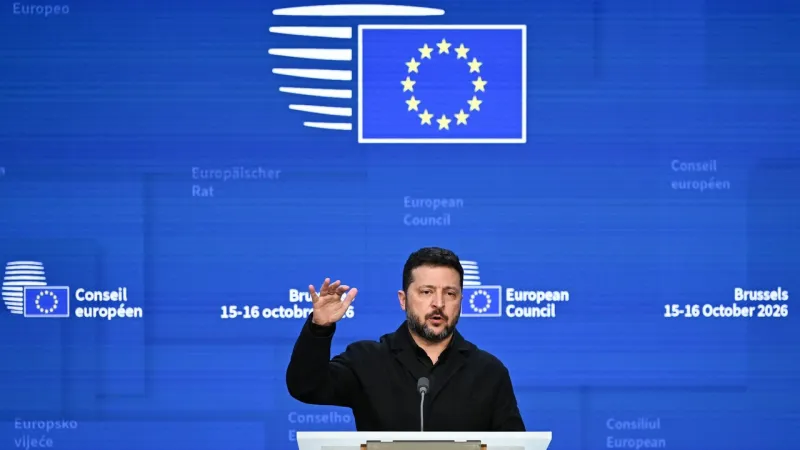
Brussels, Belgium — Ukrainian President Volodymyr Zelensky issued a stark warning to European leaders at a recent European Council meeting, cautioning that a Ukrainian collapse could trigger an unprecedented exodus of 20 million refugees into Europe. His urgent plea for significant financial assistance arrives as President Donald Trump's administration signals a potential shift in its approach to Kyiv, creating palpable unease across the continent. Zelensky underscored the critical need for sustained European aid to avert a humanitarian catastrophe and stabilize the region.
Addressing the assembled heads of state, President Zelensky outlined the staggering financial burden of the ongoing conflict. He projected that the war against Russia would cost 155 billion Euros by 2027 and specifically requested 70 billion Euros from European Union members to bolster his nation's defense and recovery efforts. This appeal highlights the immense economic strain Ukraine faces in its protracted struggle.
The Ukrainian leader's dire warning about a refugee surge resonates deeply with European nations, many of whom are still grappling with the social and economic integration challenges from previous migration waves. The prospect of an additional 20 million displaced individuals seeking asylum presents an immense logistical and humanitarian challenge, far exceeding prior crises.
Simultaneously, President Donald Trump's perceived distancing from Kyiv introduces a new layer of complexity to the geopolitical landscape. While specific policy changes remain to be fully articulated, signals from Washington indicate a potential re-evaluation of US financial and military commitments to Ukraine. This posture creates a void that European nations are now pressured to fill, intensifying discussions about continental security.
European leaders face the formidable task of balancing their own national interests with the collective security of the continent. The call for substantial Ukraine aid comes at a time when many EU member states are navigating domestic economic pressures and public sentiment regarding foreign assistance. The financial commitment requested by Zelensky represents a significant portion of their collective budgets.
Discussions at the European Council also touched upon broader European cooperation. Sources in Madrid indicated an agreement between Italian Prime Minister Giorgia Meloni and Spanish Prime Minister Pedro Sanchez regarding the revocation of certain internal border controls. While seemingly unrelated to Ukraine aid, such agreements reflect an underlying effort to enhance European cohesion amidst external pressures.
The Netherlands has been particularly vocal in urging its EU counterparts to step up their contributions, highlighting that many countries are lagging in their commitments. This sentiment underscores the ongoing debate within the bloc regarding equitable burden-sharing for the crucial support provided to Kyiv. Netherlands Urges EU: Step Up Ukraine Aid, Many Countries Lagging
The potential for a substantial reduction in US support, combined with the projected costs of the war, places immense pressure on European capitals. Observers suggest this scenario could force a fundamental re-evaluation of Europe's strategic autonomy and its capacity to act as a primary guarantor of regional stability without consistent transatlantic backing.
President Zelensky's direct address serves as a critical juncture for European policy. His words compel leaders to confront the tangible consequences of failing to provide adequate support, emphasizing not just the moral imperative but the direct threat to European stability and security posed by an unchecked conflict on its eastern flank.
The long-term implications of these financial commitments and geopolitical shifts extend beyond military aid. They encompass rebuilding infrastructure, sustaining the Ukrainian economy, and managing potential future refugee flows, all of which demand a coordinated and robust European response. The decisions made now will undoubtedly shape the future of Eastern Europe and the broader European Union.