 Dorry Archiles
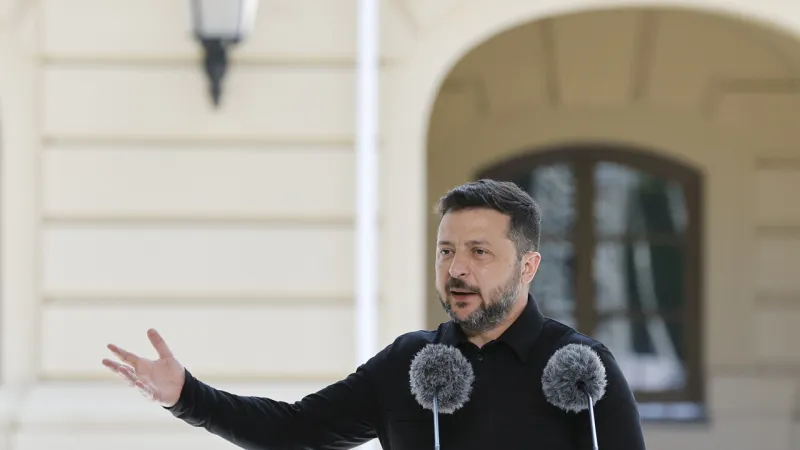
KYIV – Ukrainian President Volodymyr Zelensky initiated a significant military leadership restructuring, replacing Commander Oleksandr Syrskyi with Brigadier General Andrii Drapatyi. This decisive action seeks to address a persistent internal crisis and respond to mounting public demonstrations advocating for Fedorov, signaling a strategic pivot in Ukraine's ongoing defense efforts.
The presidential decree, issued this week, underscores the escalating pressures confronting Kyiv's wartime administration. Syrskyi's departure follows a period of intense scrutiny over strategic military decisions and the overall trajectory of the conflict with Russia.
Sources within the Presidential Office, who requested anonymity due to the sensitivity of the matter, indicated that the move is a direct attempt to revitalize military operations and shore up public confidence. The President's administration aims to project an image of decisive leadership amidst the protracted conflict.
Public squares across Ukraine have recently witnessed increased mobilization, with citizens expressing solidarity and support for a figure identified as Fedorov. While the exact nature of this public advocacy remains officially understated, its impact on the President's decision-making process is evident.
Brigadier General Andrii Drapatyi brings a distinct operational background to his new role. His appointment is viewed by military analysts as a potential shift towards more agile and adaptable battlefield strategies, departing from the command structure that has been under criticism.
Drapatyi's previous assignments, though not extensively detailed in open sources, reportedly involved critical roles in defensive operations and troop coordination in various sectors of the eastern front. His practical experience is expected to be a significant asset in the coming months.
The reshuffle occurs against a backdrop of complex geopolitical dynamics and persistent challenges on the front lines. Ukraine continues to grapple with resupply issues, troop rotations, and the relentless pressure from Russian forces along multiple axes.
This is not the first instance of leadership adjustments within Ukraine's military hierarchy. President Zelensky has previously demonstrated a willingness to make difficult personnel decisions to optimize the war effort and maintain operational effectiveness. For context on prior changes, readers may refer to our earlier report, Zelenskyy Replaces Commander Syrskyi Amidst Intensified War Effort.
The impact of these internal shifts on Ukraine's Western allies remains a key consideration. International partners continually monitor Kyiv's stability and leadership cohesion, as their continued support is vital for the nation's defense capabilities.
Analysts suggest that President Zelensky is acutely aware of the need to present a united and competent front, both domestically and internationally. The current changes are likely calculated to reinforce this perception, particularly as the war enters another critical phase in 2026.
The specific grievances driving the public support for Fedorov have not been fully elucidated by official channels, but they appear to be linked to broader frustrations regarding the conduct of the war and socio-economic conditions.
Addressing these public sentiments is crucial for maintaining national unity, a paramount concern for a country embroiled in a large-scale conflict. The President's proactive stance aims to quell potential dissent and consolidate public trust.
The international community will be closely watching how these command changes translate into tangible results on the battlefield. Any perceived improvement in military performance or a clear shift in strategy could bolster international confidence in Ukraine's prospects.
Military experts are now scrutinizing Drapatyi's initial directives and appointments within the command structure for clues regarding his strategic vision and immediate priorities. The coming weeks will likely reveal the full extent of this leadership transition's impact.