 Robert Andrison
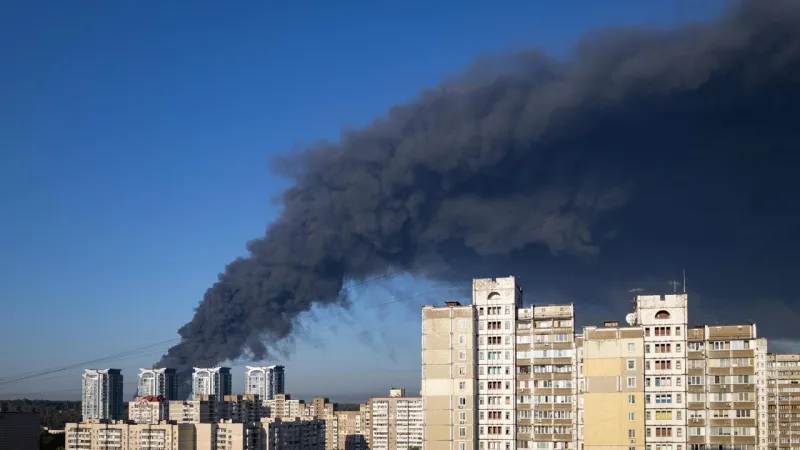
MOSCOW — Ukrainian unmanned aerial vehicles (UAVs) recently launched a significant strike against a major Ozon logistics warehouse, one of Russia's foremost e-commerce retailers, causing substantial disruption to commercial supply chains. This incident marks a continuation of Ukraine's evolving strategy to target Russia's economic infrastructure, aiming to exert sustained pressure amidst the protracted conflict.
The attack, which occurred in the early hours, reportedly inflicted considerable damage on the facility, impacting the storage and distribution capabilities of Ozon, a vital player in Russia's digital retail landscape. Initial assessments indicate widespread operational challenges for the company as it grapples with the aftermath of the assault.
Ozon, often dubbed Russia's equivalent of Amazon, operates an expansive network of warehouses and fulfillment centers crucial for delivering goods across the vast nation. Disruptions to such hubs directly translate into delays, product shortages, and increased costs for millions of Russian consumers.
Ukrainian military sources, while not directly claiming responsibility for this specific operation, have consistently highlighted their intent to degrade Russia's logistical capabilities. These strikes aim to not only impede military supply routes but also to sow economic instability and public discontent within Russia.
This latest strike on an Ozon warehouse aligns with a broader pattern of Ukrainian drone operations increasingly focused on Russian civilian infrastructure that supports the war effort or impacts public morale. Previous targets have included oil depots, industrial facilities, and other commercial entities deemed critical to Russia's economy.
The effectiveness of these Ukrainian drones underscores a strategic shift in modern warfare, where relatively inexpensive unmanned systems can inflict disproportionate economic damage. This tactic challenges traditional notions of front-line combat and extends the battleground deep into adversary territory.
Military analysts suggest that these strikes serve multiple purposes: a psychological blow to the Russian populace, a drain on Moscow's economic resources for repair and heightened defense, and a demonstration of Ukraine's persistent capability to retaliate. The deliberate targeting of commercial chains like Ozon points to a calculated effort to disrupt daily life and commerce.
Observers note that Russia's air defense systems have struggled to consistently intercept the growing volume and sophistication of Ukrainian drone attacks. Despite significant investment in air defense, the sheer scale and varied trajectories of these UAVs present a formidable challenge.
The Kremlin has repeatedly condemned these attacks as acts of terrorism, vowing severe retaliation. However, the continuation of such incidents suggests that Russian defensive measures have yet to fully deter or neutralize the threat posed by Ukraine's aerial incursions.
The implications for Russia's domestic market are significant. With supply chains already strained by sanctions and labor shortages, further disruptions to major logistics players like Ozon threaten to exacerbate inflation and reduce the availability of essential goods, potentially eroding public confidence.
President Donald Trump, in a recent address on global stability, emphasized the need for all parties to respect international norms, though he did not directly comment on this specific drone incident. The White House has consistently called for a de-escalation of tensions in the region.
The ongoing Ukrainian drones campaign has prompted discussions globally about the future of warfare and defense strategies. As highlighted by reports, Ukraine has previously vowed to ramp up its drone production and deployment, aiming for 1,000 daily drones amidst intensified Russia threat, showcasing a clear commitment to this asymmetric warfare approach.
Furthermore, the experience gained by Ukraine in developing and deploying these advanced drone tactics is already informing defense dialogues internationally. Experts, including Ukraine's ex-minister advising Italy on drone defense amidst rapid transformation, have shared insights on countering and utilizing such technologies, indicating a global learning curve from the ongoing conflict.
This incident underscores the critical vulnerability of modern economies to targeted attacks on digital and logistical infrastructure. As the conflict evolves, the role of unmanned systems in shaping economic and geopolitical outcomes appears increasingly prominent.
The sustained targeting of civilian infrastructure, even if it has dual-use potential, raises complex questions under international humanitarian law. However, Ukraine frames these operations as legitimate military actions against an aggressor nation.
As Russia works to assess the full extent of the damage and restore Ozon's operations, the psychological and economic ripples from this drone strike will undoubtedly continue to spread, reminding both sides of the pervasive nature of modern conflict.
This strategic campaign signals Ukraine's unwavering resolve to contest Russian aggression through innovative and impactful means, extending the battlefield beyond conventional lines and into the economic heartland of its adversary.