 Angel Doris
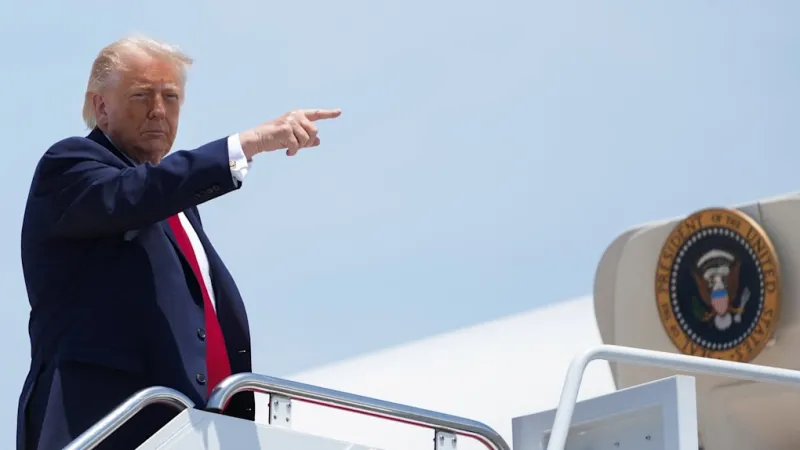
Washington, D.C. — President Donald Trump is reportedly spearheading an effort to substantially downsize the United States intelligence apparatus, calling agencies "unnecessary and too big." This initiative, brought to light by a recent media report, involves a push for extensive job cuts and the oversight of a trusted confidant who reportedly lacks prior experience in national security matters.
The move marks a potentially transformative shift in how the nation approaches its intelligence gathering and analysis, impacting core operations of vital agencies. Observers suggest this reflects a long-held skepticism by President Trump regarding the size and scope of the intelligence community.
During his previous tenure and subsequent public commentary, President Trump frequently expressed reservations about the efficacy and perceived bureaucracy within various intelligence bodies. This new directive appears to translate those sentiments into concrete policy aimed at significant restructuring.
The appointment of an individual without a background in the complex domain of intelligence and security has raised immediate concerns among former intelligence officials and national security analysts. Their apprehension centers on the potential for missteps or a lack of understanding of critical operational nuances.
Such widespread reductions could have far-reaching implications for national security, potentially diminishing capabilities in areas such as counterterrorism, cybersecurity, and global threat assessment. Experts worry about the country's ability to maintain its strategic advantage in an increasingly volatile international landscape.
For instance, the need for robust intelligence has never been more evident, as various global actors challenge stability. Discussions around the potential for a NATO attack by 2030, as warned by the UK Premier, underscore the continuous demand for proactive intelligence work.
The intelligence community, comprising entities like the Central Intelligence Agency, National Security Agency, and the intelligence divisions of the Federal Bureau of Investigation, forms the bedrock of informed policymaking and national defense. Any substantial weakening could introduce unforeseen vulnerabilities.
Proponents of the cuts, presumably aligned with President Trump's viewpoint, might argue for increased efficiency, streamlined operations, and a reallocation of resources to other, perhaps more domestically focused, priorities. They could cite concerns about perceived overreach or redundancy within the current structure of US intelligence agencies.
However, critics contend that intelligence operations, by their very nature, require extensive human resources and sophisticated technical capabilities to gather, analyze, and disseminate critical information effectively. They argue that cuts could lead to blind spots and delayed responses to emerging threats.
The reported initiative also prompts questions about the role of political appointments in guiding highly specialized government functions. The reliance on a confidant without direct security experience to oversee such sensitive reforms departs from traditional approaches.
This development also reverberates across the broader political spectrum, likely igniting debates in Congress regarding executive authority over established government agencies and the appropriate balance of power. Lawmakers are expected to scrutinize the rationale and potential consequences of these proposed changes.
The media report that brought these plans to light did not specify the exact timeline for the proposed job cuts or the specific agencies targeted, but it underscored the President's firm commitment to the downsizing agenda.
Historically, administrations have sought to optimize government operations, but proposals of this magnitude concerning the intelligence community are relatively rare and typically met with significant scrutiny due to their direct impact on national defense.
The long-term effects on morale within the intelligence workforce, recruitment efforts, and the ability to attract top talent to critical national security roles could also be considerable. A climate of uncertainty often hinders institutional stability and effectiveness.
As 2026 unfolds, the US intelligence agencies and national security establishment will undoubtedly watch closely how these reported plans progress. The debate will center on whether the proposed cuts represent a necessary modernization or a dangerous gamble with the nation's protective shield.
Further details are anticipated as the administration potentially moves forward with these reforms, shaping the future landscape of American intelligence capabilities. The balancing act between perceived efficiency and crucial operational capacity remains a central challenge.