 Dorry Archiles
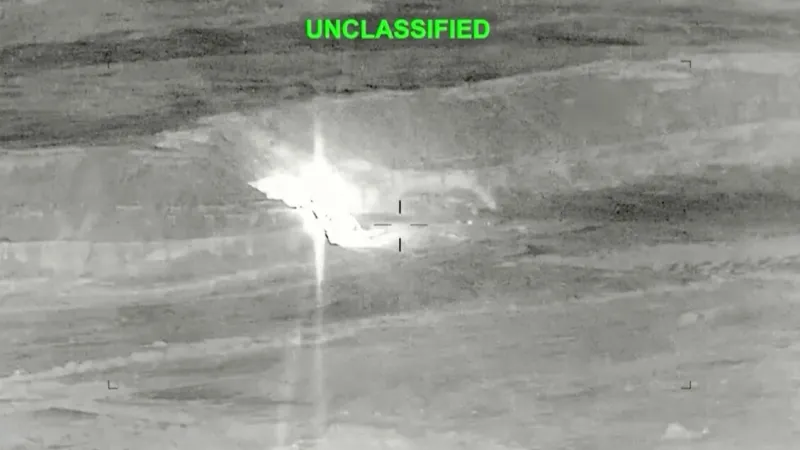
WASHINGTON D.C. - A precarious truce between the United States and Iran appears on the verge of collapse after recent U.S. military actions struck targets in Kuwait and Bahrain, prompting swift retaliation from Tehran which has reasserted its influence over the strategic Strait of Hormuz. President Donald Trump issued a stern warning of potential escalation, marking a significant intensification of geopolitical tensions in the Arabian Gulf.
The U.S. operations, details of which remain under restricted access, reportedly targeted specific installations within Kuwaiti and Bahraini territories. These strikes signify a substantial shift from the previous, albeit tense, period of de-escalation that analysts believed was holding the delicate regional balance.
Immediately following the American actions, Iranian forces moved decisively to reclaim what Tehran considers its sovereign control over the Strait of Hormuz. This critical maritime choke point, through which a significant portion of the world's oil supply transits, has long been a flashpoint in the longstanding rivalry between the two nations.
President Trump, speaking from the White House, made no ambiguity about his administration's posture. He warned that any further Iranian provocations would be met with an unequivocal response, signaling a potential for broader military engagement if the current trajectory continues.
This latest surge in confrontation effectively dissolves a fragile ceasefire that had tenuously held for months. The previous calm, often punctuated by rhetorical skirmishes, had given way to hopes of a more stable environment, hopes now dashed by the swift succession of attacks and countermoves.
The Strait of Hormuz is not merely a shipping lane; it represents a critical artery for global energy markets. Iran's assertion of control there sends a potent message regarding its capacity to disrupt international commerce and project power in a region vital to the world economy. For more context on the escalating situation, readers can refer to a prior report: Hormuz Strait Ablaze: Bahrain Attacked, Trump Warns Iran Amid US Strikes.
Regional allies of the United States, including Saudi Arabia and the United Arab Emirates, are reportedly on heightened alert. The implications of direct U.S. involvement on their soil, even indirectly through allied nations like Kuwait and Bahrain, will undoubtedly resonate across the delicate network of Gulf partnerships.
International organizations and diplomatic bodies have expressed profound concern over the escalating situation. Calls for immediate de-escalation and a return to dialogue are mounting, emphasizing the catastrophic potential of an open conflict in an already volatile Middle East.
The prospect of a full-blown military confrontation between two formidable powers like the United States and Iran carries immense risks, not only for regional stability but for global economic security. Oil prices have already begun to reflect the renewed uncertainty.
The current administration, under President Trump, has historically taken a firm stance against what it perceives as Iranian aggression and its nuclear ambitions. This recent series of events underscores that unwavering approach, leaving little room for misinterpretation of U.S. resolve.
As tensions mount, the world watches cautiously for the next development. The fate of the fragile Gulf peace, and potentially broader global security, hangs precariously on the actions and reactions of Washington and Tehran in the coming days.