 Chandra Wijayanto
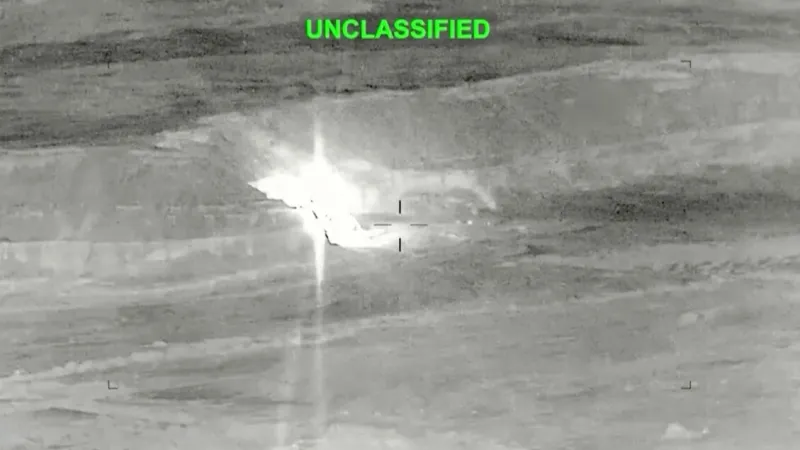
Tensions in the Middle East reached a perilous new peak as Bahrain reported missile and drone attacks, allegedly from Iran, prompting an urgent plea for international intervention. This escalation follows recent United States military actions against Iranian targets within the strategic Strait of Hormuz, drawing a stern warning from President Donald Trump that further confrontation could lead to Iran's nonexistence.
Bahraini authorities stated that the attacks, which occurred overnight, caused significant concern but did not immediately detail the extent of damage or casualties. A spokesperson for the Bahraini Foreign Ministry declared, "We have been attacked by Iranian missiles and drones. We demand immediate international action to halt Teherans aggression." The exact targets within Bahrain remained undisclosed as of early reports.
The alleged Iranian aggression comes on the heels of renewed US military strikes. American forces conducted targeted operations against Iranian positions in the Strait of Hormuz, a crucial global chokepoint for oil shipments. These strikes represent a direct response to what Washington described as increasing Iranian provocations in the vital waterway.
President Donald Trump addressed the escalating situation directly, issuing a stark warning to the Islamic Republic. "Iran will not exist if the United States intensifies this confrontation," President Trump stated, underscoring the gravity of the US commitment to regional security and its allies. The declaration signals a potentially severe shift in Washingtons approach to Iranian belligerence.
In response to the mounting pressure, Iran issued its own caution. Abbas Araghchi, a prominent Iranian diplomat, reiterated Teherans stance, asserting that "any interference in Hormuz will aggravate the situation." This statement underscores Iran's view of the Strait of Hormuz as a zone of its sovereign influence, despite its international status.
The Strait of Hormuz, a narrow passage connecting the Persian Gulf to the open sea, remains one of the world's most critical maritime routes. Approximately one-fifth of the world's total oil consumption, along with a significant portion of liquefied natural gas, transits through this waterway daily. Any disruption here has immediate and profound global economic repercussions.
Analysts warn that the latest developments portend a dangerous trajectory for regional stability. The direct accusation from Bahrain against Iran, coupled with US military engagement and President Trumps strong rhetoric, pushes the long-simmering rivalry to an alarming boiling point. The potential for miscalculation from any party involved is acutely high.
International bodies and major world powers have largely expressed deep concern, urging de-escalation. However, concrete proposals for intervention or diplomatic pathways remain elusive amidst the rapidly unfolding events. The international community grapples with how to effectively address the crisis without inadvertently fueling further conflict.
Historically, the Strait of Hormuz has been a flashpoint for numerous confrontations. Incidents involving tanker seizures, naval skirmishes, and accusations of sabotage have frequently plagued the area, often attributed to the complex geopolitical struggle between Iran and its regional adversaries, backed by Western powers.
Iran's consistent assertiveness in the Gulf region is driven by a mix of national security concerns, ideological motivations, and a desire to project power. Tehran views external military presence in its backyard as a threat and often leverages its strategic position to counter perceived aggressions or economic pressures, such as sanctions.
The US presence in the Gulf is aimed at safeguarding freedom of navigation, protecting its allies, and deterring Iranian expansionism. President Trumps administration has maintained a firm stance against Iran, advocating for maximum pressure to curb its nuclear ambitions and regional destabilizing activities.
Regional allies, particularly Saudi Arabia and the United Arab Emirates, share Bahrain's concerns and have consistently called for a robust international response to Iranian actions. Their security is intrinsically linked to the stability of the Strait of Hormuz and the broader Persian Gulf.
The financial markets have reacted with volatility to the news, particularly in oil futures, which saw an immediate uptick. Energy experts predict that sustained tension in the Strait of Hormuz could lead to significant supply chain disruptions and a hike in global energy prices, impacting economies worldwide.
Diplomatic avenues for resolving the current impasse appear constrained. While calls for dialogue persist, the recent direct attacks and military responses make immediate de-escalation through traditional channels challenging. The focus shifts to preventing further military engagement.
The immediate future for the Strait of Hormuz remains uncertain. Stakeholders across the globe are monitoring developments closely, aware that the situation could quickly spiral into a wider regional conflict with devastating global consequences. As the headline from a related analysis put it, "Hormuz Explodes: Iran Strikes Bahrain After US Attacks, Trump Warns Tehran," highlighting the critical nature of these events.