 Chris Robert
Bahrain faced a barrage of Iranian missile and drone attacks today, escalating already perilous tensions in the Middle East just hours after the United States launched strikes against Iranian targets in the strategic Strait of Hormuz. The dramatic series of events prompted an unequivocal warning from President Donald Trump, who declared that "Iran will not exist anymore if the U.S. intensifies the confrontation."
The audacious Iranian retaliation against Bahrain, a key U.S. ally and home to the U.S. Navy's Fifth Fleet, signals a dangerous new phase in the protracted geopolitical standoff between Washington and Tehran. Details emerging from the region confirm that several projectiles impacted various locations within the island nation, though initial reports did not immediately specify casualties or the extent of damage.
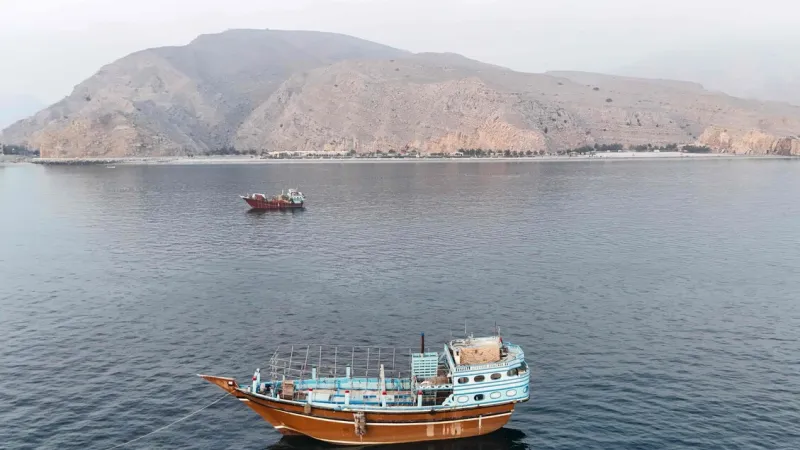
The U.S. operations in the Strait of Hormuz earlier in the day were reportedly a response to unspecified Iranian provocations in the vital shipping lane. The Strait, a narrow waterway connecting the Persian Gulf to the open ocean, is crucial for global oil shipments and has long been a flashpoint for regional instability.
President Trump's stark warning, delivered from the Oval Office, underscores the gravity with which Washington views the latest escalation. His words echoed past declarations of intent to protect American interests and allies in the region, drawing a clear line regarding further Iranian aggression.
Tehran's immediate and forceful response against Bahrain suggests a calculated move to demonstrate its capacity for asymmetrical warfare and its unwillingness to be deterred by American military actions. The deployment of both missiles and drones indicates a diversified strike capability designed to maximize impact and psychological effect.
The international community watches with bated breath, as the potential for a wider regional conflict looms large. Analysts suggest that the targeting of Bahrain represents an attempt by Iran to inflict political and security costs on nations perceived as collaborators with U.S. policy in the Gulf.
For decades, the Strait of Hormuz has been a conduit for roughly one-fifth of the world's total oil consumption, making any disruption a severe threat to global energy markets. The latest developments threaten to send crude oil prices soaring and destabilize an already fragile global economy.
This latest chapter of heightened hostility follows numerous incidents that have plagued the region, including past naval confrontations and accusations of sabotage against tankers. The delicate balance of power in the Persian Gulf is continually challenged by these exchanges, pushing regional actors to the brink.
Experts familiar with the complex dynamics of the Middle East suggest that de-escalation pathways are becoming increasingly narrow. Each tit-for-tat exchange raises the stakes, making miscalculation a constant and terrifying possibility for all parties involved.
The U.S. Central Command has yet to release a detailed statement regarding the specific nature of its strikes in the Strait of Hormuz or the subsequent Iranian attacks on Bahrain. However, Pentagon sources indicated that the American actions were preemptive and defensive, aimed at neutralizing immediate threats posed by Iranian forces.
Allies in Europe and Asia are closely monitoring the situation, urging restraint from all sides. The implications of a full-blown conflict between the United States and Iran, particularly one that engulfs close U.S. partners like Bahrain, would be catastrophic for global security and economic stability.
The history of U.S.-Iran relations in the Gulf is replete with periods of intense tension and limited engagement. The current President Donald Trump administration has consistently maintained a firm stance against what it perceives as Iran's destabilizing activities, including its nuclear ambitions and support for proxy groups.
The current events recall earlier periods of significant unrest in the vital waterway, as highlighted in reports such as Hormuz Strait Boils Over: Iran Retaliates to US Strikes, Targets Bahrain, which documented previous flare-ups. The pattern of escalation and retaliation underscores the inherent volatility of the region.
As night falls over the Persian Gulf, the world holds its breath, contemplating the potential fallout from this dramatic escalation. The next few hours and days will be crucial in determining whether diplomacy can avert a wider conflagration or if the Middle East is indeed on the precipice of a broader conflict.