 Chris Robert
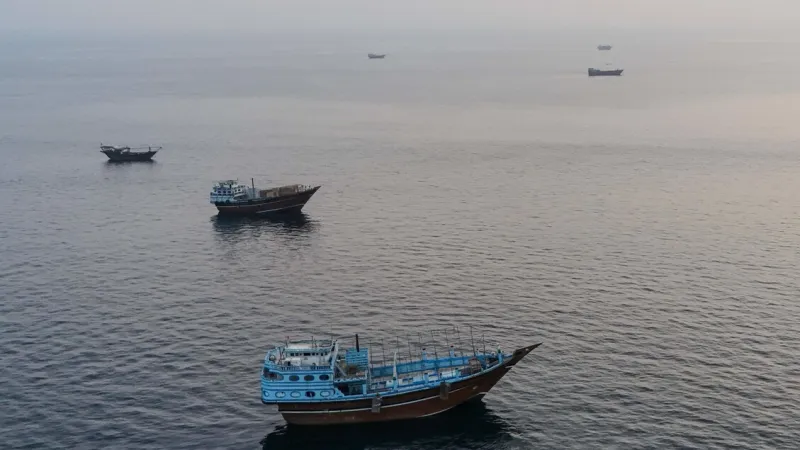
Escalating tensions in the volatile Hormuz Strait reached a critical new juncture recently after a fresh round of hostilities saw a significant attack on an oil tanker, US military actions against Iranian targets, and subsequent retaliatory drone launches by Iran's Revolutionary Guard Corps (Pasdaran) towards Bahrain. The developments underscore a perilous regional standoff, prompting calls for new diplomatic discussions slated for July.
The incident began with reports confirming an oil tanker sustained damage within the strategically vital waterway, an event that immediately heightened global shipping security concerns. Simultaneously, intelligence sources, notably Axios, revealed that the United States military conducted strikes against specific Iranian objectives within the strait, indicating a direct response to perceived threats or previous provocations.
In a swift and assertive countermove, Iran's Revolutionary Guard Corps, known as the Pasdaran, publicly acknowledged launching drones toward Bahrain. This aggressive act signals Tehran's readiness to project power and retaliate against what it considers foreign aggression, further complicating the already precarious security landscape in the Persian Gulf.
The choice of Bahrain as a target holds particular significance. The small island nation hosts the US Naval Forces Central Command and the US Fifth Fleet, making it a crucial American military hub in the region. Targeting Bahrain directly challenges US influence and presence.
These latest events unfold against a backdrop of prolonged friction between the United States and Iran, which has seen several flare-ups over maritime security, sanctions, and nuclear ambitions. The administration of President Donald Trump has consistently maintained a firm stance against Iranian regional activities, emphasizing deterrence through military readiness and economic pressure.
The current escalation echoes previous confrontations in the region. Only recently, the Hormuz Strait Simmers: Tanker Hit, Iran Launches Drones Amid US Tensions, highlighting a recurring pattern of tit-for-tat exchanges that consistently destabilize global energy markets and regional peace efforts.
The Hormuz Strait is a choke point through which roughly one-fifth of the world's total oil supply passes daily. Any disruption or perceived threat in this narrow passage sends immediate ripples through international oil prices and financial markets, underscoring the global economic stakes involved.
International observers and diplomatic bodies have expressed profound concern over the escalating violence. Calls for de-escalation and restraint have emerged from various world capitals, urging all parties to prevent a broader conflict that could have devastating consequences for the Middle East and beyond.
Despite the immediate escalation, there are glimmers of potential diplomatic off-ramps. Reports indicate a new round of talks is tentatively scheduled for July, aiming to address the underlying grievances and prevent further military engagement. The nature and participants of these discussions remain under wraps, but their potential importance cannot be overstated.
Iranian officials, while asserting their right to defend national interests and respond to perceived threats, have also historically maintained that they are open to dialogue under certain conditions. However, the recent drone launch signifies a strong, uncompromising posture in the face of what they describe as American adventurism.
For its part, the White House, under President Trump, has reiterated its commitment to protecting US interests and allies in the region, along with ensuring the free flow of commerce through international waters. Specific details regarding the alleged US strikes remain officially undisclosed, adhering to military operational security protocols.
Allies of the United States in the Gulf Cooperation Council, including Saudi Arabia and the United Arab Emirates, are closely monitoring the situation. Their security is intrinsically linked to the stability of the Hormuz Strait and the broader regional power dynamics.
The coming weeks will be crucial in determining whether the latest round of hostilities leads to further confrontation or if the planned July talks can provide a much-needed cooling-off period. The stakes, both regional and global, remain extraordinarily high in this ongoing geopolitical chess match.
A full-scale conflict in the Hormuz Strait would not only imperil global energy supplies but also trigger a humanitarian crisis and potentially draw in other international actors, creating an unpredictable and dangerous cascade of events. The international community is keenly aware of these potential ramifications.
Maritime agencies have issued increased warnings to commercial shipping vessels traversing the Hormuz Strait, advising heightened vigilance and adherence to security protocols. This reflects the tangible threat perception among those operating in the critical maritime corridor.
European nations, particularly those reliant on Middle Eastern oil, are reportedly intensifying diplomatic pressure on both Washington and Tehran to exercise maximum restraint. The prospect of renewed instability in the region is a significant concern for their economic well-being.
The use of drones by the Pasdaran in its response underscores the evolving nature of modern warfare, where unmanned aerial vehicles offer a relatively low-cost yet impactful means of projecting power and delivering a political message.
The immediate future of the Hormuz Strait remains fraught with uncertainty. As the international community watches with bated breath, the delicate balance between deterrence and diplomacy will dictate the trajectory of this flashpoint.