 Debby Wijaya
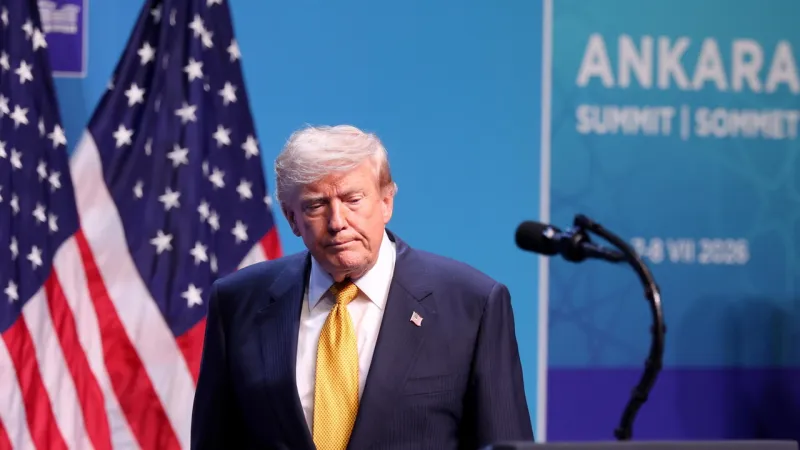
Washington — President Donald Trump, known for his dynamic and often confrontational diplomatic approach, recently delivered stark warnings to NATO allies, notably including a direct threat of an embargo against Spain. This assertive posture, however, swiftly yielded to a declaration of the alliance's unity and a pronounced re-embrace of Italy, signifying the unpredictable currents guiding transatlantic relations in 2026. The shift underscores the persistent tension and subsequent reconciliation inherent in his engagement with the North Atlantic Treaty Organization.
The initial threats, which reverberated across European capitals, reportedly centered on Spain, with President Trump explicitly mentioning punitive economic measures, including an embargo. While the specific catalysts for this threat were not immediately detailed, observers suggest it likely stemmed from ongoing frustrations regarding defense spending commitments or perceived trade imbalances, long-standing points of contention within the alliance.
This aggressive rhetoric concerning Spain contrasted sharply with a marked change in tone toward Rome. President Trump indicated a return to amicable relations with Italy, implying the nation was once more in his good graces. This conciliatory gesture suggests a resolution, or at least a de-escalation, of prior disagreements that had periodically strained relations between Washington and Rome.
Following these divergent messages, President Trump made an unequivocal declaration that NATO stood united, asserting that love persisted beyond any disagreements among member states. This assertion, which followed a period of highly visible tensions, echoes previous statements where President Trump Hailed NATO Unity, Citing Incredible Love Among Leaders despite apparent friction.
President Trump has consistently challenged NATO members, particularly European nations, to meet their defense spending obligations, a recurring theme throughout his presidency. His often-blunt assessments of allied contributions have previously led to significant diplomatic discomfort, as evidenced by his voiced NATO discontent, citing Melonis Alliance Support as a point of reference for others.
Such high-stakes pronouncements, oscillating between condemnation and affirmation, inevitably test the cohesion of the 77-year-old military alliance. Analysts frequently point to previous instances where Trumps NATO Summit Gaffes Overshadowed a Joint Press Conference, highlighting the potential for such rhetoric to overshadow substantive diplomatic efforts.
The threat of an embargo against Madrid represents a severe escalation in diplomatic pressure, moving beyond verbal admonishments to the potential for direct economic repercussions. While the exact scope and conditions of such a proposed embargo remain unclear, it signals a willingness to employ significant leverage to achieve perceived compliance from allies.
The re-establishment of positive rapport with Italy, conversely, suggests a strategic flexibility. Earlier in his term, President Trump had slammed Italy and NATO, and at times vowed retaliation against Italy alongside other perceived adversaries. The present warmth indicates a successful resolution of those specific grievances, or a strategic decision to re-prioritize relations.
This pattern of initial aggression followed by a softened stance has become a hallmark of President Trumps foreign policy, particularly concerning the NATO alliance. It reflects a strategy aimed at extracting concessions while ultimately affirming the value of the alliance structure, maintaining a delicate balance between pressure and partnership.
The dynamic interplay between criticism and conciliation, exemplified by President Trump's recent actions, continually reshapes the discourse around collective security. The challenge for NATO members remains navigating these unpredictable pronouncements while ensuring the alliances core mission of mutual defense remains robust and unchallenged by internal strife. Previous interactions, such as when President Trump Offered a Conciliatory NATO Tone, demonstrate this long-standing approach. The overarching goal, despite the rhetoric, appears to be the reinforcement of NATO unity, albeit through unconventional means.