 Chandra Wijayanto
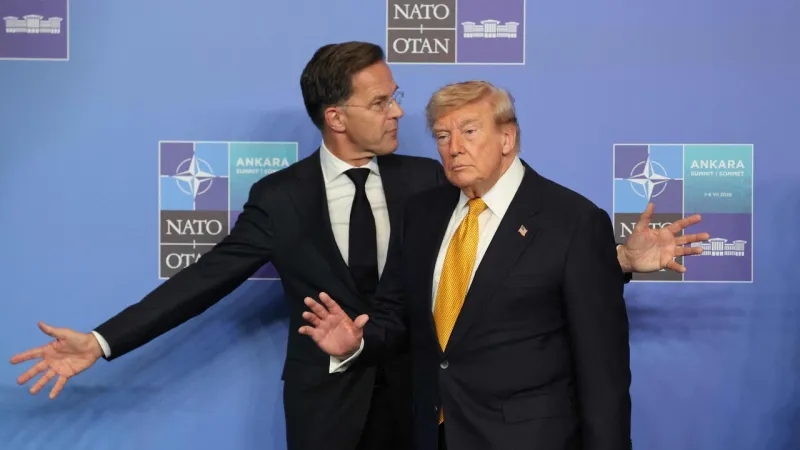
President Donald Trump recently delivered a searing critique of international alliances and adversaries, expressing profound anger at the North Atlantic Treaty Organization and specifically criticizing Italy for its perceived inadequacies regarding military bases. In a series of broad denunciations, President Trump also labeled Iran "sick and a liar" following the reported end of a ceasefire, while simultaneously announcing the termination of commercial relations with Spain, calling the nation a "hopeless case."
The President's remarks underscored a persistent skepticism towards NATO, a cornerstone of Western security for decades. He stated he was "very angry with NATO," a sentiment that echoes his long-standing demands for alliance members to meet their defense spending commitments and contribute more equitably to collective security. This public chastisement sends ripples through the transatlantic alliance, prompting renewed questions about its future cohesion.
The criticism directed at Italy was particularly pointed, with President Trump asserting that "Italy is very bad on bases." This statement likely refers to issues of host nation support, financial contributions, or strategic alignment concerning US and NATO military installations on Italian soil. Such direct disapproval from the US President places a spotlight on Italy's defense posture and its role within the alliance structure.
Notably, these comments emerged even as Italian Prime Minister Giorgia Meloni reaffirmed her nation's unwavering support for Ukraine. During a recent meeting with Ukrainian President Volodymyr Zelensky, Prime Minister Meloni conveyed "Italy's firm commitment alongside Kyiv," emphasizing continued aid and solidarity against Russian aggression. This steadfast declaration stands in stark contrast to President Trump's criticisms of Italy's broader alliance contributions, highlighting a potential divergence in strategic priorities between Rome and Washington. Read more on Italy's commitment here: Meloni Reaffirms Ukraine Support to Zelensky at Pivotal NATO Summit.
Turning to the Middle East, President Trump unleashed harsh rhetoric against Iran. He unequivocally declared Iran "sick and a liar," adding a grave pronouncement that "the ceasefire is over." This statement signifies a dramatic escalation in US-Iran tensions and raises immediate concerns about renewed hostilities in a volatile region already grappling with multifaceted conflicts. The specifics of the "ceasefire" and its termination remain a critical focal point for international observers.
In another significant foreign policy move, President Trump announced severed commercial ties with Spain. He characterized the decision by stating "commercial relations closed with Spain, it is a hopeless case." This abrupt economic measure against a European ally underscores President Trump's willingness to employ economic pressure to achieve foreign policy objectives, potentially triggering a reassessment of trade agreements and diplomatic engagements with the United States.
Amidst these condemnations, President Trump offered a rare positive assessment of a major global power, remarking that "China treated us well." This comment provides a contrasting perspective to the predominantly confrontational tone of his other international statements and could signal shifting dynamics in US-China relations, especially in areas of trade and economic cooperation.
President Trump's discontent with NATO is not a novel development. Throughout his political career, he has consistently challenged the alliance's operational and financial frameworks, advocating for a more transactional approach to international security. His latest remarks reinforce the persistent pressure on member states to increase defense spending to the agreed-upon 2% of GDP threshold, a key demand associated with his foreign policy doctrine. For further context on President Trump's historical stance on the alliance, see: Trump Voices NATO Discontent, Citing Meloni's Alliance Support and Trump Unleashes Fury at NATO, Targets Iran and Spain at Ankara Summit.
These far-reaching pronouncements carry profound implications for global alliances and diplomatic stability. Critics argue that such public rebukes can undermine collective security frameworks, embolden adversaries, and sow discord among partners. The immediate aftermath will likely see intense diplomatic activity as nations attempt to decipher the precise meaning and potential actions stemming from President Trump's declarations.
European capitals, particularly those in NATO member states, will undoubtedly be processing these statements with grave concern. The public questioning of a foundational alliance member like Italy, coupled with the direct termination of commercial ties with Spain, signals a challenging period for transatlantic relations. Leaders will be weighing their responses, balancing national interests with the imperative of maintaining a unified front on key global issues.
President Trump's latest remarks are emblematic of his administration's distinctive foreign policy approach, which prioritizes what he terms "America First" and often involves bilateral deals over multilateral consensus. This style frequently bypasses traditional diplomatic channels and leverages direct public statements to exert pressure and signal policy shifts to both allies and adversaries alike.
The geopolitical landscape in 2026 remains highly complex, marked by ongoing conflicts, economic uncertainties, and shifting power dynamics. President Trump's aggressive stance on Iran adds another layer of instability to the Middle East, while his criticisms of European allies could complicate efforts to address shared challenges, including the ongoing war in Ukraine and broader strategic competition with powers like Russia and China.
The termination of commercial ties with Spain could have tangible economic repercussions for both nations. Trade flows, investment, and supply chains built over decades would face disruption, potentially affecting various sectors from agriculture to manufacturing. The declaration of Spain as a "hopeless case" suggests a deep level of dissatisfaction within the US administration regarding their economic relationship.
While these statements command international attention, they also serve a significant domestic purpose. President Trump's rhetoric often resonates strongly with his political base, who may view such declarations as assertive leadership against perceived international freeloaders or hostile regimes. This dual audience — international and domestic — is a consistent feature of his public communications.
As the international community digests these powerful statements, the coming weeks will reveal the extent of their practical implementation and the subsequent diplomatic fallout. The President's pronouncements signal a readiness to redefine key international relationships, challenging long-standing norms and setting the stage for potentially significant shifts in global power dynamics and alliance structures under the current US administration.