 Demian Sahputra
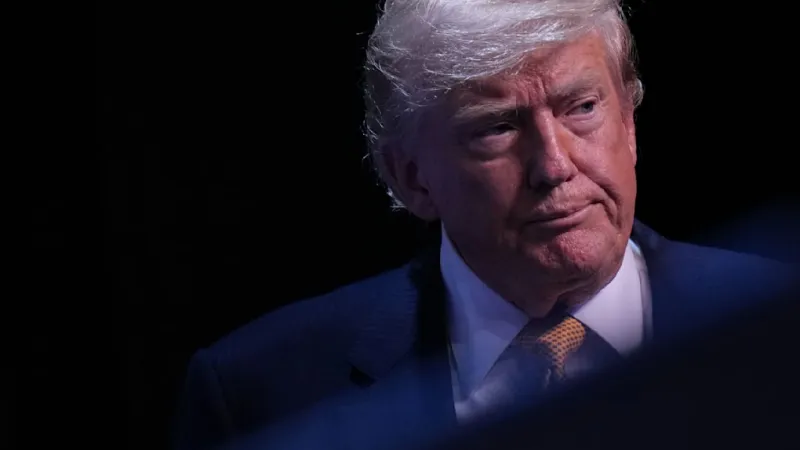
President Donald Trump made several notable verbal missteps during a joint press conference with Ukrainian President Volodymyr Zelenskyy at the recent NATO Summit, an event already largely overshadowed by Trump's prior criticisms and threats towards the alliance. Held amidst swirling geopolitical tensions, the summit featured President Trump addressing reporters alongside President Zelenskyy, whose presence underscored the urgency of continued support for Ukraine. Despite the U.S. President's uncharacteristic fumbles in articulation, German Chancellor Merz offered a surprisingly positive assessment of the summit outcomes, even citing a remark by the American leader as evidence of progress.
The conference, which quickly became a focal point for media scrutiny, saw President Trump deviate from prepared remarks, leading to what some observers described as a series of lapses in clarity and unscripted detours. These verbal incidents occurred against a backdrop of ongoing concerns regarding transatlantic solidarity and the future direction of the North Atlantic Treaty Organization. The precise nature of these gaffes remained a subject of immediate analysis, but they contributed to an atmosphere of uncertainty.
Prior to the joint appearance, President Trump had engaged in his characteristic outspoken criticism of various NATO member states, reiterating his long-standing demands for increased defense spending and fairer burden-sharing. His often confrontational rhetoric had set a tense tone for the summit proceedings, leading many to anticipate a potentially fractious gathering. Reports suggested the summit was initially clouded by President Trump's direct warnings and critiques aimed at nations perceived as not meeting their financial obligations.
In a striking contrast to the perceived discord, German Chancellor Merz emerged from the summit expressing an upbeat sentiment. Merz, speaking to the press, highlighted what he considered to be constructive elements of the discussions, directly quoting a statement from President Trump to support his optimistic conclusion. This private remark, later disclosed by Merz, offered a counter-narrative to the prevailing impression of a tumultuous summit, suggesting moments of potential convergence despite public disagreements. This echoes earlier sentiments reported, such as when Trump Offered a Conciliatory NATO Tone.
The U.S. President's communication style has frequently drawn attention, often characterized by impromptu remarks and direct challenges to diplomatic norms. However, the specific verbal missteps during the press conference with President Zelenskyy were noted for their apparent unforced nature, leading to questions about their potential impact on diplomatic messaging at such a critical juncture.
President Zelenskyy, for his part, maintained a steadfast focus on Ukraine's urgent needs for military and financial assistance, underscoring the relentless aggression from Russia. He articulated a clear message emphasizing the critical importance of unwavering alliance support for his nation's sovereignty and territorial integrity. His remarks aimed to solidify commitments from NATO members, even as the U.S. President's commentary sometimes diverted attention.
The NATO Summit itself was intended to reinforce allied unity and strategize responses to evolving global threats, particularly in Eastern Europe. Discussions encompassed a broad range of topics, including collective defense, cybersecurity, and emerging security challenges. Leaders aimed to project a united front, but internal dynamics often surface during such high-profile gatherings.
President Trump has consistently advocated for a recalibration of NATO responsibilities, asserting that certain member states have not contributed their fair share to the collective defense budget. This stance has been a cornerstone of his foreign policy agenda, prompting debates about the alliance's long-term sustainability and operational capacity. His focus on these financial contributions has frequently overshadowed other diplomatic exchanges.
Observers suggested that Chancellor Merz's decision to publicly share President Trump's more conciliatory remark was a strategic effort to emphasize positive outcomes and de-escalate tensions. It presented an alternative interpretation of the U.S. President's overall message, seeking to underscore moments of common ground rather than dwelling solely on his criticisms. This aligns with broader efforts to maintain alliance cohesion, previously exemplified by Trump Hailing NATO Unity in other contexts.
The verbal missteps, regardless of their intent, provided fresh fodder for political commentators and international relations analysts. They prompted renewed discussions about the efficacy of diplomatic communication at the highest levels and the delicate balance between robust political expression and precise articulation in critical global forums.
This latest episode at the NATO Summit highlights the complex and often unpredictable nature of international diplomacy in the current geopolitical landscape. The interplay between assertive national interests, alliance solidarity, and individual leadership styles continues to shape the global stage, with every public statement subject to intense scrutiny and interpretation.
Further analysis of the summit proceedings, including detailed transcripts and expert commentary, continues to emerge as leaders return to their respective capitals. The full implications of President Trump's remarks and verbal fumbles, along with Chancellor Merz's efforts to frame the summit positively, will likely unfold over the coming weeks as diplomatic assessments are fully processed.