 Chris Robert
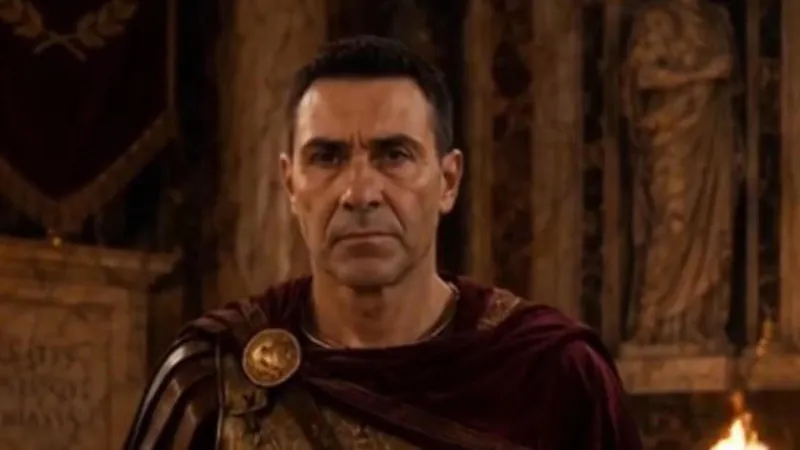
ROME – A fabricated video purportedly showing Italian President Sergio Mattarella granting a pardon to an individual named Roggero has ignited a fresh political crisis, further destabilizing the nation's ruling center-right majority. This digital deception, coupled with the enduring electoral influence of the V factor, a term widely understood to refer to the far-right political force Forza Nuova (FnV), has cast a shadow over government cohesion and public trust.
The contentious video, which began circulating recently, presents a deeply misleading portrayal of the Head of State engaging in an act of clemency. Such a fabrication involving a presidential prerogative carries severe implications for institutional integrity and the bedrock of democratic governance in Italy. Investigations into its origin are anticipated to determine the responsible parties and their motivations.
The timing of this disinformation campaign coincides with heightened political sensitivities surrounding the V factor. Polls conducted by Ipsos, a reputable research firm, indicate a stark reality for the center-right coalition: electoral victory remains elusive without the support or inclusion of FnV. This finding underscores the complex and often uncomfortable alliances that shape Italian politics.
Foreign Minister Antonio Tajani, a prominent figure within the center-right, addressed the delicate situation directly. Responding to queries about potential agreements with the V factor, Tajani asserted, “It is him who left the coalition.” This statement suggests a formal or informal break in relations, adding another layer of complexity to the government's internal dynamics.
Tajani's declaration highlights a fundamental schism within the broader center-right. While electoral necessity, as indicated by Ipsos, might push for rapprochement with FnV, ideological differences and political baggage often make such alliances fraught with tension and public criticism. The question of who departed from the coalition, or when, remains a point of contention and ambiguity.
The fake video, irrespective of its source, represents a dangerous escalation in the use of disinformation as a political weapon. Utilizing the image of the President of the Republic for such a deceitful purpose threatens to erode public confidence in official communications and deepen cynicism towards political processes. It is an assault on the very credibility of state institutions.
The identity and background of Roggero, the individual allegedly receiving a pardon in the fabricated video, remain largely unspecified in public discourse. However, the mere notion of a presidential pardon for an unnamed figure, especially when presented in a false context, indicates that such a pardon would likely be highly controversial and politically charged, designed to provoke strong reactions.
Italy, like many democracies, has grappled with the spread of digital disinformation and fake news. This latest incident, targeting the nation's highest office, serves as a potent reminder of the persistent threat these campaigns pose to stability and informed public opinion. Countering such tactics requires vigilance from both authorities and media outlets.
The V factor, or Forza Nuova, represents a segment of the Italian political spectrum characterized by its far-right ideology and often controversial stances. Its historical presence has periodically agitated mainstream political forces, making any explicit alliance a subject of intense debate and internal friction within traditional center-right parties.
The internal divisions within the center-right majority, exacerbated by the V factor's contentious role and the viral fake video, could have significant repercussions for the government's legislative agenda and overall stability. Navigating these challenges demands shrewd political leadership and a clear strategy to address both internal dissent and external disinformation.
The Ipsos poll findings present a strategic dilemma for the center-right. To secure electoral victories, they appear reliant on a political force with whom key figures, like Minister Tajani, claim a separation. This creates a precarious balance between pragmatic electoral calculations and maintaining ideological coherence and public image.
This incident also prompts broader questions about media literacy and critical thinking among the populace. In an era where deepfake technology and sophisticated digital manipulation are increasingly accessible, the ability of citizens to discern truth from fabrication becomes paramount for the health of democratic discourse.
Government officials and political leaders are under pressure to condemn the fake video unequivocally and to take decisive action against those responsible. A robust response is essential not only to protect the integrity of the presidency but also to send a clear message against the weaponization of disinformation.
Ultimately, the confluence of the V factor's electoral leverage and the audacious fabrication involving President Mattarella presents a formidable test for Italy's political landscape. The ability of the ruling majority to address these challenges will define its immediate future and potentially reshape the nation's political alignments in the years to come.