 Debby Wijaya
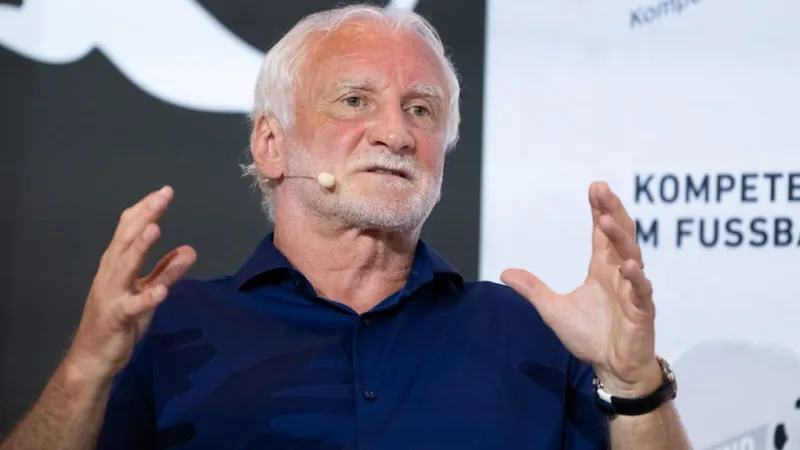
COLOGNE – Rudi Völler, the esteemed German sporting director and former World Champion, delivered a pointed critique of Argentina's playing style during the recent World Cup, asserting it deviates from the true essence of football. Speaking at the International Coach Congress, Völler lauded the distinct approaches of Spain and England as exemplary models for the beautiful game.
“I do not want a team that plays like Argentina. That has nothing to do with football,” Völler stated emphatically, leaving little doubt about his philosophical stance on the sport. His comments quickly resonated through the corridors of the congress, sparking discussions among coaches and football administrators.
Völler, a figure widely respected in German football for his illustrious career as a player, manager, and administrator, leveraged his considerable platform to advocate for a more aesthetically pleasing and attacking brand of football. His tenure as a World Champion player in 1990 and his later role in guiding Germany to the 2002 World Cup final lend significant weight to his pronouncements.
The specific target of his criticism, Argentina, clinched the World Cup in 2022 through a blend of tactical pragmatism, individual brilliance, and robust defending. While ultimately successful, their path often involved a more cautious, results-oriented strategy, which Völler apparently views as antithetical to football's spirit.
Völler's comments highlight a long-standing debate within football circles: the tension between winning at all costs and winning with style. For many purists, the manner of victory is as crucial as the victory itself, a sentiment clearly echoed by the German sporting director.
In stark contrast, Völler singled out Spain for praise, a nation renowned for its tiki-taka philosophy of possession-based football, intricate passing, and technical prowess. This style, characterized by control and artistic flair, aligns closely with Völler's apparent ideals for how the game should be played.
England also earned his commendation, suggesting an appreciation for their modern, dynamic approach. England's teams typically combine physical intensity with tactical discipline and often feature fast-paced, direct attacking play, providing a different yet equally appealing spectacle to Völler's discerning eye.
The International Coach Congress serves as a crucial forum for football leaders to exchange ideas, debate strategies, and influence the future direction of the sport. Völler's outspoken remarks are therefore not merely personal opinion but an attempt to steer the discourse toward what he perceives as a more noble form of football.
His criticism is not without historical precedent. Throughout football's history, teams have been admired or decried for their playing styles, from the “Catenaccio” of Italian football to the “Total Football” of the Dutch. Völler's intervention places him squarely in the camp advocating for an expansive, creative game.
As sporting director, Völler's philosophy often influences the development pathways within the German football system. His desire for teams that eschew overly defensive or disruptive tactics could shape future coaching directives and player selection criteria within German clubs and national teams.
Such high-profile commentary also puts pressure on other footballing nations to evaluate their own philosophies. Do federations prioritize entertainment, or is the ultimate goal solely silverware, regardless of the method?
This debate transcends mere aesthetics; it touches upon fan engagement, the marketability of the sport, and the legacy teams leave behind. A team playing exciting football can cultivate a broader and more passionate fan base, even in defeat.
Völler's vision aligns with the enduring appeal of the “Beautiful Game,” a term often associated with Brazilian football legends who championed skill, improvisation, and attacking enterprise. He appears to be calling for a return to, or a reinforcement of, those foundational principles.
The challenge for coaches worldwide lies in balancing the demand for results with the desire to play attractive football. In an era where data analytics often drives tactical decisions, Völler reminds the footballing world of the human element and the emotional connection fans have to the game's artistry.
His remarks will undoubtedly fuel further debate among pundits, players, and fans about what constitutes a truly great football team. Is it the team that wins the most, or the team that inspires with its play?
Ultimately, Völler's critique serves as a potent reminder that while victory is sweet, the journey—the style, the flair, the commitment to offensive football—holds significant value in the eyes of many, particularly those who have shaped the game's history.