 Stefani Rindus
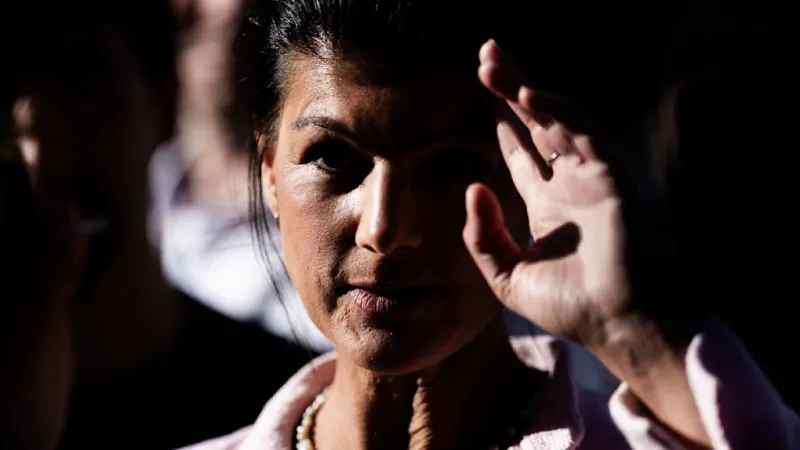
BERLIN — Sahra Wagenknecht, founder of the Bündnis Sahra Wagenknecht (BSW) party, has publicly challenged Björn Höcke, a prominent figure in the far-right Alternative for Germany (AfD), to a direct, live debate. This provocative call to a rhetorical duel is intrinsically linked to her proposal for a non-partisan head of government in the eastern German state of Thuringia.
The challenge, issued this week, underscores the escalating political tensions in Germany, particularly concerning the future leadership of Thuringia, where the AfD has seen significant electoral gains. Wagenknecht, known for her sharp rhetoric and ability to attract voters from across the political spectrum, framed her invitation as an appeal to Höcke's asserted strength and principles.
Her proposed debate would feature a neutral moderator, aiming for a direct confrontation of ideas on a public platform. This move positions Wagenknecht's BSW as a key player in the evolving German political landscape, ready to directly engage with controversial figures like Höcke.
The core of Wagenknecht's initiative extends beyond a mere debate. She envisions a scenario where Thuringia, facing complex political alignments, could benefit from a consensus-driven leader unaligned with any single party. This concept aims to circumvent potential deadlocks or the rise of a purely partisan government.
Björn Höcke, often described as a hardline nationalist within the AfD, commands a significant following, especially in eastern Germany. His potential role in future Thuringian governance has been a subject of intense national discussion and concern. Political analysts frequently highlight the strong opposition to an AfD Minister-President, as articulated by figures like Cem Özdemir, who stated an AfD Minister-President Poses German Security Risk. This sentiment underscores the high stakes involved in Thuringia's political trajectory.
The political climate in Thuringia is particularly volatile. Recent polling suggests a fragmentation of the electorate, making coalition-building challenging. Wagenknecht's call for a non-partisan chief executive could be interpreted as an attempt to find a pragmatic solution to a potentially intractable political stalemate.
Wagenknecht's BSW, a relatively new political force, has quickly gained traction by appealing to voters disillusioned with established parties. Her platform often blends left-wing economic policies with more conservative stances on immigration and cultural issues, a combination that distinguishes her from traditional political players.
The public nature of the challenge also serves to elevate the BSW's profile and demonstrate its readiness to tackle contentious political issues head-on. A televised Wagenknecht Höcke debate would undoubtedly draw significant national attention and could reshape public perceptions ahead of crucial regional and federal elections.
For Höcke and the AfD, accepting such a debate would present both opportunities and risks. While it could offer a platform to articulate their vision directly to a broader audience, it also means engaging with one of Germany's most skilled political communicators in a high-pressure environment.
Critics of Wagenknecht's non-partisan leader proposal argue that it could undermine democratic accountability, removing a directly elected representative from the highest office. Proponents, however, suggest it offers a viable path forward when traditional political mechanisms falter, particularly in regions with deeply entrenched ideological divides.
The specific wording used by Wagenknecht in issuing her challenge, alluding to Höcke's emphasis on qualities traditionally associated with masculinity, adds a layer of psychological maneuvering to the political chess match. It aims to directly provoke a response from a figure known for his strong public persona.
Thuringia, like several other eastern German states, faces unique socio-economic challenges that resonate deeply with voters. The debate over its leadership is not merely a regional issue but reflects broader national anxieties about political representation and the rise of populist movements.
The BSW's strategy appears to be one of calculated confrontation, aiming to position itself as a decisive force capable of confronting established political narratives and figures. By targeting Höcke directly, Wagenknecht signals her party's intent to compete vigorously for influence.
Whether Höcke will accept the public debate remains to be seen. His decision will have immediate political ramifications, either validating Wagenknecht's challenge or allowing her to frame his refusal as an avoidance of direct scrutiny. The public awaits his response keenly.
This proposed Wagenknecht Höcke debate highlights a growing trend in German politics where direct, personality-driven confrontations are becoming more prevalent, especially in an era of increasing political polarization. It marks a significant moment in the German public discourse.
The outcome of this political gambit could significantly influence the upcoming electoral dynamics in Thuringia and potentially set a precedent for how political impasses are addressed in other German states. The nation watches as the political drama unfolds.