 Chandra Wijayanto
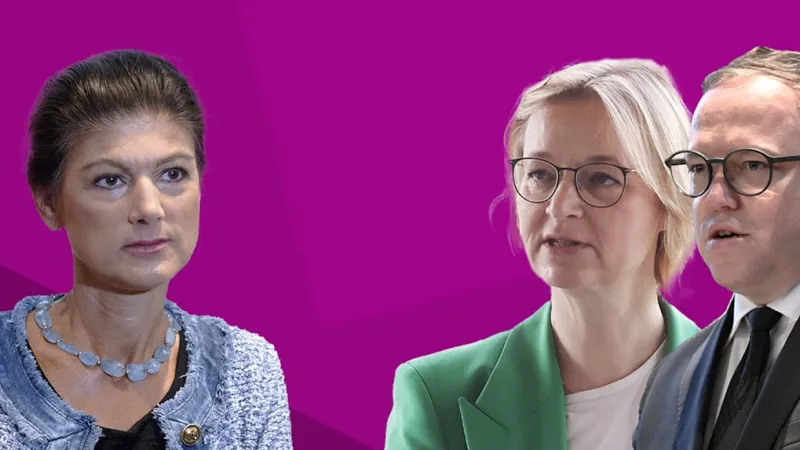
BERLIN, Germany – The Bündnis Sahra Wagenknecht (BSW), widely known as the Wagenknecht Party, currently confronts a significant internal struggle that threatens its nascent political existence. This burgeoning conflict centers on a fundamental question: should the party participate in government coalitions that explicitly exclude the Alternative for Germany (AfD), or should it consider avenues of cooperation with the controversial far-right entity? This pivotal debate has plunged the young party into an existential crisis, raising profound questions about its future direction and core principles.
The division highlights a critical fault line within the BSW, barely a year after its formation. One faction advocates for adherence to democratic norms by aligning exclusively with mainstream parties, thereby isolating the AfD. Conversely, another segment argues for a more pragmatic, albeit contentious, approach that would entertain collaboration with the AfD on specific issues or even in coalition talks, particularly in eastern German states where the AfD holds significant sway.
Founded by charismatic former Left Party luminary Sahra Wagenknecht, the BSW emerged with the stated aim of offering an alternative to Germany's established political spectrum. Its platform combines conservative social policies, a skeptical view on immigration, and traditionally left-leaning economic stances, appealing to a diverse voter base disillusioned with current governance. This unique ideological blend has made its stance on other parties, especially the AfD, critically ambiguous until now.
The Alternative for Germany (AfD) has steadily risen as a powerful force in German politics, frequently labeled as far-right by mainstream media and political figures. Its anti-immigration rhetoric, Euroskepticism, and occasional flirtations with extremist views make it a pariah for most established parties, which have maintained a firm firewall against direct cooperation. The BSW's internal debate therefore represents a potential breach in this long-standing cordon sanitaire.
The outcome of this internal strife will profoundly impact the BSW's identity and its role in Germany's fragmented political landscape. A decision to engage with the AfD, even partially, could alienate potential centrist voters and coalition partners, potentially isolating the party from mainstream politics. Conversely, a rigid exclusion of the AfD might limit the BSW's leverage in regions where conservative and right-wing voters are abundant.
Political analysts observing German affairs describe the situation as a critical litmus test for the Wagenknecht Party. They note that the party's ability to navigate this ideological chasm will determine its long-term viability and credibility. This is not merely a policy dispute; it is about the soul of the BSW, stated one prominent German political commentator, who requested anonymity to speak freely on internal party dynamics.
Historically, new political formations in Germany have often faced similar dilemmas when confronted with the rise of populist or extremist movements. The Greens, for instance, underwent their own internal power struggles between pragmatic Realos and ideological Fundis in their early decades. The BSW's situation echoes these past challenges, albeit with the unique pressure of a highly polarized contemporary environment.
Germany's political climate in 2026 remains notably volatile, marked by shifting alliances and pervasive voter dissatisfaction with established parties. Mainstream political figures, including prominent leaders, have voiced concerns regarding the BSW's potential influence. For instance, a German leader recently warned that BSW support could inadvertently pave the way for an AfD government, underscoring the high stakes involved. In this environment, the BSW's internal disarray over the AfD could either solidify its unique appeal or lead to its swift fragmentation.
Sahra Wagenknecht herself, known for her strong will and independent thought, has maintained a somewhat enigmatic public stance on the AfD. While she has often criticized the AfD's economic policies and nationalist rhetoric, she has also expressed a willingness to engage with voters across the political spectrum who feel unheard. Her ultimate decision or guidance in this internal conflict will be decisive.
The coming weeks are expected to be crucial for the Wagenknecht Party as its leadership attempts to forge a unified path forward. Rank-and-file members and prominent figures within the party are reportedly engaged in intense discussions and internal polling to gauge support for the differing strategies. The party faces immense pressure to clarify its position ahead of upcoming regional elections.
The choice facing the BSW is not merely tactical; it will define the party's ethical boundaries and its potential role in shaping future German governments. Whether it embraces an uncompromising stance against the far-right or seeks pragmatic avenues of cooperation, the decision carries profound implications for Germany's democratic fabric.