 Debby Wijaya
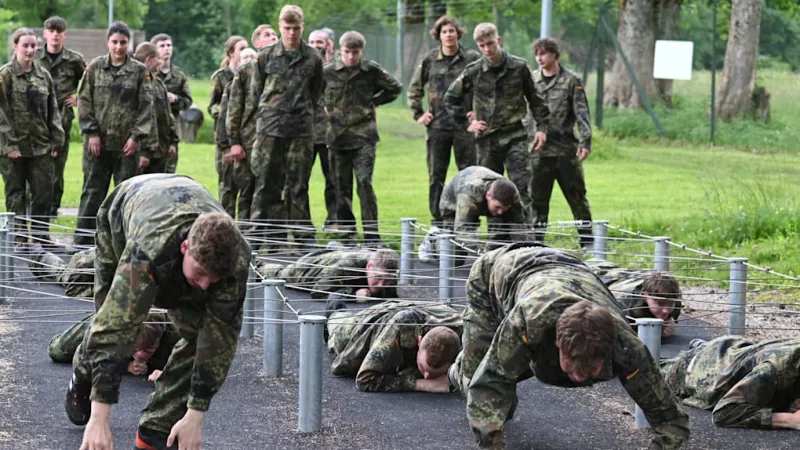
Historian Carlo Michels has provided a sobering assessment regarding the prospect of a Russian attack on Germany, stating it would take "months or years" for Russian forces to reach the Oder River. His analysis, which draws parallels between present-day geopolitical tensions and Cold War "mobilization mechanisms," comes amidst renewed discussions in Germany about the potential reintroduction of compulsory military service to bolster national defense.
Michels, a prominent military historian, presented his findings during a recent expert discussion, emphasizing that while the threat exists, the timeline for a deep offensive into German territory is not immediate. He underscores the considerable logistical and strategic challenges inherent in such a large-scale military operation.
The historian specifically highlighted similarities in how nations prepare for potential conflicts, noting that contemporary "mobilization mechanisms" echo those seen during the Cold War era. This comparison reignites historical anxieties and prompts a re-evaluation of current defense postures across Europe.
The potential return of conscription, or Wehrpflicht, has become a significant topic within German political discourse. Discussions have gained traction as European security concerns escalate, pushing nations to reconsider their readiness and long-term military capabilities. This is particularly salient given the current geopolitical landscape.
While no official decision on conscription has been made, several political figures and defense experts have voiced support for its reintroduction. Proponents argue that it would enhance the Bundeswehr's operational strength and foster a greater sense of civic responsibility regarding national security.
Opponents, however, point to the economic costs, logistical complexities, and potential societal disruption associated with mandatory military service. They suggest that modern defense requires highly specialized, professional forces rather than a broad conscript army.
The debate unfolds against a backdrop of heightened tensions in Eastern Europe, a situation that has prompted many European nations to reassess their defense strategies. Russia's actions in the region continue to be a primary catalyst for these strategic shifts, aligning with broader concerns about new global war shadows.
Germany, as a key member of NATO, is intrinsically linked to the collective defense of the alliance. The prospect of a Russian offensive, however remote or distant, necessitates robust national and allied preparations. NATO has already begun bolstering its Eastern Flank with advanced technologies to counter potential threats.
Michels posited that even if Russia were to launch an attack, the sheer scale of moving forces across such vast distances and overcoming logistical hurdles would delay any significant territorial gains for an extended period. This provides a critical timeframe for defensive measures and international response.
The historian's analysis serves as a stark reminder of the long-term strategic planning required to maintain peace and deterrence in a volatile world. It underscores that while immediate existential threats might be mitigated by time, continuous vigilance and robust defense policies remain paramount.
Beyond the conscription debate, Germany's broader defense strategy includes significant investment in modernizing its armed forces, enhancing cyber capabilities, and participating in joint exercises with NATO allies. These efforts are crucial components of the nation's overall security posture.
Ultimately, Michels' assessment offers a nuanced perspective on the timing and feasibility of a large-scale Russian military advance into central Europe. It suggests that while the notion of an attack demands serious consideration, the immediate threat of Russian forces reaching the Oder River within weeks or months is likely overstated, providing a crucial window for German and allied response.