Gabriella
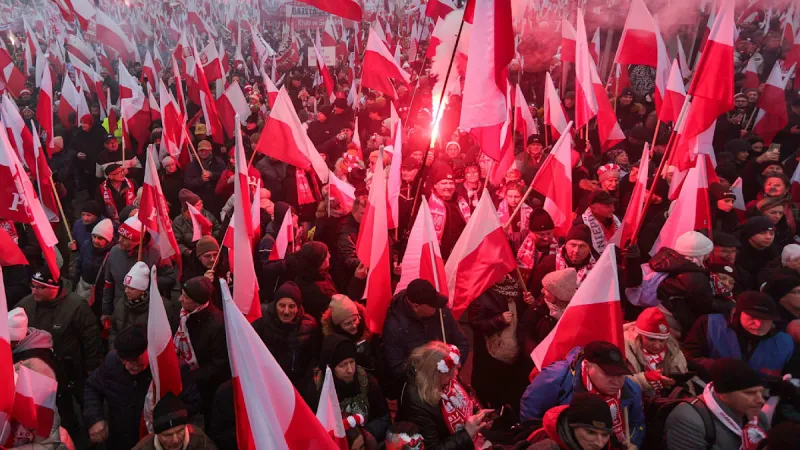
Warsaw – Tens of thousands congregated in the Polish capital today for the annual Independence March, an event celebrating Poland's sovereignty, which was significantly overshadowed by the conspicuous display of far-right extremist symbols and overtly antisemitic literature among participants.
This year's demonstration, a recurring fixture in Poland's national calendar, again drew criticism as various groups openly carried banners and materials aligned with nationalist and extremist ideologies. Observers documented numerous instances of such provocative content throughout the vast procession.
The Independence March commemorates Poland's regaining of independence in 1918 after 123 years of partition. While it began as a broad patriotic gathering, it has increasingly become a flashpoint for debate due to the persistent presence of ultranationalist and xenophobic elements.
Among the disturbing visuals reported were flags emblazoned with symbols associated with historical far-right groups and posters promoting discriminatory rhetoric. Several individuals were also seen distributing and openly reading books containing antisemitic narratives, fueling alarm among human rights advocates and international observers.
Critics argue that the authorities have been inconsistent in their efforts to curtail the promotion of hate speech and extremist ideologies during these public gatherings, allowing a platform for groups that undermine democratic values and promote intolerance.
The persistent issue of extremist displays at such a prominent national event raises significant questions about Poland's commitment to combating hate speech and ensuring public order in a manner consistent with European democratic standards. The government has often faced a delicate balancing act between freedom of assembly and the need to prevent the spread of dangerous ideologies.
For years, civil society organizations within Poland and across Europe have voiced concerns about the march's trajectory. They highlight the danger of normalizing rhetoric that many consider antithetical to the principles of a modern, inclusive society.
The presence of such materials and symbols risks damaging Poland's international reputation, especially given its historical experience with occupation and the profound suffering inflicted by extremist ideologies during the 20th century. International bodies frequently monitor human rights and expressions of extremism within member states.
The organizers of the Independence March typically assert that the event is purely patriotic and inclusive, disavowing any connection to extremism. However, the recurring visual evidence from the march complicates this narrative, leading many to question the efficacy of their control over participant conduct.
The incident underscores a broader European challenge: how nations grapple with historical memory, national identity, and the rise of nationalist movements in an increasingly polarized political landscape. The balance between national pride and vigilance against extremism remains a critical, ongoing discussion.
As the fallout from this year's march continues, both domestic and international scrutiny will undoubtedly intensify regarding Poland's approach to addressing the public display of far-right and antisemitic sentiments at major national events.