 Edward DP Situmorang
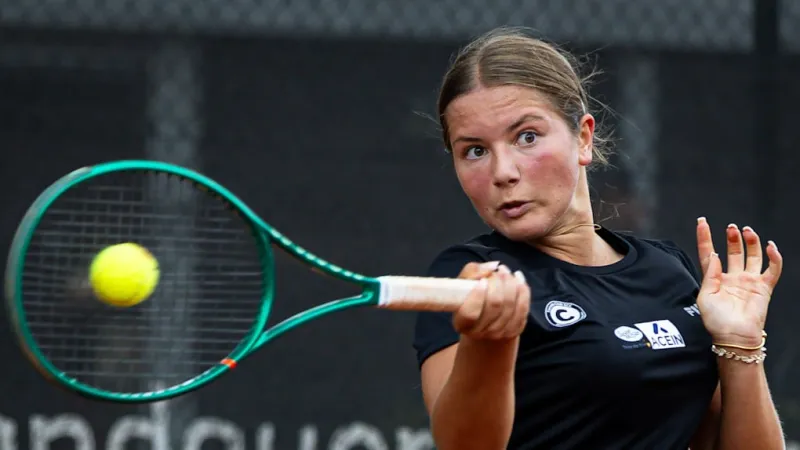
London – A moment of intense frustration has led to the disqualification of 15-year-old German tennis sensation Ida Wobker from the prestigious Wimbledon junior competition. The young athlete was removed from her match after throwing her racket, an act deemed unsportsmanlike conduct during one of her worst performances at the tournament. This incident sends a stark reminder of the strict behavioral codes governing professional tennis, even at the junior level.
The dramatic scene unfolded during a critical match in the junior circuit at the All England Lawn Tennis and Croquet Club. Wobker, who was reportedly struggling significantly throughout the encounter, vented her palpable frustration by violently casting her equipment across the court. This lapse in composure immediately drew the attention of officials.
Sources close to the player indicated that Wobker was deeply upset and ashamed following the decision. She was said to be in tears, grappling with the immediate consequences of her actions and the abrupt end to her Wimbledon bid. For a promising junior player, such an early exit from a Grand Slam is particularly disheartening.
Wimbledon, known for its revered traditions and strict adherence to decorum, maintains a rigorous code of conduct for all participants, irrespective of age or professional status. Rules regarding equipment abuse are clearly articulated, and officials are empowered to enforce them with immediate disqualification if warranted.
The incident casts a spotlight on the immense pressure faced by young athletes competing at the highest levels of their sport. Teenage players often contend with the emotional weight of expectations, the demands of performance, and the public scrutiny that accompanies major international tournaments like Wimbledon.
While incidents of racket abuse are not uncommon in professional tennis, leading to warnings or point penalties, outright disqualifications are rare and reserved for more egregious violations. Wobker's actions evidently crossed a line that officials found indefensible, particularly within the hallowed grounds of Wimbledon.
The ruling highlights the importance of emotional regulation and sportsmanship, qualities that are paramount in a sport emphasizing individual discipline. Coaches and mentors frequently work with young players on managing frustration and maintaining composure under competitive stress.
For Wobker, this disqualification represents a significant setback in her burgeoning career. It will serve as a harsh lesson regarding on-court discipline and the potential repercussions of allowing emotions to dictate actions during high-stakes matches.
Her premature departure stands in contrast to the mixed fortunes experienced by other young talents in the tournament. Across the draws, players battle not only their opponents but also the psychological demands of Grand Slam competition.
Other promising juniors continue their campaigns, hoping to make a name for themselves. For instance, this year's Wimbledon has already seen impressive performances from other European contenders. Italian Tennis Stars See Mixed Fortunes at Wimbledon, Two Advance to the next rounds, demonstrating the varied experiences players encounter.
The All England Club is renowned for upholding the highest standards of play and conduct. From the pristine white uniforms to the quiet reverence of the crowd during points, every aspect of Wimbledon reinforces an atmosphere of respect and tradition.
Wobker's emotional outburst and subsequent disqualification underscore the mental fortitude required to succeed in top-tier tennis. Beyond technical skill, players must cultivate resilience and emotional control to navigate the pressures of Grand Slam events.
The German tennis federation will likely address this incident with Wobker, offering guidance and support to help her learn from the experience. Developing coping mechanisms for frustration is a crucial part of an athlete's development.
This event also serves as a cautionary tale for aspiring athletes globally, emphasizing that talent alone is insufficient; professionalism and adherence to sporting ethics are equally vital for a sustained career.
In a tournament that has also seen seasoned professionals display moments of intense pressure, the junior competition often mirrors the larger event's drama. Cobolli Stuns Khachanov in Five-Set Wimbledon Thriller; Paolini Advances further illustrating the high stakes.
The eyes of the tennis world are often fixed on the junior draws, seeking out future stars. Incidents like Wobker's, while regrettable, can become defining moments in a young athlete's journey, shaping their approach to the sport going forward.
The immediate aftermath saw Wobker retreating from the court, her Wimbledon dream for 2026 abruptly ended. The memory of this disqualification will undoubtedly linger, serving as a powerful impetus for self-reflection and growth.
As the Wimbledon junior competition progresses, other young hopefuls will continue to vie for the prestigious title, all while operating under the same strict guidelines that ultimately led to Ida Wobker's early exit.