Gabriella
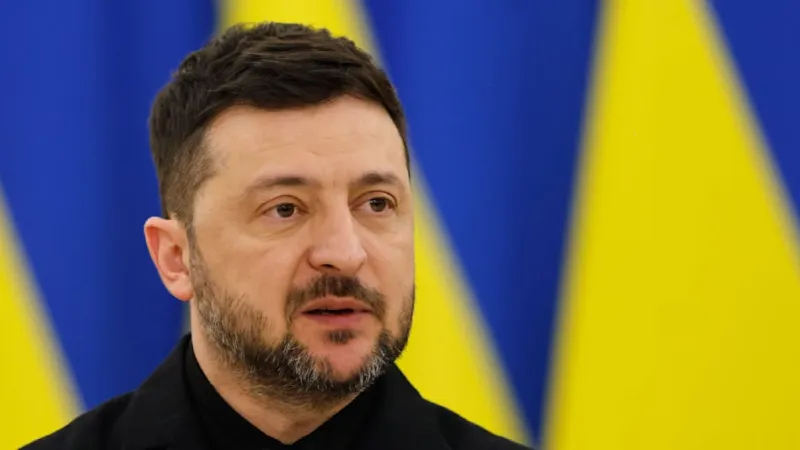
KYIV, Ukraine — Ukrainian President Volodymyr Zelenskyy lauded his nation's armed forces for unprecedented strikes deep within Russian territory, including a major oil facility in Siberia. The commendation, issued following reports of the long-range assault, signals a significant escalation in the ongoing conflict and demonstrates Kyivs expanding operational capabilities against Moscows strategic infrastructure.
President Zelenskyy described the reach as historic, noting that it marked "the first time in Russias history" that its forces faced such deep incursions. This declaration underscores a critical shift in the tactical landscape, challenging the perception of Russian security within its own borders, particularly far from the front lines.
The specific oil plant targeted, though not officially named by Ukrainian authorities, is believed to be located thousands of kilometers from the Ukrainian border, highlighting the sophistication and extended range of Kyivs evolving drone and missile programs. Reports from Russian state media acknowledged an incident at an energy installation without detailing the origin or full extent of the damage.
This type of attack on a vital energy asset so far from the conventional conflict zone holds profound strategic implications. It aims to disrupt Russias economic backbone, which heavily relies on oil and gas exports, and to exert psychological pressure on the Kremlin and the Russian populace.
The Siberia strike is the latest in a series of increasingly bold Ukrainian operations targeting Russian military and industrial sites well beyond the immediate front. Previous incidents have included attacks on airfields, arms depots, and other critical infrastructure across western Russia, often employing unmanned aerial vehicles (UAVs).
For weeks, Ukrainian forces have intensified these deep strikes, indicating a concerted strategy to degrade Russias war-making capacity and its ability to sustain its offensive. These actions mirror a broader trend of escalating tensions, as explored in recent reports such as Ukraine Drones Strike Deep Into Russia, Casualties Mount Amid Escalation.
Moscow has consistently condemned such attacks as acts of terrorism and has vowed retaliation, though its ability to effectively intercept all incoming threats, especially those reaching deep into its vast territory, has been repeatedly questioned. The geographic scale of the current war presents immense defensive challenges for Russian air defense systems.
Echoing his commitment to press the advantage, President Zelenskyy affirmed that further strikes into the Russian hinterland "shall follow." This open declaration serves as a warning, signaling Kyivs resolve to continue these long-range operations and to broaden the scope of its resistance beyond traditional battle lines.
Targeting critical energy infrastructure, particularly in a region as vital as Siberia, directly impacts Russias revenue streams and its capacity to fund military operations. Such attacks also aim to erode public confidence in the Kremlins ability to protect its assets and citizens, even far from the perceived conflict zone.
While Western allies generally refrain from overtly endorsing attacks inside Russia, they have largely maintained that Ukraine has the right to defend itself by any means necessary against the ongoing invasion. The increasing range of Ukrainian capabilities could prompt further debate among international partners regarding the boundaries of acceptable defense.
The success of these long-range strikes speaks to significant advancements in Ukraines indigenous drone technology and its strategic intelligence gathering. Kyiv has increasingly relied on domestically produced, cost-effective drones to offset the numerical and logistical superiority of the Russian military.
Analysts suggest that Ukraines strategy is evolving from purely defensive maneuvers to more proactive measures designed to disrupt Russian logistics, demoralize troops, and create a sense of insecurity within Russia itself. This could force Moscow to divert more resources to homeland defense, potentially thinning its forces on the front lines.
Zelenskyys strong rhetoric suggests that Ukraine views these operations not merely as retaliatory acts but as integral components of a broader strategy to regain the initiative and compel Russia to reassess the costs of its aggression.
The political ramifications within Russia are also noteworthy. Such high-profile attacks on distant, supposedly secure targets could exacerbate existing internal pressures and challenge the narrative of an invincible, protected homeland that the Kremlin endeavors to project.
Ultimately, these expanded operations aim to demonstrate that no part of Russia is entirely immune from the consequences of its war against Ukraine, thereby increasing the pressure on President Vladimir Putins regime to reconsider its military objectives.