 Stefani Rindus
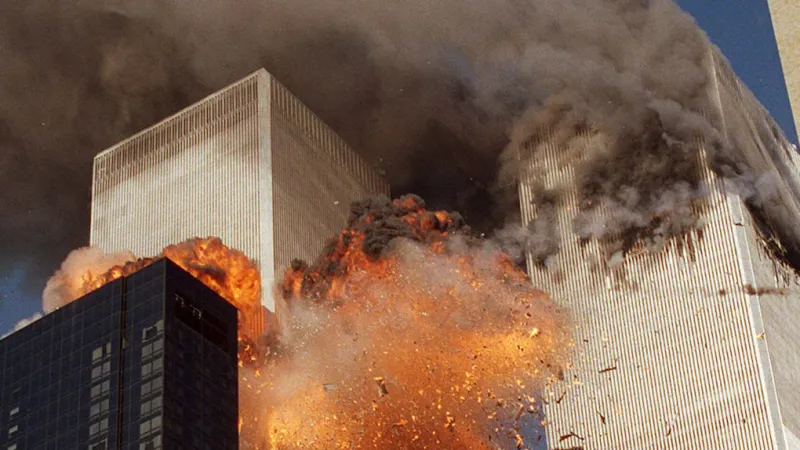
On September 11, 2001, a series of coordinated terrorist attacks devastated the United States, as nineteen al-Qaeda operatives hijacked four commercial airliners, transforming them into deadly missiles. These catastrophic events targeted the World Trade Center in New York City, the Pentagon near Washington D.C., and resulted in a plane crash in Shanksville, Pennsylvania, claiming the lives of 2,977 victims and immediately galvanizing a national demand for robust military action.
The profound shock reverberated across the nation, compelling citizens and leaders alike to confront an existential threat unlike any experienced on American soil since Pearl Harbor. The immediate aftermath was characterized by chaos, grief, and an overwhelming sense of vulnerability, prompting urgent discussions on national security and defense.
Islamic terrorists commandeered four Boeing passenger aircraft from East Coast airports. Two planes, American Airlines Flight 11 and United Airlines Flight 175, were deliberately flown into the North and South Towers of the World Trade Center complex in Lower Manhattan, causing both iconic skyscrapers to collapse within hours.
Another hijacked aircraft, American Airlines Flight 77, struck the western facade of the Pentagon, the headquarters of the United States Department of Defense, just outside Washington D.C. The impact triggered a partial collapse of the building and ignited a massive fire, adding to the day's unfathomable destruction.
The fourth plane, United Airlines Flight 93, was reportedly headed for the US Capitol building or the White House. However, passengers and crew valiantly fought back against the hijackers, leading to the plane crashing into a field in Shanksville, Pennsylvania, preventing further loss of life and potential symbolic damage.
The human toll was staggering. The attacks resulted in 2,977 fatalities, including 2,753 in New York City, 184 at the Pentagon, and 40 in Pennsylvania. Victims included citizens from over 90 countries, illustrating the global impact of the tragedy. Thousands more sustained injuries, and many first responders later developed serious health conditions from exposure to toxic debris.
The call for military engagement was immediate and visceral. As the nation grappled with the unprecedented scale of the assault, the public and political figures articulated a clear demand for accountability and retribution. The phrase, “We need the military. We are in something very bad here,” captured the urgent sentiment during those terrifying hours.
This sentiment quickly translated into a global War on Terror, spearheaded by the United States. Operations in Afghanistan aimed at dismantling al-Qaeda and targeting its leader, Osama bin Laden, commenced within weeks, marking a significant shift in American foreign policy and defense strategy. The attacks reshaped geopolitical landscapes and security protocols worldwide.
The legacy of September 11 continues to influence national discourse on counter-terrorism measures, intelligence gathering, and international alliances. Commemorations serve as somber reminders of the lives lost and the enduring resilience displayed by the American people. For instance, the Empire State Building Illuminates Blue, Marking Solemn 9/11 Quarter-Century, honoring the memory of those who perished.
Beyond immediate military responses, the attacks prompted widespread reevaluations of security frameworks, both domestically and internationally. Airport security protocols were drastically overhauled, and new intelligence agencies and policies were established to prevent future acts of terrorism. The Department of Homeland Security was created in response to these vulnerabilities.
The global scrutiny that followed extended to international allies, with countries like Germany undertaking Germany's Post-9/11 Scrutiny: Questioning the True Culprits, reflecting a broader international effort to understand and combat the root causes of extremism.
The attacks left an indelible mark on the American psyche, fostering a sense of national unity in the immediate aftermath, even as it ushered in an era of heightened security concerns and prolonged military engagements abroad. The commitment to safeguarding national interests and preventing future tragedies remains a paramount objective for the United States.