 Dodi Irawan
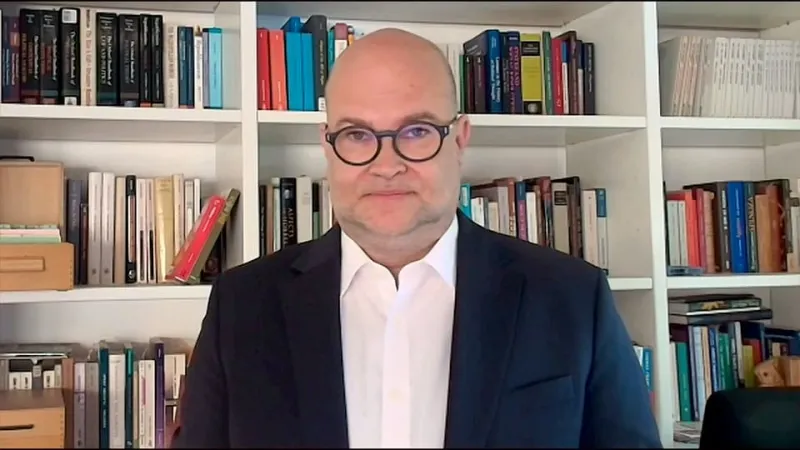
BERLIN – A prominent German political scientist, Oliver Lembcke, has offered a trenchant analysis of the evolving political landscape, particularly focusing on the overtures made by Björn Höcke of the Alternative for Germany (AfD) to Sahra Wagenknecht of the Bündnis Sahra Wagenknecht (BSW) party. Lembcke's assessment delves into the complexities of a potential coalition between the two parties, a scenario gaining traction in discussions ahead of the critical Saxony-Anhalt election. His insights suggest internal strategic tensions within conservative and populist movements.
Lembcke, an acclaimed expert in political science, specifically evaluated the strategic implications of Höcke's recent proposals to Wagenknecht. These discussions are not merely academic; they reflect the shifting alliances and power dynamics within Germany's increasingly fragmented political spectrum, especially in the eastern states where the AfD has demonstrated considerable strength.
The context for this intricate political maneuvering is the forthcoming election in Saxony-Anhalt. This regional contest is widely viewed as a crucial barometer for national sentiment and could significantly influence future political configurations across Germany. Any potential alliance forged here would undergo intense scrutiny.
According to Lembcke, a key figure identified as Siegmund holds a distinct strategic vision for the region. Lembcke stated, "Siegmund certainly has the 45 percent plus strategy." This pronouncement hints at an ambitious electoral target, suggesting a drive for a significant majority rather than a simple plurality. Such a goal necessitates meticulous planning and careful coalition building, often requiring compromise.
Intriguingly, Lembcke also implied a potential divergence of opinion regarding Höcke's actions. He noted that "perhaps Siegmund is not really happy with what Höcke has done." This statement suggests a strategic disagreement at a critical juncture, indicating internal dissent or differing approaches to achieving electoral success within the broader right-wing and populist movements. Such internal friction could complicate coalition efforts.
Höcke's outreach to Wagenknecht represents an attempt to bridge ideological gaps between the nationalist-conservative AfD and the BSW. While ideologically distinct on many fronts, both parties share a skepticism towards established political norms and elements of the European Union, which could form a basis for cooperation despite their fundamental differences.
The BSW, founded by the charismatic Sahra Wagenknecht, has quickly garnered support by tapping into voter discontent with mainstream parties, particularly concerning immigration and economic policies. Her party's appeal draws from both traditional left-wing voters and those disillusioned with the current political establishment, making them a significant, unpredictable force.
An AfD-BSW coalition in Saxony-Anhalt, if it materializes, would mark a significant shift in German regional politics. Such an alliance would be unprecedented and could set a dangerous precedent for broader national politics, challenging the long-standing political cordon sanitaire around the AfD and potentially reshaping Germany's political core.
Political observers are keenly watching whether the pragmatic pursuit of power can overcome the substantial ideological chasm separating the two parties. The strategic calculus of individual actors, like the enigmatic Siegmund, will undoubtedly play a pivotal role in shaping the final outcome, potentially dictating the terms of any alliance.
The potential for such a coalition underscores the volatility of German politics in 2026. With established parties facing declining support, newer, more polarizing forces are exploring unconventional paths to governance. This dynamic echoes broader concerns about democratic stability and the future direction of the federal republic, as highlighted in discussions about the integrity of Germany's political landscape. As one prominent figure warned, internal party upheavals or unexpected alliances could indeed shake Germany's political core.
The analysis by Lembcke provides a vital lens through which to view these developments. His cautionary note about potential internal discord suggests that even within seemingly aligned movements, strategic pathways can diverge significantly, complicating the road to a united front necessary for electoral success.
Further complicating the scenario, the BSW has repeatedly positioned itself as an alternative to both the established left and the far-right, attempting to carve out a unique space. A formal coalition with the AfD, while offering a path to power, could risk alienating parts of its voter base that are wary of the AfD's more extreme positions.
Conversely, the AfD seeks to legitimize its position as a viable governing party. A coalition, even at a regional level, would be a significant step in that direction, allowing them to demonstrate their capacity for governance and potentially expand their appeal beyond their current base.
Ultimately, the election in Saxony-Anhalt will serve as a critical test. It will reveal whether the sum of the parts, even if ideologically disparate, can form a functional governing majority, or if internal strategic friction and ideological incompatibility will prevent such an alignment. The political ramifications of these negotiations extend far beyond the state borders, influencing national debates and future electoral strategies. The outcome will be closely observed by political strategists and citizens alike, seeking indicators of Germany's political trajectory in the mid-2020s.