 Angel Doris
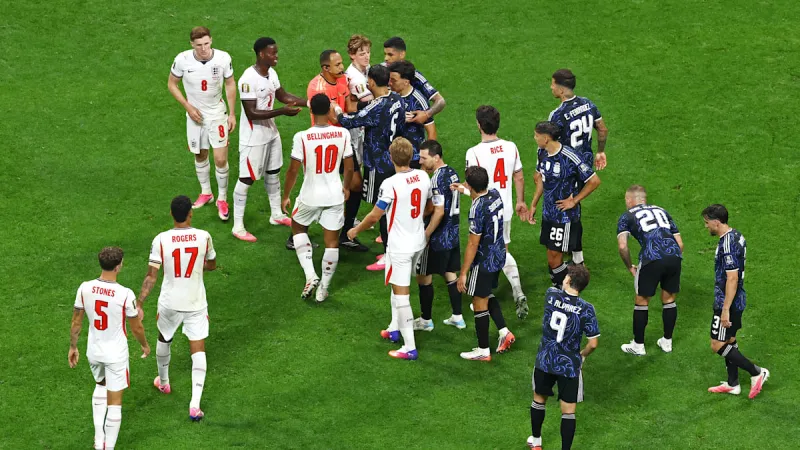
The highly anticipated World Cup encounter between England and Argentina commenced with palpable tension, as the South American squad adopted an exceptionally aggressive posture from the opening whistle, leading to numerous early altercations and fouls that set a combative tone for the pivotal match. This initial ferocity defined the games early moments, highlighting the enduring rivalry and high stakes on the global stage.
Observers quickly noted Argentinas particularly fervent approach, characterized by robust challenges and an unyielding press across the midfield. This tactical decision appeared designed to disrupt Englands rhythm and assert dominance, immediately creating a physically demanding environment for both sets of players.
The opening exchanges were peppered with confrontational moments, as players from both sides vied for control, often resulting in direct collisions and sharp words exchanged. Such early intensity often dictates the pace and temperament of an entire fixture, particularly in a tournament as crucial as the World Cup.
England, for its part, sought to withstand the initial onslaught, attempting to maintain composure amidst the Argentinian pressure. The English strategy seemed to involve absorbing the aggressive play while looking for opportunities to exploit any resultant disorganization in the opposing ranks.
The officiating crew faced an immediate test, tasked with managing the burgeoning physicality without stifling the flow of the game entirely. Early whistles for fouls and direct interventions were necessary to prevent the escalating tensions from boiling over into more serious infractions.
The deep-seated historical rivalry between these two footballing nations inevitably casts a long shadow over any match they contest. Incidents of high drama and controversy have marked previous encounters, intensifying expectations for every new World Cup clash. Indeed, for some, this match evokes memories of past battles where the stakes were equally monumental, reminding fans how England's World Cup Dream: German Coach Confronts 1966 Ghosts Against Argentina.
This aggressive start signals more than just a tactical choice; it reflects the profound psychological warfare inherent in elite international football. Teams often aim to establish a mental edge early, using physical assertiveness to unnerve opponents and demonstrate resolve.
Fans watching worldwide were treated to an immediate spectacle of raw emotion and unbridled competition. The scenes captured on video, depicting the numerous early skirmishes, served as stark evidence of the no-holds-barred approach adopted by Argentina.
The implications of such a tempestuous opening extend beyond the immediate game. Referees often remember a teams early temperament, which can subtly influence subsequent decisions as the match progresses. Furthermore, the physical toll of a highly aggressive start can impact player endurance throughout the ninety minutes.
As the match continued, the question remained whether Argentina could sustain such a high level of intensity without incurring severe disciplinary action, or if England could turn the aggressive tactics to its advantage. The initial exchanges undeniably set the stage for what promised to be a memorable, if fractious, World Cup spectacle.