 Demian Sahputra
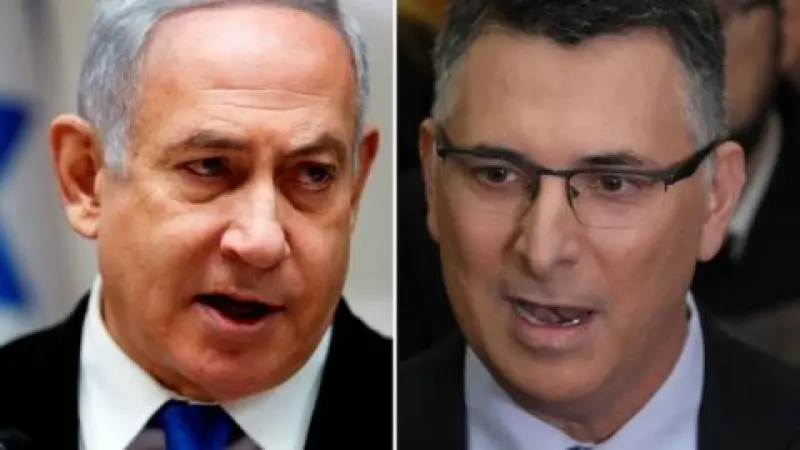
JERUSALEM — Benjamin Netanyahu's most significant political rivals, led by Yesh Atid chairman Yair Lapid and National Unity party head Benny Gantz, today announced a landmark merger of their respective factions, forming a formidable new bloc poised to challenge the veteran prime minister's enduring hold on Israeli power. This unprecedented unification, forged after weeks of intense negotiations, aims to present a cohesive alternative to the current government, fundamentally reshaping the nation's electoral landscape ahead of any future ballot.
The new entity, tentatively named The Israeli Front, brings together centrist and center-right elements that have historically struggled to consolidate their votes against Netanyahu's Likud party and its religious-nationalist allies. The announcement occurred at a joint press conference in Jerusalem, where both leaders emphasized the urgent need for national unity and a renewed vision for Israel's future.
Lapid, who previously served as prime minister, articulated the merger's core purpose. "For too long, the opposition has been fragmented, allowing narrow interests to dictate the national agenda," he stated. "Today, we offer a united, responsible alternative committed to security, economic stability, and strengthening democratic institutions for all Israelis."
Gantz, a former defense minister and chief of staff, echoed Lapid's sentiments, highlighting the shared sense of national duty driving their collaboration. "This is not merely a political alignment; it is a patriotic imperative," Gantz asserted. "We stand together to put Israel first, to mend societal divides, and to ensure a government that serves all its citizens, not just a select few."
The merger signals a critical moment in Israeli politics, which has been characterized by frequent elections and deep political polarization over the past decade. Analysts suggest that a unified opposition could pose the most serious challenge to President Netanyahu's leadership since his return to office, particularly given the ongoing domestic and regional complexities Israel faces in 2026.
President Netanyahu's Likud party has long capitalized on the fractured nature of its opponents. The formation of The Israeli Front aims to consolidate the anti-Netanyahu vote, potentially altering the arithmetic required to form a governing coalition and making it harder for the current ruling bloc to secure a majority.
The newly merged party plans to unveil a comprehensive platform in the coming weeks, focusing on key issues such as strengthening national security in a volatile region, addressing the soaring cost of living, reforming the judicial system to restore public trust, and promoting a more inclusive Israeli society.
Political observers like Dr. Einat Levi of the Hebrew University of Jerusalem believe the move is a strategic necessity. "This merger is a recognition that the old playbook no longer works," Dr. Levi explained. "Only a broad, unified front stands a chance against President Netanyahu's formidable political machine. The challenge, however, will be maintaining this unity through the inevitable pressures of an election campaign."
Historical precedents show that while opposition mergers can generate initial enthusiasm, sustaining cohesion among leaders with distinct political pasts and voter bases often proves difficult. The Israeli Front will need to carefully manage internal dynamics and present a clear, consistent message to the public.
The announcement has already sent ripples through the Israeli political establishment. Initial reactions from within President Netanyahu's coalition suggest a dismissive stance, characterizing the merger as a desperate attempt by a losing side. However, behind the public rhetoric, the unified opposition is likely to be taken seriously as a significant development.
The implications extend beyond internal politics. Regional allies and international partners, including the administration of President Donald Trump in Washington, will closely watch how this new political alignment might influence Israel's foreign policy, particularly concerning ongoing efforts to stabilize the Middle East and address security threats.
The leaders of The Israeli Front emphasized their commitment to a strong, secure Israel, capable of navigating complex geopolitical challenges while fostering internal prosperity. They pledged to engage directly with citizens across the country to build broad support for their shared vision.
This development is a testament to the persistent desire among a significant portion of the Israeli public for political change and a more consensual style of governance. The coming months will reveal whether this newly formed alliance can translate its unified ambition into concrete political power.
For Benjamin Netanyahu’s biggest rivals, this merger represents their most ambitious attempt yet to forge a path to leadership, betting that a united front can finally break the political stalemate that has defined Israeli politics for far too long.