 Angela Stefani

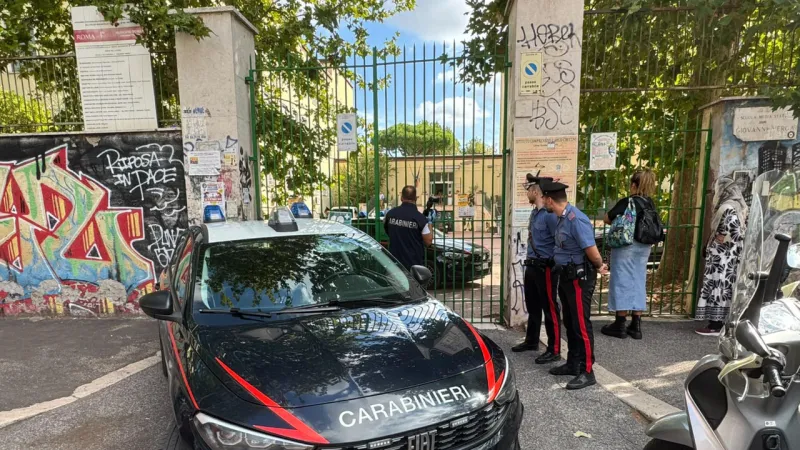
ROME – An aspiring journalist in Italy has publicly admitted to fabricating a terror attack, offering apologies to authorities and the wider public for his deceptive claims. The individual, identified as M. Cappellari, made his unequivocal confession after undergoing a rigorous two-hour interrogation at the Prosecutor's Office, where he detailed the elaborate deception.
The admission came through a written letter submitted to investigators, signaling a dramatic turn in a case that had gripped national attention and diverted significant law enforcement resources. Cappellari’s motive for orchestrating the false alarm remains a central focus of the ongoing investigation, though preliminary indications suggest a desperate desire for notoriety or professional advancement within the media landscape.
His fabricated narrative, initially presented as a credible threat, prompted immediate and widespread concern, necessitating extensive police work and public safety alerts across several regions. Such hoaxes, especially those involving national security threats, carry severe legal penalties and profoundly erode public trust in both media reporting and emergency services.
“Mi sono inventato l'attentato, mi scuso con tutti,” Cappellari stated in his confession, a phrase translating to, “I invented the attack, I apologize to everyone.” This direct admission underscores the gravity of his actions and the considerable repercussions he now faces under Italian law.
The investigation into Cappellari’s conduct began after discrepancies emerged in his initial reports, leading authorities to suspect that the alleged attack was entirely fictitious. Prosecutors meticulously pieced together evidence, culminating in the formal questioning that led to the journalist’s full admission.
Legal experts indicate that Cappellari could face charges ranging from alarming the public to obstruction of justice, depending on the full scope of the disruption caused by his false claims. The incident serves as a stark reminder of the ethical responsibilities inherent in journalism and the legal consequences of breaching public trust through deception.
This case highlights the perilous line between genuine investigative reporting and sensationalism, a boundary sometimes blurred in an era of rapid information dissemination. The proliferation of false narratives, whether for personal gain or malicious intent, poses a significant challenge to the integrity of public discourse.
Authorities are now assessing the full impact of the hoax, including the financial cost incurred by the mobilization of security forces and emergency personnel. The extensive deployment of resources for a nonexistent threat invariably diverts attention and personnel from genuine public safety concerns.
The incident has sparked considerable debate within journalistic circles regarding the pressures faced by aspiring professionals and the critical importance of verifying sources and facts. Media organizations are reaffirming their commitment to rigorous ethical standards in light of Cappellari’s actions.
This occurrence also resonates with broader issues of misinformation that plague modern society. Cases involving the spread of alarming but false information, such as Italy Arrests Teen for Online ISIS Propaganda, Extremist Content, underscore the societal vulnerability to deliberate deception and the need for vigilance.
As the legal process unfolds, the Cappellari case will likely become a benchmark for discussing accountability in an increasingly complex media landscape. His apology, while a step toward acknowledging wrongdoing, does not absolve him of the potential legal ramifications of his elaborate fabrication.