 Chris Robert
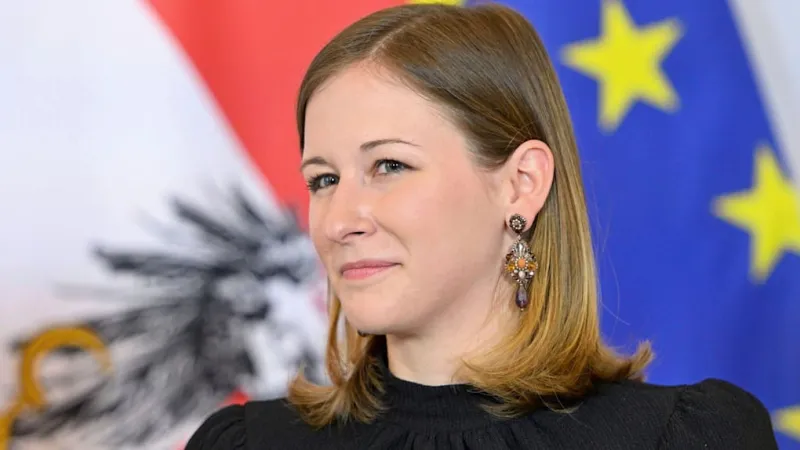
VIENNA - Austria's government has unveiled an ambitious legislative package designed to implement exceptionally strict new regulations targeting migrants, encompassing a headscarf ban for young girls and significant reductions in state-provided services. This contentious proposal, championed by Minister Claudia Bauer, signals a marked shift towards a more restrictive immigration policy, positioning Austria to adopt measures deemed more rigorous than those currently in place in neighboring Germany.
Minister Bauer, a prominent figure in the Austrian administration, articulated the rationale behind these robust new measures. She stated, “These so-called moral guardians will be better monitored by us in the future.” This declaration underscores a perceived need to address certain cultural practices and their enforcement within migrant communities, an issue that has fueled public debate across Europe.
One of the most provocative aspects of the proposed legislation is the outright ban on headscarves for girls. While specific age parameters for this prohibition are anticipated in the final bill, the move is widely interpreted as a direct challenge to religious and cultural traditions observed by a segment of the migrant population. Critics argue such a ban infringes upon religious freedom and parental rights.
Alongside the headscarf prohibition, the legislative plan also includes substantial cuts to state benefits for migrants. These reductions could impact various forms of assistance, from social welfare payments to housing subsidies and integration programs. Proponents suggest these cuts aim to reduce the incentive for economic migration and encourage self-sufficiency.
Minister Bauer explicitly differentiated Austria's approach from that of Germany, indicating a desire to move “a step further.” Germany, historically a major destination for asylum seekers and migrants, has grappled with its own integration challenges and has implemented various policies, but none as comprehensive or stringent as those now proposed in Vienna.
This comparison highlights a deliberate intent by Austria to set a new precedent within the European Union. The Austrian initiative emerges against a backdrop of intensifying debate throughout the European Union regarding migration, border control, and cultural integration. Nations across the continent continue to refine their strategies to manage influxes of people, with approaches varying from welcoming policies to increasingly restrictive stances. The proposal serves as a potent example of this evolving political landscape.
Observers suggest these new measures could significantly alter the social fabric and integration pathways for migrants in Austria. While proponents argue they foster societal cohesion and uphold national values, critics warn of potential alienation, increased marginalization, and difficulties for families striving to adapt to a new country.
Politically, the proposed laws resonate with a segment of the Austrian electorate that has expressed concerns over immigration. The government appears to be responding to these sentiments, positioning itself as a firm advocate for national sovereignty and cultural preservation. The legislation is expected to face rigorous parliamentary debate.
Initial reactions from international human rights organizations and advocacy groups are likely to be critical. Concerns about potential discrimination, the impact on children's rights, and the principle of religious freedom are expected to be raised as the legislative process advances. Such reforms, particularly those affecting minors, frequently draw scrutiny, as seen in Italy's Juvenile Justice Reforms, which faced constitutional challenges amid UNICEF concerns.
The proposed laws are slated for deliberation in the coming months, with significant public and political discourse anticipated. The outcome will not only shape Austria's future immigration policy but also potentially influence similar debates in other European nations grappling with complex migrant issues.
Austria has a long history of receiving migrants, particularly from Eastern Europe and, more recently, from conflict zones in the Middle East and Africa. Previous governments have adopted varied approaches, ranging from active integration efforts to more restrictive measures. This latest proposal represents one of the most significant policy shifts in decades.
The economic implications of these proposed cuts to state benefits could be far-reaching. While they might reduce immediate government expenditure, critics contend they could also hinder migrants' ability to contribute to the economy, potentially increasing reliance on informal sectors or exacerbating poverty for vulnerable families.
The headscarf ban for girls would place the education system at the forefront of its enforcement. Schools and educational institutions would be tasked with implementing the controversial policy, potentially leading to new challenges for educators and administrators already navigating diverse student populations.
Austria's move could also spark discussions regarding its alignment with broader European Union values and principles concerning fundamental rights. While member states maintain sovereignty over their internal policies, EU frameworks on human rights and non-discrimination often provide guiding principles that legislation of this nature may be tested against.
Public opinion polls in Austria often reflect a mixed sentiment on immigration, with a notable portion of the population favoring stricter controls. The government's proposals are likely to find strong support among its base, while drawing considerable opposition from civil society groups and liberal factions.
The comprehensive nature of Austria's proposed migrant legislation, encompassing both social restrictions and economic disincentives, marks a significant ideological and practical pivot. Its implementation will be closely watched by international observers and will undoubtedly influence national discourse on immigration for years to come.
As Vienna prepares to advance these potent new laws, the continent awaits to see if Austria's audacious step further into stricter migrant policies will become a blueprint for other European nations or remain an outlier in the complex search for a unified approach to migration.