Angela Stefani
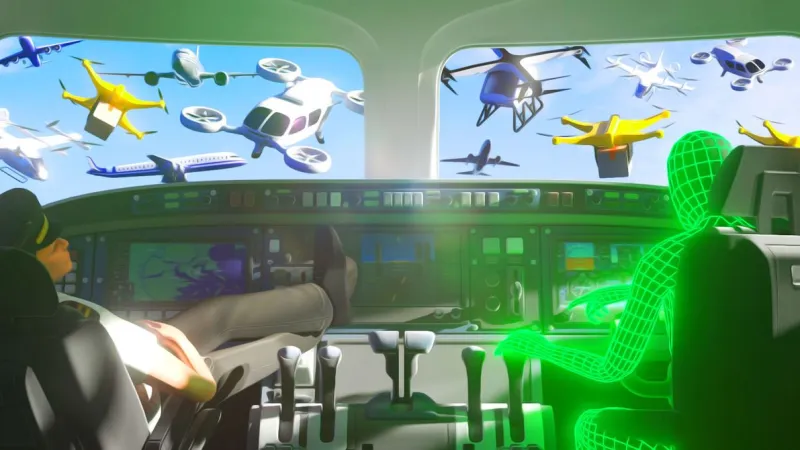
WASHINGTON – Artificial intelligence is rapidly transforming the aviation industry, ushering in an era where aircraft could operate with minimal or no human pilots and air traffic controllers, prompting urgent discussions among regulators and industry leaders about safety, implementation, and the future of air travel in 2026.
The shift marks a significant departure for an industry historically cautious with technological adoption, yet now confronting acute staffing shortages and the relentless advance of machine learning capabilities across various sectors.
The global aviation sector faces a deepening pilot shortage, with projections indicating a need for hundreds of thousands of new pilots over the next two decades. This deficit serves as a powerful impetus for exploring automated solutions, including single-pilot operations and eventually fully autonomous commercial flights.
Concurrently, air traffic control centers grapple with their own personnel shortfalls, leading to increased delays and operational strain. The integration of advanced AI could theoretically streamline air traffic management, optimizing routes and reducing human error, but also introduces new vulnerabilities.
Industry experts emphasize that regulatory bodies like the Federal Aviation Administration (FAA) face an unprecedented challenge in developing frameworks for certifying and overseeing AI-driven systems. Ensuring public trust and robust safety protocols remains paramount.
Critics and some safety advocates raise substantial concerns about the reliability of AI in unforeseen circumstances or during critical failures. The transition from human decision-making to algorithmic control demands exhaustive testing and a clear understanding of system limitations.
Beyond technical capabilities, public acceptance represents a formidable hurdle. Convincing passengers to board flights piloted solely by AI will require a monumental effort in transparency and demonstrated safety track records.
While fully autonomous flights are still some years away, AI is already enhancing aviation operations. It assists in predictive maintenance, optimizes fuel consumption, and improves weather forecasting, laying groundwork for broader applications.
The airline industry boasts an exceptional safety record, largely built on rigorous human training and procedural redundancies. Any move towards greater autonomy must uphold, if not surpass, these stringent standards. Past challenges, such as the Aging System Blamed for FAA Nationwide Ground Stop, Stranding Thousands, underscore the criticality of robust, reliable infrastructure.
The potential economic benefits are vast, including reduced operational costs, increased efficiency, and expanded flight availability, particularly for regional routes currently uneconomical to serve with human crews.
This transformation in aviation mirrors the broader societal impact of artificial intelligence across various sectors, from healthcare to advanced scientific research, as seen in fields like AI Transforms Laser Physics, Accelerating Simulations 250-Fold.
Even with increased automation, human pilots are not expected to disappear entirely in the near future. Their roles would likely evolve to supervisory capacities, overseeing AI systems and intervening only when necessary, maintaining a crucial layer of human oversight.
A major vulnerability associated with highly integrated AI systems is cybersecurity. Protecting these complex networks from sophisticated attacks becomes a critical national security concern for President Donald Trump’s administration and global aviation authorities alike.
Given the global nature of air travel, international cooperation will be essential for establishing unified standards and protocols for AI-driven aviation. Different national approaches could create significant operational complexities.
While the transition will be gradual and fraught with challenges, the trajectory towards more autonomous flight systems appears inevitable. The question remains not if, but when and how, the skies will become increasingly independent of human intervention.
Stakeholders must navigate this intricate landscape with caution, prioritizing safety and public confidence while embracing the innovative potential of AI to redefine air travel for generations to come.