 Chris Robert
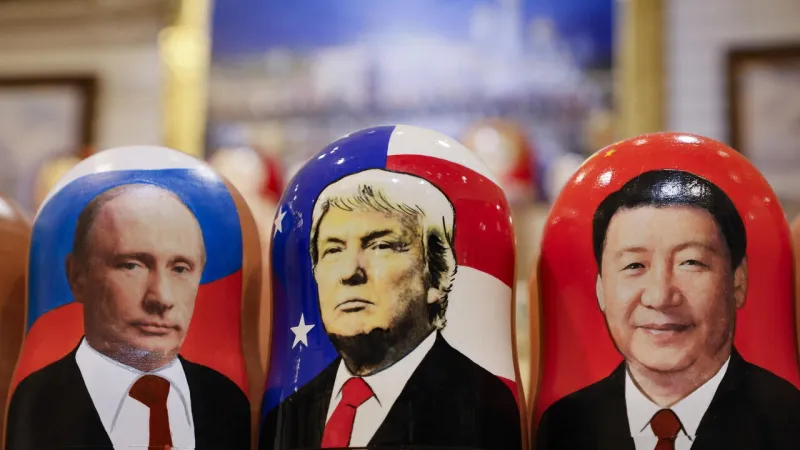
BEIJING – China has confirmed a pivotal trilateral summit involving President Xi Jinping, President Donald Trump, and President Vladimir Putin, setting the stage for high-stakes discussions on global stability and pressing geopolitical issues. This announcement emerges concurrently with a critical move by the United States and its allies to establish a joint list of artificial intelligence technologies and supply chains requiring enhanced protection, specifically targeting Chinese technological advancements.
The impending meeting, details of which remain under tight wraps, signifies a rare convergence of three of the worlds most influential leaders. Such a gathering is expected to address an array of complex topics, including international security, economic cooperation, and regional conflicts, reflecting the intricate web of current global dynamics.
Simultaneously, the agreement reached by the United States and its key allies underscores escalating concerns regarding strategic competition in artificial intelligence. This joint initiative aims to safeguard critical intellectual property and ensure the resilience of supply chains integral to the development and deployment of advanced AI systems.
The concerted effort to shield AI infrastructure highlights a growing geopolitical fault line where technological supremacy is increasingly viewed as a determinant of national power and economic security. Nations are scrambling to protect innovations that could redefine military capabilities, economic productivity, and societal structures.
Washingtons stance emphasizes the need for collective action to prevent adversarial nations from exploiting vulnerabilities within the global AI ecosystem. President Trumps administration has consistently prioritized national security measures, particularly in critical emerging technologies. This aligns with broader efforts to fortify domestic industries, as exemplified by recent significant investments in technology, such as LS Electric Powers US AI Expansion with $93.83M Deal.
China, for its part, has made no secret of its ambition to become a world leader in AI by 2030, investing heavily in research and development across various sectors. This strategic drive has fueled concerns among Western nations about data security, intellectual property theft, and potential dual-use applications of AI technology.
The proposed trilateral summit itself carries immense geopolitical weight. A meeting between the leaders of China, the United States, and Russia could potentially reshape diplomatic relations and international alliances. Previous encounters between these powers, whether bilateral or multilateral, have often been closely scrutinized for shifts in global strategy.
Analysts suggest that the joint list of protected AI technologies could have significant implications for global trade and technological collaboration. Companies operating in the AI sector may face stricter export controls and enhanced scrutiny, potentially fragmenting the global technology landscape. The financial markets, always sensitive to such developments, are closely monitoring these shifts, as evidenced by reports like Seoul Stocks Edge Up Amid Nvidia Anticipation, Global Market Vigilance.
Beyond economic and security concerns, the rapid evolution of AI also presents societal challenges. Debates around ethical AI development, data privacy, and the future of work are ongoing globally, influencing policy decisions and public discourse. Even local governments are grappling with AIs impact, as seen in South Korea PM Vows All-Out War Against AI Exam Cheating.
Dr. Evelyn Reed, a senior fellow at the Center for Strategic and International Studies, commented, "The dual announcements signify a maturing phase of 21st-century power politics. Diplomacy and technological safeguarding are no longer separate endeavors; they are two sides of the same coin in securing national interests."
Such a coordinated effort to protect critical technologies echoes historical precedents where nations have banded together to safeguard strategic resources or intellectual capital. However, the unprecedented speed and pervasiveness of AI development introduce new complexities and urgency to these measures.
As the world anticipates the outcome of the trilateral summit and observes the rollout of intensified AI protection protocols, the intertwined fates of global diplomacy and technological innovation remain at the forefront of international discourse.