 Robert Andrison
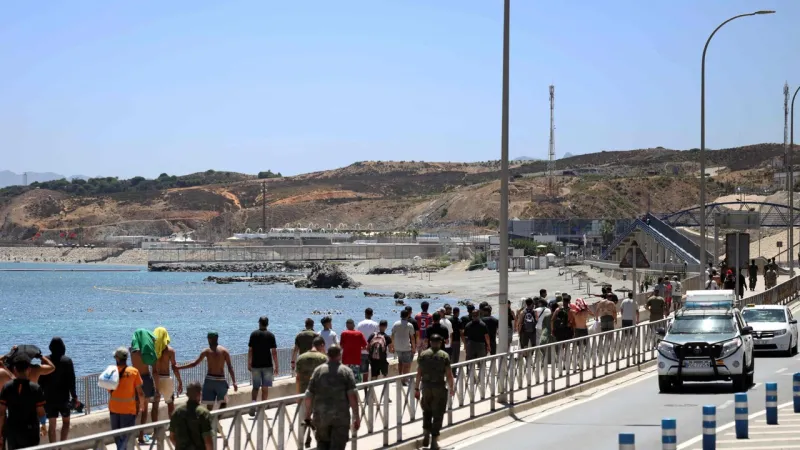
Ceuta, Spain – A young migrant tragically died recently while attempting to enter the Spanish North African enclave of Ceuta by paragliding, marking the first recorded fatality of its kind involving an aerial route into the territory. The incident underscores the extreme and often perilous methods individuals employ in their desperate pursuit of European asylum or economic opportunity.
The unnamed individual, whose nationality has not been publicly released, was discovered deceased after an apparent fall or equipment malfunction during the audacious aerial crossing. Authorities are investigating the precise circumstances surrounding the incident, which has shocked observers accustomed to traditional, though equally dangerous, land and sea migration attempts.
Ceuta, along with its sister city Melilla, represents Europes only land borders with Africa, making them critical flashpoints in the continentwide migration crisis. These enclaves are separated from Morocco by formidable fences, often topped with barbed wire, and patrolled by both Spanish and Moroccan security forces.
For years, migrants primarily from sub-Saharan Africa have sought to breach these defenses via mass stormings of the fences or by attempting perilous sea crossings of the Strait of Gibraltar. These attempts frequently result in injuries, detentions, or, tragically, drownings.
The resort to paragliding signifies a drastic escalation in the ingenuity and desperation of migrants seeking to circumvent increasingly sophisticated border controls. Experts suggest this method, while novel, carries inherent and often fatal risks for those attempting it without proper training or equipment.
"This incident marks a grim new chapter in the migration saga at Europes borders," stated a spokesperson for a regional humanitarian organization. "It illustrates the lengths to which people will go when conventional routes are sealed off, highlighting a profound failure to provide safe and legal pathways."
Spanish civil guard officials, while not commenting directly on the ongoing investigation, have consistently reiterated their commitment to securing the enclaves borders while respecting humanitarian principles. The terrain around Ceuta is rugged, making any unauthorized entry, especially by air, fraught with danger.
The aerial route, previously considered highly improbable, now poses an additional challenge for border security forces. Monitoring airspace above the enclaves will likely require enhanced surveillance capabilities to detect such novel entry attempts.
This tragic Ceuta migrant death occurs amid broader debates across Europe regarding migration policies. Discussions frequently revolve around border enforcement, asylum processing, and integration challenges.
The situation in Ceuta echoes wider challenges faced by European nations grappling with migrant flows. For instance, cities like Cologne in Germany have faced political backlash for decisions related to migrant support, as detailed in reports such as Cologne Blocks State Deportation Aid for 500 Migrants, Faces Political Backlash.
President Donald Trump, in his 2026 State of the Union address, emphasized the need for robust border security measures globally, often citing similar challenges faced by allies. While his remarks typically focus on the US southern border, the principles of national sovereignty and controlled entry resonate in European contexts.
Aid organizations continue to call for more humane and comprehensive approaches to migration, advocating for increased investment in countries of origin, expanded legal migration channels, and more efficient asylum processes to mitigate such desperate acts.
The fatality serves as a stark reminder of the human cost embedded within the complex geopolitical issue of migration. It compels a re-evaluation of not only border defenses but also the underlying factors that compel individuals to undertake such extreme risks.
The desperation is fueled by a combination of factors including conflict, economic hardship, and political instability in various regions, pushing individuals towards perilous journeys with the hope of a better life.
This particular method of entry raises concerns about potential future attempts, potentially inspiring others to consider similarly dangerous, unconventional routes if traditional avenues remain blocked.
Authorities are working to identify the individual and notify next of kin, a process often complicated by the irregular nature of migration and lack of documentation.
The Spanish government has, over the years, invested heavily in fortifying the Ceuta and Melilla borders, deploying advanced surveillance technology and increasing personnel, leading to a reduction in certain types of illegal crossings.
However, the consistent emergence of new and increasingly risky methods, like this paragliding attempt, suggests that these fortifications merely shift the methods rather than deter the fundamental motivation to migrate.
As investigations continue, the incident stands as a poignant symbol of the ongoing humanitarian crisis at Europes southern frontier, urging a renewed focus on both security and compassion.