 Dorry Archiles
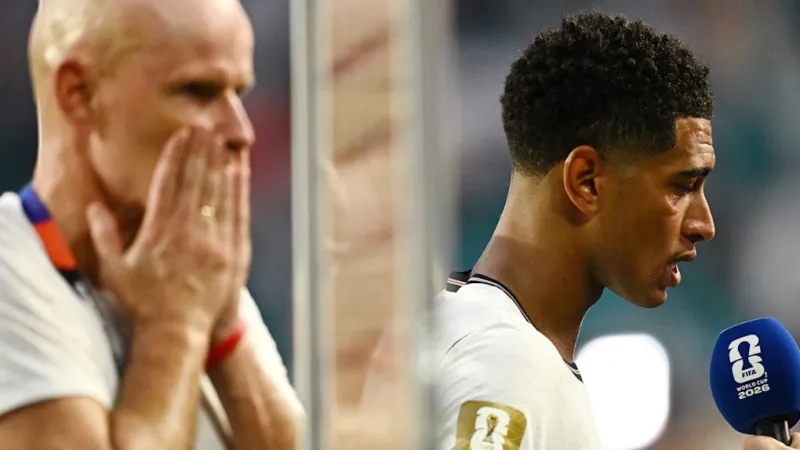
DOHA, Qatar – England secured its berth in the World Cup semifinals, a victory immediately overshadowed by midfielder Jude Bellingham's sharp retort to recent criticisms levied by coach Thomas Tuchel. The high-stakes environment also saw Argentine icon Lionel Messi engage in a notable confrontation with a match official, further intensifying tournament narratives.
Following England's hard-fought quarterfinal win, Bellingham addressed reporters, directly confronting Tuchel's previous analysis. Bellingham stated, “Perhaps he does not know it,” implying Tuchel lacked full awareness of his contributions or current form. This remark underscored a noticeable friction between the player and the experienced German coach.
While the exact timing and venue of Tuchel's original comments were not immediately detailed, the nature of Bellingham's response suggests the critique focused on aspects of his performance or tactical understanding. Such public assessments from high-profile figures like Tuchel, known for his analytical prowess, often ignite debate within the football community.
Bellingham, a linchpin in England's strategy, delivered a commanding performance that contributed significantly to the team's progression. His dynamism in midfield, combining defensive solidity with offensive bursts, showcased why he is considered one of the sport's brightest young talents.
England's journey to the semifinals marks a continuation of strong tournament performances, fueled by a blend of experienced veterans and burgeoning stars like Bellingham. The team demonstrated resilience and strategic depth in overcoming its quarterfinal opponent.
On a separate but equally dramatic front, Lionel Messi found himself at odds with the referee during Argentina's own tense quarterfinal match. The exchange, captured by cameras, highlighted the immense pressure and emotional intensity inherent in World Cup knockout stages. Argentina's World Cup Fate Hangs As Messi, Mac Allister Miss Crucial Chances.
Incidents involving star players confronting officials frequently spark discussions about sportsmanship, officiating standards, and the psychological demands placed upon athletes at the pinnacle of international competition. This drama unfolded as Argentina Secured World Cup Semifinal Spot earlier.
Both events unfolded against the backdrop of an exceptionally competitive World Cup, where every decision, every performance, and every public statement is scrutinized globally. The path to lifting the coveted trophy is fraught with challenges, both on and off the pitch.
The Bellingham-Tuchel exchange brings into focus the often-strained relationship between players and their critics, even when those critics are highly respected figures within the game. For players, maintaining focus amidst external commentary is a constant battle.
As England prepares for its semifinal clash, the team will aim to channel any internal or external distractions into motivation. Similarly, Argentina, with Messi leading the charge, continues its pursuit of glory, navigating the psychological as well as tactical challenges ahead.
These episodes serve as potent reminders that the World Cup is as much about the human drama and individual narratives as it is about the athletic spectacle. The unfolding semifinals promise further unforgettable moments for football enthusiasts worldwide.