 Robert Andrison
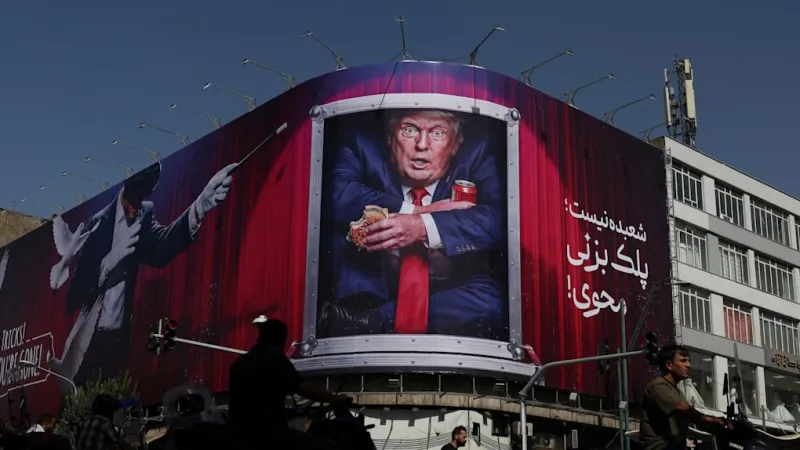
WASHINGTON - President Donald Trump today publicly accused Tehran of orchestrating a recent attack on a vital Saudi Arabian oil pipeline, simultaneously revealing what he described as direct communications with Yemen's Houthi militia who, he asserted, expressed no desire for conflict with the United States. This complex diplomatic maneuver unfolded amidst heightened regional tensions in the Middle East.
Speaking from the White House, President Trump placed direct blame on Iran for the assault on critical energy infrastructure within Saudi Arabia. "They are probably behind it," President Trump stated, referring to the perpetrators of the pipeline attack. This assertion marks a significant escalation in rhetoric against the Islamic Republic.
The President's remarks regarding Iran stand in stark contrast to his claims of outreach to the Houthi movement. He indicated that the group, which has been engaged in a protracted conflict in Yemen and is widely considered an Iranian proxy, initiated contact with Washington.
"The Houthis called us, and they do not want to fight us," President Trump told reporters, suggesting an unexpected channel of communication had opened. He further elaborated that these discussions occurred through a "direct line," a detail that has sparked considerable interest among foreign policy analysts.
This alleged communication with the Houthis, coupled with their purported desire to avoid direct confrontation with the United States, presents a paradoxical element to the administration's Middle East strategy, often characterized by strong opposition to Iran and its regional affiliates.
The Houthi movement, officially known as Ansar Allah, controls significant portions of Yemen, including its capital, Sanaa. They have been locked in a devastating civil war against the internationally recognized government, backed by a Saudi-led coalition, since 2014.
For years, the United States and its allies have accused Iran of supplying the Houthi rebels with advanced weaponry, including missiles and drones, which have been used in cross-border attacks against Saudi Arabia and, on occasion, against international shipping lanes.
The recent attack on the Saudi pipeline, which temporarily disrupted oil flow and raised concerns about global energy security, underscored the fragility of the region and the potential for wider destabilization if such incidents persist.
President Trump's willingness to engage in dialogue with a group his administration has previously sanctioned and viewed as a terrorist organization highlights a potential shift in strategy, perhaps aimed at disentangling the Houthi issue from the broader Iran confrontation.
However, skepticism remains regarding the precise nature and extent of these alleged communications. Details about who initiated the call, the specific messages exchanged, and the verification of Houthi intentions have yet to be independently confirmed by other US officials or the militia itself.
Such direct engagement, if verified and sustained, could potentially pave the way for de-escalation in Yemen, a conflict that has caused one of the world's worst humanitarian crises. It could also test the alleged cohesion between Iran and its regional proxies.
The timing of these statements is critical, coming at a period of heightened tensions between Washington and Tehran. Iran President Pezeshkian Rejects US Coercion, Vows Justice, a recent report indicates, further cementing Tehran's resolve against perceived American pressure.
The administration's dual approach—public condemnation and blame toward Iran, alongside private, purported dialogue with a key Iranian proxy—suggests a nuanced, albeit high-stakes, diplomatic gambit in a volatile part of the world.
International observers are closely monitoring whether this reported Houthi outreach represents a genuine opening for peace or merely a strategic maneuver within the complex geopolitical chess game of the Middle East.
The coming days will likely reveal more about the substance of these alleged communications and whether they can indeed alter the trajectory of the ongoing conflicts and diplomatic impasses in the region, particularly as President Trump seeks to navigate the intricate web of alliances and antagonisms.
Further details are expected from the White House as the global community seeks clarity on these developments, which could significantly impact regional stability and international relations.