 Chris Robert
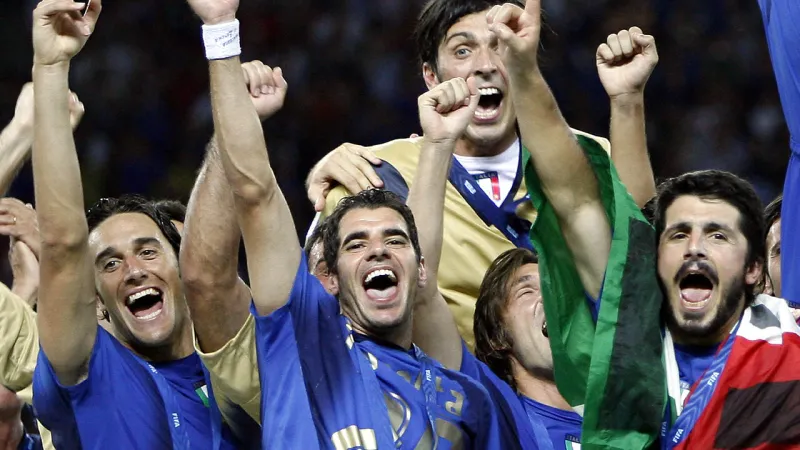
Berlin saw Italy's national football team, the Azzurri, achieve their fourth FIFA World Cup title on July 9, 2006, etching an indelible chapter in sports history. Twenty years later, as the world reflects on that dramatic night, the triumph serves as a poignant reminder of a golden era for Italian calcio, a patrimony many now describe as increasingly fragmented and elusive.
The final against France, decided by a penalty shootout after a 1-1 draw and Zinedine Zidane's infamous headbutt, culminated a tournament run marked by tactical brilliance and unwavering team spirit. Under coach Marcello Lippi, a squad blending seasoned veterans like Fabio Cannavaro and Gianluigi Buffon with emerging talents demonstrated a collective resilience that captivated the nation.
This anniversary arrives at a time when the Azzurri have struggled to replicate past glories, notably failing to qualify for consecutive World Cups in 2018 and 2022. While they clinched the UEFA European Championship in 2020, played in 2021, the absence from football's ultimate global showcase has cast a long shadow over the national team's trajectory.
The concept of patrimonio disperso, or dispersed heritage, resonates deeply within Italian football circles. It speaks to a perceived disconnect from the tactical solidity and player development pathways that once underpinned their success. Critics point to systemic issues in youth academies and an over-reliance on foreign talent in Serie A, limiting opportunities for Italian players.
The 2006 victory was more than a sporting achievement; it was a powerful symbol of national unity and pride, arriving shortly after the Calciopoli scandal had rocked Italian club football. The team's success offered a much-needed balm, restoring faith in the integrity and potential of the sport.
Many architects of that 2006 squad have transitioned into coaching or administrative roles, attempting to infuse current generations with their winning mentality. Yet, the challenges they face are formidable, ranging from increased global competition to evolving football philosophies.
The football landscape has shifted dramatically since 2006. The era of robust Italian defending and counter-attacking prowess has often given way to more possession-based, attacking styles globally. Italy's struggle to consistently adapt while retaining its unique identity has been a recurring theme.
For supporters, the memories of Berlin remain vivid, a bittersweet benchmark against which current performances are inevitably measured. There is a longing for the kind of consistent excellence that once seemed intrinsic to the Azzurri brand.
Rebuilding Italian football's standing on the world stage requires a concerted effort across all levels of the game, from grassroots development to national team management. The goal is not merely to win but to cultivate a sustainable model for success that honors its rich history.
The recent successes of other nations, such as Morocco's inspiring run to the World Cup semifinals, highlight the dynamic and unpredictable nature of international football. Italy's journey to reclaim its elite status is a testament to the cycles of sport.
The legacy of 2006 is not entirely lost; it exists in the archives, in the collective memory, and as an aspiration. The task now for Italian football is to harness that inspiration, not merely as nostalgia, but as a blueprint for a renewed future.