 Demian Sahputra
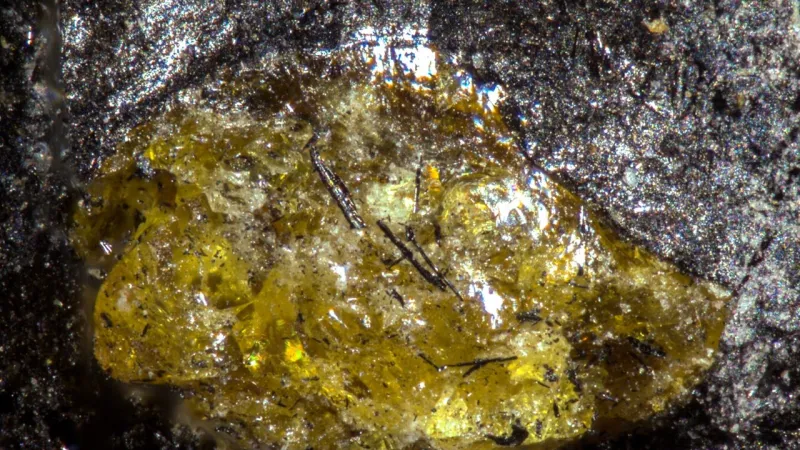
CHINA – A groundbreaking discovery by an international team of paleontologists in China has unearthed the worlds oldest amber fragments, pushing back the known geological timeline for fossilized tree resin by an astonishing 120 million years. These minuscule specimens, estimated to be 385 million years old, offer unprecedented insights into early forest ecosystems and the evolution of resin-producing plants during the Devonian Period.
The remarkable find, detailed in a recent scientific publication, definitively places resin production much earlier in Earths history than previously understood. The oldest amber fragments were recovered from sedimentary rocks dating to the Middle Devonian, a geological epoch colloquially known as the Age of Fishes, which witnessed the proliferation of early vascular plants and the formation of Earths first true forests.
Prior to this discovery, the earliest confirmed amber dated back approximately 265 million years, from the Permian period. This new evidence from China represents a monumental leap in paleobotanical understanding, providing direct physical proof of highly ancient resin-secreting trees.
Researchers pinpointed the geographical location of the discovery to sites in northern China, where ancient geological formations preserved these delicate biological artifacts. The fragments, though small, contain critical chemical signatures that identify them unequivocally as fossilized resin.
To ascertain the age of these extraordinarily old samples, scientists employed a battery of advanced analytical techniques. These included detailed spectroscopic analysis and precise radiometric dating of associated minerals, ensuring the 385-million-year estimate is robust and reliable.
The Devonian Period, spanning from about 419 to 359 million years ago, was a time of significant terrestrial evolution. It saw the diversification of plants, with early trees like archaeopterids developing complex root systems and woody stems, dramatically altering Earths landscapes and atmosphere.
This ancient resin likely served similar protective functions to modern tree resins, acting as a defense mechanism against insects, fungi, and other pathogens. Its presence indicates that these early trees had already developed sophisticated biochemical pathways to produce such exudates.
Understanding the chemical composition of this primordial resin offers clues about the flora of the Devonian period. Researchers are now analyzing the compounds trapped within the amber to reconstruct the environment and biodiversity of these nascent terrestrial ecosystems.
The implications of this discovery extend beyond paleobotany. The presence of resin-producing plants so early in geological history provides a new context for studying co-evolutionary relationships between plants and ancient arthropods, many of which are known from Devonian fossils.
While no intact insects or other organisms were found encapsulated within these microscopic fragments of the oldest amber, the mere existence of the resin opens possibilities for future discoveries of extremely ancient inclusions in larger samples, should they be found.
This finding underscores the vast unknowns that still exist regarding Earths ancient past and the continuous potential for new scientific breakthroughs to rewrite established timelines. It reaffirms Chinas growing prominence in paleontological research, particularly in uncovering pivotal moments in evolutionary history.
Further expeditions and detailed analyses are expected to follow, as scientists endeavor to uncover more samples and additional information about these incredibly ancient arboreal secretions and the forest environments that produced them during the Devonian age.
The study suggests that the ability to produce protective resins was an early and critical evolutionary innovation that enabled plants to colonize and thrive in diverse terrestrial habitats, eventually leading to the complex forest ecosystems we observe today.