 Chandra Wijayanto
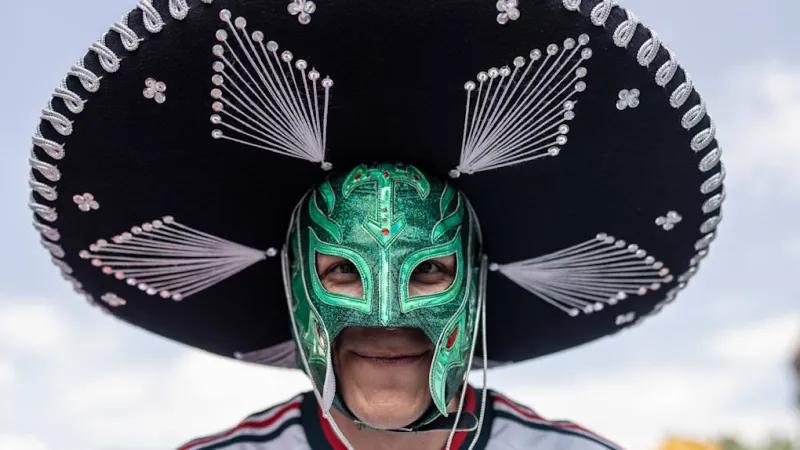
MEXICO CITY — The prevailing narrative depicting Mexico as a failed state overrun by cartels is fundamentally a political construct, not an accurate reflection of its reality, asserts researcher Oswaldo Zavala. His extensive work on cartel power dynamics sheds light on the true controllers of Mexican football and the underlying motives behind escalating American rhetoric, particularly as the shared 2026 World Cup approaches with President Donald Trump at the helm in Washington.
Zavala, a prominent academic specializing in the intricate structures of organized crime, argues that this portrayal serves specific political agendas, often intensifying during periods of heightened tension between the United States and Mexico. His findings challenge the simplistic view that criminal organizations hold absolute sway over the nation's governance and societal functions.
The researcher suggests that the narrative gains particular traction when bilateral relations are strained, creating fertile ground for political leverage. With President Trump leading the United States in 2026, the rhetoric surrounding Mexico and its security challenges often becomes a strategic tool, especially with the global spotlight of the World Cup shining on both nations.
The unprecedented co-hosting of the 2026 FIFA World Cup by the United States, Mexico, and Canada offers a unique political stage. For President Trump, escalating tensions or shaping public perception of Mexico could serve various domestic and international objectives, making the shared sporting event a more potent arena for political discourse.
Central to Zavala's research is the revelation of who genuinely exercises control over football in Mexico. His work suggests that the power structures influencing the sport are far more complex than commonly perceived, diverging from the notion of cartels having sole or primary command. This insight offers a critical counterpoint to sensationalized accounts.
The American rhetoric Zavala references frequently frames Mexico through a lens of instability and unchecked criminal influence. This perspective, according to his analysis, often overlooks the sophisticated layers of power, economic interests, and political actors that truly shape the nation, both within and outside the realm of illicit activities.
Such powerful narratives have tangible consequences, shaping public opinion, influencing policy decisions, and potentially impacting the everyday lives of Mexican citizens. They can also exacerbate xenophobia and misunderstanding across borders, making objective discourse more challenging.
Through rigorous academic investigation, Zavala delves into the historical evolution of cartel influence, their economic integration, and their often-symbiotic, yet covert, relationships with other powerful entities. This nuanced approach helps to demystify the sensationalism surrounding organized crime.
His research underscores that criminal groups operate within a broader ecosystem of political, economic, and social forces. To label an entire nation a 'failed state' based solely on the presence of cartels, Zavala implies, ignores the resilience of its institutions and the agency of its people.
Despite these geopolitical narratives, Mexico has demonstrated considerable success on the international football stage, frequently advancing in major tournaments. For instance, in previous World Cup campaigns, Mexico has often secured critical victories to proceed to the knockout stages, a testament to the organizational strength and national pride surrounding the sport. Mexico Advances to Knockout Stage, World Cup Group Win Ignites Fan Euphoria and Mexico Clinches World Cup Berth, Defeating South Korea are examples of this consistent performance.
Zavala suggests that a narrative emphasizing chaos in Mexico holds particular utility for politicians aiming to justify stringent border policies or to rally support for specific foreign policy stances. This fear-based framing can divert attention from other complex socio-economic issues.
Ultimately, Zavala's work serves as a powerful call for a more nuanced understanding of Mexico, urging observers to look beyond politically expedient labels and recognize the intricate tapestry of power and influence at play. His insights provide a critical lens through which to examine international relations and media portrayals.