 Demian Sahputra
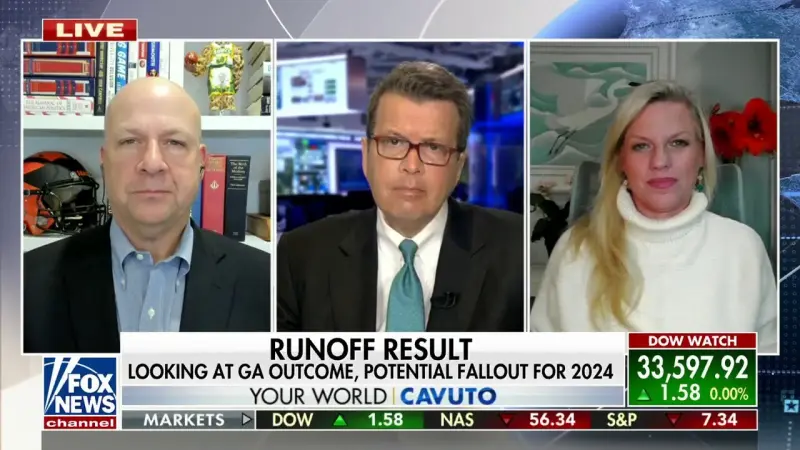
WASHINGTON — Sen. Raphael Warnock (D-Ga.) issued a stark warning regarding a recent Supreme Court decision on voting rights, asserting its legal ramifications have "poured fuel on this redistricting arms race" and intensified partisan battles over electoral maps nationwide. His comments underscore growing concerns in Washington about the integrity of the nation's electoral system as the 2026 election cycle looms.
The Georgia Democrat highlighted how the Court's ruling, which he did not specify by name but referenced broadly, has emboldened state legislative majorities to pursue more aggressive gerrymandering strategies. These strategies often involve drawing congressional and state legislative districts to favor one political party over another, effectively predetermining election outcomes.
Critiques of the decision center on its perceived weakening of federal oversight mechanisms designed to prevent discriminatory voting practices. Critics argue the ruling has reduced the tools available to challenge maps that dilute minority voting strength or create entrenched partisan majorities, regardless of popular vote.
Warnock articulated that this judicial shift has created an environment where political actors feel unconstrained in their pursuit of electoral advantage through map manipulation. This phenomenon, often termed the redistricting arms race, sees both major parties investing heavily in data analytics and legal resources to craft maps that maximize their power.
For decades, federal laws, particularly the Voting Rights Act of 1965, served as a crucial bulwark against such abuses, even as judicial interpretations evolved. However, a series of Supreme Court decisions over the past decade has progressively chipped away at these protections, culminating in the recent controversial ruling.
The ramifications extend far beyond mere political jockeying. Experts contend that extreme gerrymandering leads to less competitive elections, decreases voter turnout, and fosters greater polarization by creating safe districts where incumbents face little challenge from the opposing party.
In turn, this allows elected officials to be less responsive to the broader electorate and more beholden to their partisan base. The result is often a legislature that struggles to find common ground on critical national issues, further deepening political divides.
Civil rights organizations across the country have echoed Senator Warnock's concerns, filing numerous legal challenges at state levels in an attempt to curb the most egregious instances of partisan map-drawing. However, these efforts often face an uphill battle in state courts or are preempted by the very federal judicial precedent Warnock criticizes.
President Donald Trump's administration has largely maintained a stance of federal non-intervention in state-level electoral processes, emphasizing states' rights in such matters. This approach, critics argue, inadvertently provides cover for states seeking to implement more restrictive voting laws or partisan maps.
The ongoing debate highlights a fundamental tension between states' constitutional authority to administer elections and the federal government's role in ensuring fair and equitable access to the ballot box. Warnock's intervention brings this complex legal and political battle to the forefront of national discourse.
The senator emphasized the long-term impact on democratic representation, stating that when district lines are drawn to predetermine outcomes, the very essence of a representative government is undermined. He called for a renewed commitment to fair maps and transparent redistricting processes.
As the nation approaches the critical 2026 midterm elections, the shadow of redistricting looms large over control of Congress and state legislatures. The maps drawn in the wake of the Supreme Court's decision will shape political power for the next decade, influencing policy and governance.
The senator urged Congress to explore all legislative avenues to mitigate the impact of the Court's decision and protect voting rights, though the path for such legislation in a divided Congress remains fraught with political challenges.
Ultimately, Warnock's remarks serve as a potent reminder of the fragility of electoral fairness and the constant vigilance required to uphold democratic principles against partisan encroachment.