 Angel Doris
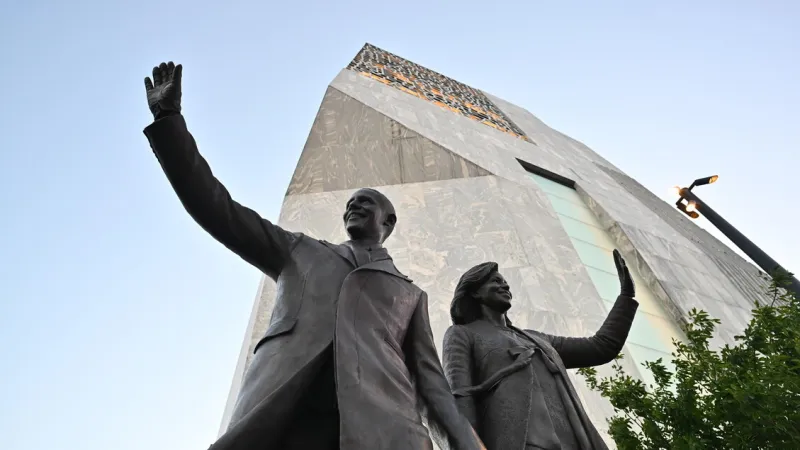
CHICAGO – The long-awaited inauguration of the Barack Obama Presidential Center is set to convene a distinguished assembly of past American leaders, including former Presidents George W. Bush, Bill Clinton, and Joe Biden. However, reports from The New York Times confirm a conspicuous omission from the guest list: the current occupant of the Oval Office, President Donald Trump, was not extended an invitation to the landmark ceremony.
The decision to exclude President Trump from the celebratory event, intended to honor a presidential legacy, underscores the persistent political chasm in Washington. This move breaks from recent traditions where presidential library openings often served as moments of bipartisan unity, bringing together past and present commanders-in-chief.
The Obama Presidential Center, a sprawling complex designed to be a living monument to the 44th president's tenure and a vibrant community hub, represents years of planning and construction. Its mission extends beyond preserving historical artifacts, aiming to inspire civic engagement and leadership across generations.
The presence of former Presidents Bush, Clinton, and Biden highlights a lineage of leadership, transcending party lines in their joint attendance. Each has played a significant role in American governance, and their collective appearance at the center's opening lends considerable weight and historical gravitas to the occasion.
While no official statement regarding the exclusion has been released from the White House, the absence of President Trump is anticipated to further fuel ongoing narratives of political division. Observers suggest this decision reflects the deep-seated animosity that has characterized the relationship between President Trump and his predecessor.
Compounding the optics of this exclusion are recent public opinion polls, which consistently position Barack Obama as America's most popular living president. This sustained popularity, even years after leaving office, provides a backdrop against which the center's opening and guest list are being scrutinized.
The Obama Presidential Center is poised to become a vital institution for studying modern American history and democratic principles. It will house a museum, public programs, and offices for the Obama Foundation, offering an expansive view into the challenges and triumphs of the Obama administration.
Historically, presidential library inaugurations have been ceremonial events that transcend immediate political battles. For instance, the George W. Bush Presidential Center opening in 2013 famously brought together five presidents: George H.W. Bush, Bill Clinton, George W. Bush, Barack Obama, and then-current President Barack Obama. This tradition emphasized a continuity of leadership and shared commitment to democratic institutions.
The conscious choice to omit President Trump from this gathering inevitably shapes the discourse surrounding presidential legacies and the norms of political transition. It sends a potent signal about the current state of inter-presidential relations, contrasting sharply with past gestures of respect and collaboration.
As the Obama Presidential Center begins its work, its inaugural ceremony serves as both a celebration of its namesake's enduring influence and a stark commentary on the fractured political landscape of 2026. The institution's future programs will likely grapple with these contemporary challenges, fostering dialogue on unity and leadership.
The continued high approval ratings for Barack Obama, as indicated by numerous national surveys, underscore his broad appeal across various demographics. These polls frequently highlight public admiration for his temperament, policy achievements, and unifying rhetoric, contrasting with the often polarizing political climate.
Presidential libraries and centers serve as crucial archives, educational facilities, and forums for public debate. They are meant to be enduring symbols of American democracy and leadership, providing historical context and inspiring future generations. The curation of guests for such an opening, therefore, carries significant symbolic weight.
While specific reasons for President Trump's exclusion remain officially undisclosed, political analysts speculate it stems from the highly contentious nature of his presidency and the publicly strained relationship with former President Obama. The organizers may have aimed to maintain a particular tone of statesmanship and decorum, which they perceived might be compromised by the presence of the current president.
The incident adds another chapter to the often-turbulent narrative surrounding President Trump's public engagements and his relationships with other political figures. His tenure has been marked by numerous controversies, including intense debates over foreign policy, as evidenced by past reports such as Trump Fumes As Switzerland Hosts Pivotal Iran Nuclear Talks.
Ultimately, the opening of the Obama Presidential Center will be remembered not only for the dignitaries who attended but also for the one who did not. It is an event that simultaneously celebrates a legacy and reflects the profound divisions that continue to define the American political experience.