Angela Stefani
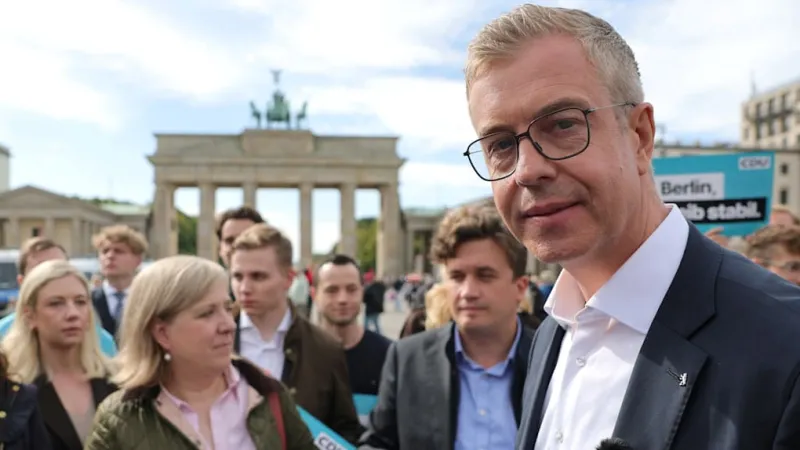
Berlin – A significant policy stance emerged from the city's election podium, where the Christian Democratic Union (CDU) top candidate expressed strong support for strengthening religious education, specifically including Islamic instruction, in public schools. This declaration, made during a debate hosted by Evangelical and Catholic churches ahead of the September 20 election, signals a potentially transformative approach to integration and education within the German capital.
The CDU leader's statements underscore a growing recognition of Berlins diverse religious landscape. With a substantial Muslim population, the demand for equitable religious education has become a prominent topic in political discourse, particularly as various parties vie for influence in the city's complex political arena.
The debate, a crucial forum for candidates to present their platforms, provided the ideal backdrop for this announcement. The engagement of both Evangelical and Catholic church institutions highlights the interfaith dialogue and collaborative spirit surrounding fundamental educational questions.
Historically, religious instruction in German public schools has predominantly focused on Christian denominations. However, the evolving demographic profile of the nation, and Berlin in particular, necessitates a reevaluation of this traditional structure. The CDU's proposal marks a notable shift from previous, more conservative positions.
Advocates for inclusive religious education argue that offering Islamic instruction within the public school system can foster better integration, cultural understanding, and prevent radicalization by providing a supervised and standardized curriculum. It also aims to provide Muslim students with an education that reflects their heritage and beliefs, akin to their Christian peers.
Critics, while generally fewer in number regarding religious pluralism in schools, sometimes raise concerns about the practical implementation, curriculum development, and the training of qualified teachers for such programs. Ensuring a balanced and non-sectarian approach within a public school setting remains a key challenge.
This policy commitment by the CDU top candidate could have far-reaching implications beyond the educational sphere. It positions the party as forward-thinking on integration issues, potentially appealing to a broader, more diverse electorate in future local and national contests.
The timing of this declaration, coinciding with a pre-election debate, suggests a strategic move to address voter concerns directly and to carve out a distinct identity in a crowded political field. Education, particularly religious education, often resonates deeply with families and communities.
Analysts note that such a stance could influence broader discussions about German identity and multiculturalism, especially in the context of persistent debates on immigration and social cohesion. This mirrors discussions seen in other European nations grappling with similar demographic shifts.
The path forward for implementing expanded religious education, including Islamic studies, will involve careful planning, collaboration with religious communities, and robust teacher training programs. The CDU's declared support could serve as a catalyst for these essential developments in Berlin's educational landscape.
The city's political climate, often a bellwether for national trends, closely observes such policy shifts. As Berlin votes continue to shape the federal discourse, the CDU's embrace of inclusive religious education may well resonate across Germany.