 Demian Sahputra
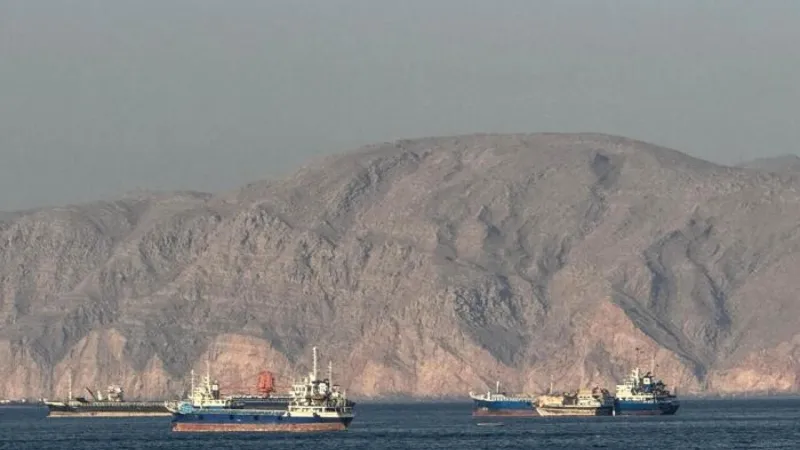
Tehran, Iran - Iranian officials have issued a stark warning, declaring the vital Strait of Hormuz could be shut down if the United States does not rectify its current policies and conduct. This provocative statement from Tehran intensifies long-standing geopolitical tensions and raises global concerns over the security of a crucial maritime chokepoint for international oil shipments.
A high-ranking Iranian official, whose name was not immediately disclosed, articulated the conditions under which Iran might take such a drastic step. "Here are the conditions," the official stated, without detailing the specific actions required from Washington. This vague pronouncement has left international observers parsing the precise demands emanating from the Islamic Republic.
The warning underscores a persistent flashpoint in relations between Tehran and Washington, particularly under the administration of President Donald Trump in 2026. Tensions have been consistently high, marked by economic sanctions, naval incidents, and a robust rhetorical exchange that often borders on confrontation.
However, a somewhat more conciliatory note emerged from another Iranian figure. Pezeshkian, an influential voice within the Iranian political landscape, suggested a window for diplomacy. "It is the best time for an agreement," Pezeshkian remarked, hinting at the potential for de-escalation through negotiation despite the public threat. This dual approach often characterizes Iranian foreign policy, blending hardline posturing with occasional overtures for dialogue.
The Strait of Hormuz, a narrow waterway between the Persian Gulf and the Gulf of Oman, holds immense strategic importance. Approximately one-fifth of the world's total oil consumption, along with a significant portion of liquefied natural gas, transits through this chokepoint daily. Its closure would precipitate a global energy crisis, sending oil prices soaring and disrupting supply chains worldwide.
Historically, Iran has threatened to close the Strait of Hormuz during periods of heightened friction with the United States and its allies. These threats, while often seen as leverage, have always been taken seriously by the international community due to the catastrophic economic implications they carry. In recent years, similar warnings have emerged, illustrating the enduring nature of this strategic pressure point. For further context, one might consider the previous report titled Iran Threatens Strait of Hormuz Blockade Amid US Tensions.
The implicit demand for the United States to "correct its behavior" likely refers to Washington's stringent sanctions regime targeting Iran's oil exports, banking sector, and other key industries. These sanctions, reimposed and expanded under President Trump, aim to curb Iran's nuclear program and its regional influence. Tehran views these measures as economic warfare and a violation of international law.
Any attempt by Iran to block the Strait of Hormuz would inevitably draw a robust military response from the United States and its regional partners, including Saudi Arabia and the United Arab Emirates. The U.S. Navy maintains a significant presence in the Persian Gulf, specifically tasked with ensuring the freedom of navigation through international waterways.
The international community watches with apprehension, urging both sides to exercise restraint and pursue diplomatic avenues. United Nations officials and several European leaders have called for de-escalation, warning against any actions that could destabilize an already volatile region. The potential for miscalculation remains high, with regional security hanging precariously in the balance.
Experts suggest that while a full, sustained closure of the Strait of Hormuz is improbable due to the overwhelming international response it would provoke, even temporary disruptions could have devastating effects on global markets. Iran's naval capabilities, while considerable for asymmetric warfare, would struggle against a concerted international effort to reopen the strait.
The current geopolitical climate in 2026 sees renewed efforts to navigate the complexities of Middle Eastern security. President Trump has consistently advocated for a tougher stance on Iran, while also expressing an openness to negotiation, albeit on terms largely dictated by Washington. This dynamic creates a delicate balance, where threats and diplomatic overtures coexist.
The Iranian government faces internal pressures as well, with economic hardships stemming from sanctions fueling public discontent. Hardline factions within the leadership may view strong rhetoric and threats against the U.S. as a means to solidify domestic support or to pressure the international community to ease sanctions.
Conversely, more pragmatic elements, like Pezeshkian, might see the current moment as an opportune time to engage in negotiations, potentially seeking relief from sanctions in exchange for concessions on their nuclear or regional policies. The exact "conditions" for averting a closure remain the critical, undisclosed variable in this high-stakes geopolitical drama.
The United States, for its part, has consistently affirmed its commitment to freedom of navigation in international waters. Any perceived threat to this principle in the Strait of Hormuz would be met with swift and decisive action, as outlined in numerous statements from the Pentagon and the State Department over the years. This unwavering stance forms a core tenet of U.S. foreign policy in the region.
The coming weeks will likely reveal whether Tehran's latest warning is merely a rhetorical tactic to gain leverage in future negotiations or a genuine precursor to more aggressive actions. The global economy, deeply reliant on the unimpeded flow of oil through the Strait of Hormuz, awaits a resolution to these escalating tensions.