 Chris Robert
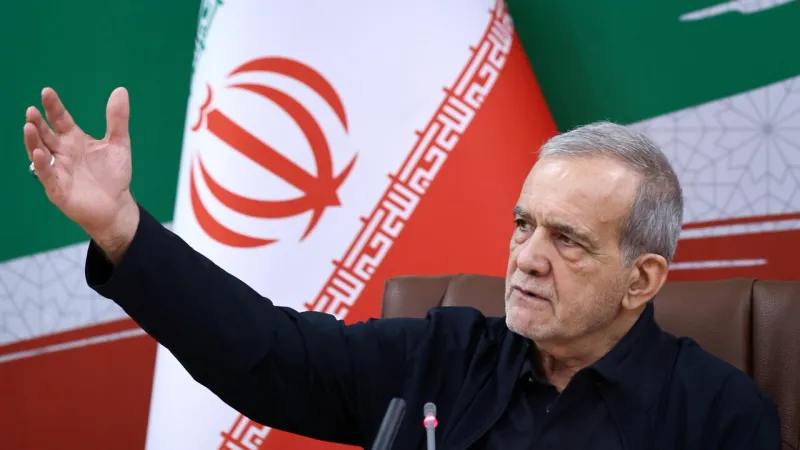
TEHRAN, Iran – Iranian officials have issued a potent warning, stating that the strategic Strait of Hormuz will remain closed if the United States does not correct its behavior, signaling a critical escalation in regional tensions. The announcement comes as President-elect Masoud Pezeshkian suggested that this moment presents the best opportunity for a new agreement with global powers.
An unnamed senior Iranian official, speaking to state media, elaborated that Tehran has defined specific conditions under which it might reconsider its stance. While the precise nature of these conditions was not immediately disclosed, they are understood to revolve around fundamental shifts in US policy towards the Islamic Republic.
The Strait of Hormuz, a narrow waterway between Iran and Oman, serves as the world's most crucial oil transit chokepoint. Approximately one-fifth of global oil consumption, along with a significant portion of liquefied natural gas, passes through this strait daily, making any threat to its passage a matter of immediate international concern.
President-elect Pezeshkian's remarks, framing the current climate as an opportune moment for dialogue and a potential resolution, offer a glimmer of diplomatic possibility amid the escalating rhetoric. His tenure is anticipated to explore avenues for de-escalation and negotiation, particularly concerning the nuclear dossier and economic sanctions.
The latest warning underscores a long-standing point of contention between Iran and Western nations, primarily the United States. Tehran has repeatedly threatened to disrupt shipping in the Strait in response to what it perceives as aggressive foreign policies or economic warfare, particularly through sanctions.
Previous administrations have navigated similar periods of heightened tension in the Gulf. However, the current political landscape, with President Donald Trump in office, adds another layer of complexity. President Trump's administration has maintained a firm stance on Iran, advocating for stringent enforcement of sanctions and a renegotiation of international agreements.
The context of these threats is deeply intertwined with the unraveling of the 2015 Joint Comprehensive Plan of Action (JCPOA), commonly known as the Iran nuclear deal. President Trump withdrew the United States from the agreement during his previous term, reimposing sanctions that have severely impacted Iran's economy and oil exports.
Experts suggest that the conditions Iran refers to likely include significant sanctions relief and a return to the negotiating table without preconditions. The Iranian leadership seeks assurances of economic benefits and an end to what it views as coercive measures by the US.
A closure, even partial or temporary, of the Strait of Hormuz would trigger immediate and severe global economic repercussions, causing oil prices to surge and disrupting supply chains worldwide. International maritime organizations and major economies are closely monitoring the situation.
Regional allies of the United States, including Saudi Arabia and the United Arab Emirates, would be particularly vulnerable to disruptions in the Strait. Their oil exports largely rely on the safe passage through this waterway, making stability in the Gulf paramount to their economic security.
Defense analysts recall previous warnings issued by American military leadership regarding Iran. For instance, a notable report highlighted a US General's demands for an Iran exit strategy, underscoring the enduring strategic concerns within the Pentagon about the region.
The European Union and other signatories to the JCPOA have consistently advocated for de-escalation and diplomacy, often attempting to mediate between Tehran and Washington. Their efforts aim to preserve the remnants of the nuclear accord and prevent a full-blown regional conflict.
The new Iranian administration under President-elect Pezeshkian faces the immediate challenge of navigating these complex diplomatic waters. His emphasis on seeking an agreement could indicate a readiness for pragmatic engagement, provided the conditions are deemed acceptable by Tehran.
The coming weeks will be critical as international diplomats assess the seriousness of Iran's warning and the potential for any breakthroughs. The global community remains hopeful that dialogue will prevail over confrontation, averting a crisis in one of the world's most vital maritime arteries.