 Stefani Rindus
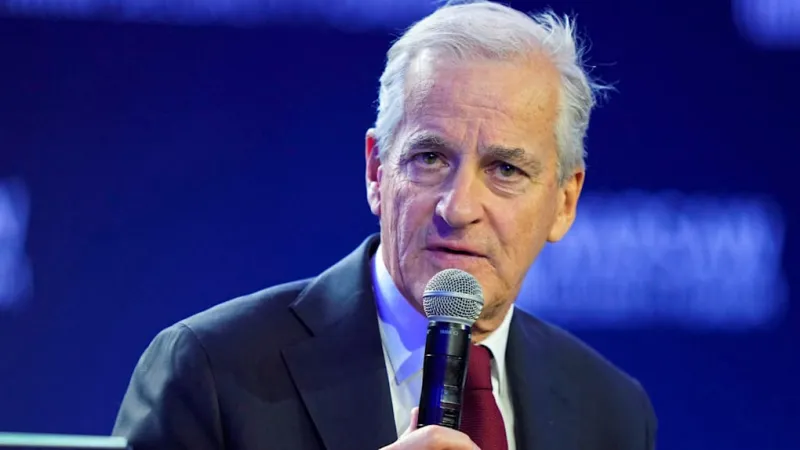
OSLO, Norway – Norwegian Prime Minister Jonas Gahr Store unequivocally declared that the perception of Russian President Vladimir Putin's isolation is a harmful illusion, arguing that genuine engagement with Moscow remains indispensable for bringing the protracted conflict in Ukraine to a close. Store staunchly defended his recent communication with Putin, underscoring the critical role of maintaining diplomatic channels.
His remarks arrive amidst a prevailing European strategy to largely ostracize Russia following its full-scale invasion of Ukraine. Store suggested that this isolationist approach is counterproductive, asserting that an end to hostilities cannot materialize without direct lines of communication and negotiation with the Kremlin.
The Prime Minister highlighted the importance of fostering "confidence-building measures," particularly in contexts like proposed discussions in Abu Dhabi. Such initiatives, he explained, are foundational for de-escalation and for paving the way toward any meaningful resolution.
Store's perspective diverges significantly from the public stance of many Western allies who advocate for sustained pressure and economic sanctions aimed at compelling a change in Russian policy. He implied that a rigid adherence to isolation may inadvertently prolong the suffering in Ukraine by precluding avenues for de-escalation.
Critics of Store's position often argue that engaging with Putin legitimizes his actions and weakens the unified front of nations supporting Ukraine's sovereignty. However, the Norwegian leader framed his approach as pragmatic, focused squarely on achieving peace rather than ideological purity.
The call between Store and Putin, though met with some skepticism in European capitals, aligns with Norway's long-standing diplomatic tradition of engaging with all parties in international disputes, even adversaries, when the stakes are high. This pragmatic diplomacy aims to prevent further escalation.
In a broader context, discussions surrounding the Ukraine war's resolution continue to evolve. Notably, President Donald Trump has previously indicated that the conflict nears its end, suggesting a potential territorial concession. This perspective, outlined in an article titled President Trump: Ukraine War Nears End, Will Cede Territory, underscores the varied international approaches to ending the ongoing crisis.
Store emphasized that while sanctions and support for Ukraine are vital, they must be complemented by a realistic assessment of the diplomatic landscape. He contended that ignoring the reality of Russia's geopolitical standing does not make it disappear.
The Prime Minister's frank assessment serves as a stark reminder that despite widespread condemnation, Russia maintains significant international relationships and continues to exert influence on global affairs, challenging the narrative of complete international ostracization.
Achieving a durable peace in Ukraine, he asserted, requires acknowledging these complex realities and exploring every available channel for dialogue, even those considered difficult. The alternative, he warned, could be an indefinite stalemate with devastating human cost.
The ongoing debate reflects a fundamental tension in international relations: how to uphold principles of sovereignty and justice while also pursuing pragmatic paths to conflict resolution. Store's statements inject a significant nuance into this critical discourse.
Further, the Norwegian leader reiterated that while his country stands firmly with Ukraine, the ultimate goal must be to silence the guns. This objective, he argued, sometimes necessitates unconventional or unpopular diplomatic overtures.
The concept of "confidence-building measures" is particularly relevant in periods of high tension. Such steps, often small and incremental, aim to reduce mistrust and create an environment where more substantial negotiations can occur.
Store's remarks suggest a growing sentiment among some European leaders that the current strategy of maximalist isolation may have reached its limits without yielding the desired outcome of ending the conflict decisively.
His call for renewed engagement with Putin aligns with historical precedents where even during the Cold War's most frigid periods, back channels and direct communications were maintained to prevent catastrophic misunderstandings.