 Angela Stefani
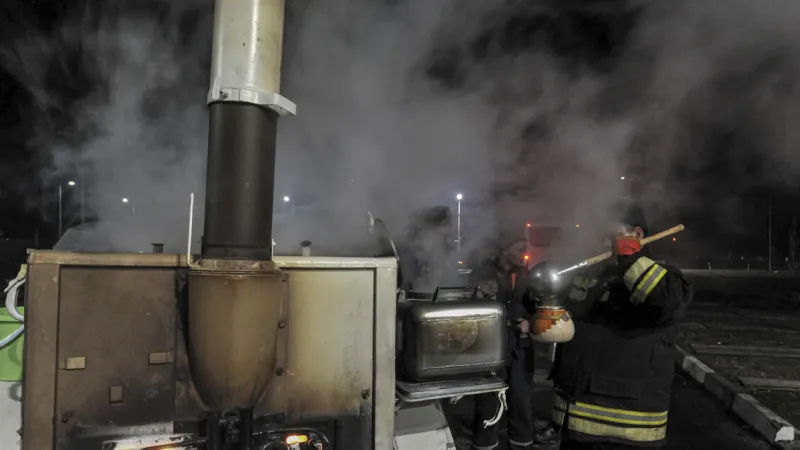
ROSTOV, Russia – Ukrainian drones targeted a significant fuel depot in Russia's southern Rostov region early Tuesday, igniting a massive blaze that sent plumes of black smoke into the sky and underscored the escalating nature of cross-border hostilities. The attack prompted immediate emergency responses as Russian authorities worked to contain the inferno, while simultaneously, Ukraine's capital, Kyiv, and several regions braced for anticipated retaliatory Russian airstrikes.
Local emergency services confirmed the drone strike on the petroleum storage facility located near the city of Rostov-on-Don. Initial reports indicated multiple storage tanks were engulfed in flames, requiring considerable resources to bring the fire under control. The incident marks another direct assault on vital Russian energy infrastructure, a recurring tactic employed by Ukrainian forces.
While Kyiv did not immediately claim responsibility for the specific Rostov attack, Ukrainian officials have consistently stated their right to target military and logistical assets within Russian territory that support the ongoing invasion. Such strikes are often framed as defensive measures designed to disrupt Russian supply lines and diminish its capacity to wage war.
Following the Rostov incident, Ukrainian officials reported widespread air raid alerts across various regions, including the capital. The Ukrainian Ministry of Defense stated, "allerta in varie regioni ucraine e nella capitale per raid russi," signaling an expectation of Moscow's reprisal for the attack on its territory. Residents were urged to seek shelter as air defense systems were activated.
The Rostov region holds considerable strategic importance for Russia's military operations. Bordering eastern Ukraine, it serves as a critical logistical hub for troop movements, equipment staging, and fuel supplies supporting the Russian invasion. Disrupting its infrastructure aims to impede Moscow's war effort directly.
This latest drone attack on Rostov follows a pattern of Ukrainian strikes targeting Russian energy facilities and military installations deep within its borders. In recent months, similar incidents have been reported in regions like Belgorod, Kursk, and Voronezh, highlighting Ukraine's evolving drone capabilities and its determination to take the fight to Russian soil.
The precision and increasing frequency of these unmanned aerial vehicle operations reflect a concerted effort. Earlier reports detailed how Ukraine Claims Two Russian Long-Range Jets Destroyed in Drone Attack, showcasing the breadth of targets now vulnerable to Kyivs aerial assaults.
Such mutual escalation underscores the grim reality of the prolonged conflict. Both sides continue to launch deep strikes into enemy territory, with Russia routinely targeting Ukrainian cities and energy infrastructure, and Ukraine increasingly retaliating against high-value Russian assets. This cycle of aggression shows no signs of abating in the immediate future.
While primarily military in objective, attacks on energy infrastructure inevitably carry broader implications. Disruptions to fuel supplies, even within Russia, can affect logistics and potentially have ripple effects on energy markets, though the immediate impact of this specific Rostov incident on global prices remains to be seen.
International observers and organizations have repeatedly called for de-escalation and respect for international law amidst these escalating attacks. However, with the conflict entering its fourth year, such appeals have largely gone unheeded by the warring parties, who remain entrenched in their respective objectives.
The prevalence of drone warfare has reshaped the battlefield, enabling asymmetric strikes and extending the reach of both combatants far beyond traditional front lines. These unmanned systems, ranging from small, commercially modified quadcopters to sophisticated long-range models, represent a defining characteristic of modern conflict.
Concerns over drone activity have also extended to critical infrastructure beyond fuel depots. For instance, a previous report detailed how a Drone Strike at Zaporizhzhia Nuclear Plant Triggers IAEA Alarm, highlighting the profound dangers posed by these weapons when deployed near sensitive sites.
Analysts anticipate that drone attacks targeting strategic infrastructure will persist as long as the conflict endures. Both nations are investing heavily in improving their drone capabilities and developing countermeasures, signaling a continued reliance on this method of warfare in the struggle for strategic advantage.