 Edward DP Situmorang
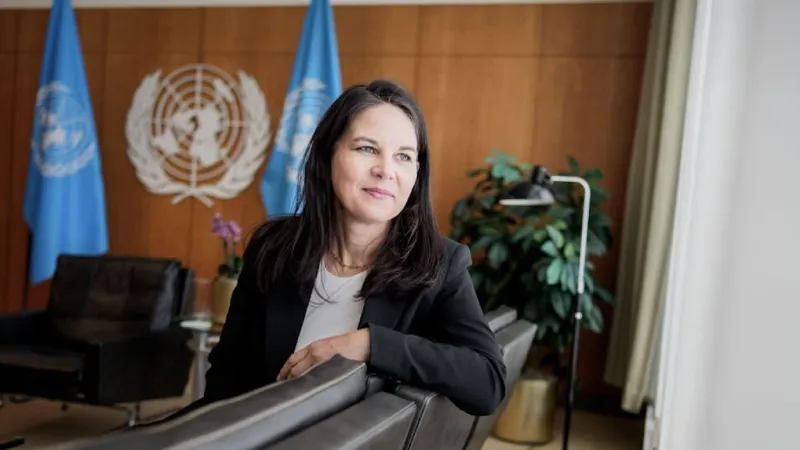
BERLIN – Annalena Baerbock, a prominent figure on the global stage, is stepping away from high-profile politics, offering a stark assessment of her recent tenure as President of the United Nations General Assembly. She described the experience as a profound "hell," characterized by what she termed "masculine power games," and issued a sobering warning regarding the multilateral body's subtle, yet dangerous, decline. Her candid reflections emerge as she concludes her significant international role, signaling a shift in her career trajectory.
Baerbock, whose political career has often been defined by her outspoken nature and commitment to diplomacy, elaborated on the intense pressures she faced. She stated, "I understand the masculine power games," highlighting a pervasive atmosphere she encountered within the UN's highest echelons. This insight suggests a deep-seated challenge in navigating the intricate dynamics of international diplomacy, particularly for women in leadership positions.
Her warning about a "silent" decay of the United Nations resonates with growing concerns among global leaders regarding the efficacy and relevance of international institutions in an increasingly fragmented world. This slow erosion, she implies, is more insidious than overt collapse, making it harder to address and reverse.
The former President of the UN General Assembly pointed to a specific, unnamed event during her presidency that proved particularly burdensome. While details remain undisclosed, her statement underscores the emotional and psychological toll that high-stakes international diplomacy can exact on its practitioners, especially when confronting entrenched systemic issues.
Baerbock's departure from what she calls the "big political stage" marks a significant moment for German and international politics. Her voice has been influential in discussions surrounding climate change, human rights, and global cooperation. Her decision to step back, coupled with her critical insights, invites deeper scrutiny of the environments in which global policy is forged.
Her comments invite comparisons with other instances where prominent female leaders have spoken out about the challenges of navigating male-dominated political structures. Such testimonies often shed light on the subtle, and sometimes overt, biases and power struggles that can impede progress and create taxing work environments.
The United Nations, founded on principles of collective security and cooperation, faces numerous contemporary challenges, from geopolitical rivalries to humanitarian crises and the looming threat of climate change. Baerbock's caution about its "silent" decay adds another layer to this complex picture, suggesting that internal dynamics may be as detrimental as external pressures. As seen in warnings such as the UN Sounds Alarm: Gigantic El Nino Threatens Global Climate Until February, the organization grapples with a vast array of global threats.
Her perspective, forged through direct experience at the apex of international diplomacy, provides a rare glimpse into the human element behind global governance. It questions whether the traditional frameworks and unwritten rules of engagement adequately serve the diverse needs and representatives of the modern world.
The call for introspection within the UN is not new, but Baerbock's direct language — her use of "hell" and pointed reference to "masculine power games" — adds urgency and personal weight to the discussion. It suggests that merely reforming structures might not be enough; a cultural shift might also be necessary.
As Annalena Baerbock transitions away from her current role, her parting words serve as a potent reminder for those who remain committed to the ideals of international cooperation. Her experience highlights the ongoing struggle to achieve truly equitable and effective global governance, urging continuous vigilance against the forces that could undermine its very foundations. Her legacy will likely include not only her policy achievements but also her courage in articulating these profound institutional critiques.