 Chandra Wijayanto
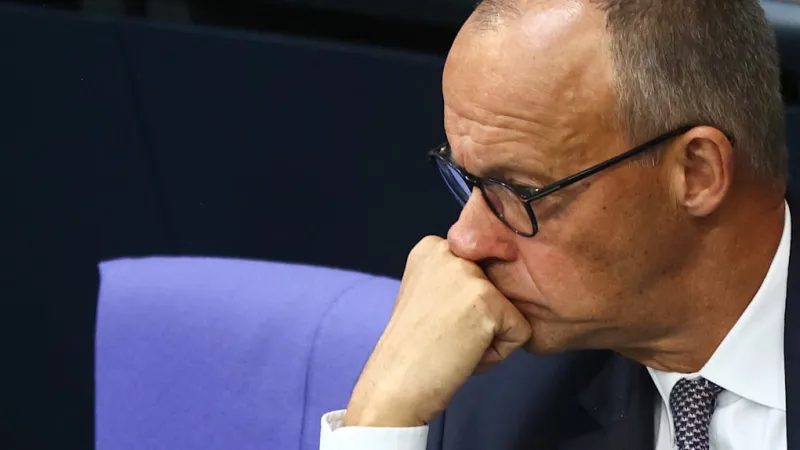
BERLIN – A recent nationwide survey has sent ripples through Germany's political landscape, indicating a significant downturn for the Union party, whose support has now dipped below the critical 20 percent threshold. Concurrently, the Alternative for Germany (AfD) has extended its lead, establishing an almost ten percentage point advantage over its traditional rivals.
This development signifies a substantial realignment within the German party system, underscoring evolving voter sentiment and the ongoing challenges faced by established political entities. The Union, historically a dominant force in German politics, finds itself at a pivotal moment, grappling with diminishing national support.
The 20 percent mark has long been considered a crucial benchmark for the Union party, reflecting its ability to command a broad voter base. Falling beneath this level suggests deeper systemic issues and potential erosion of trust among segments of the electorate, prompting widespread internal debate and public scrutiny.
Conversely, the AfD's growing prominence is unprecedented. Their nearly ten percentage point lead reflects a sustained surge in popularity, challenging conventional political narratives and solidifying their position as a significant, albeit controversial, player on the national stage. This trend has been observed across various demographics and regions, signaling a broader appeal.
Political analysts are closely examining the ramifications of these poll results. The shift could complicate future coalition formations and potentially reshape the dynamics of upcoming federal and regional elections. The traditional dominance of the center-right is evidently facing considerable pressure from both ends of the political spectrum.
This latest poll follows a period of increasing political volatility in Germany. Factors such as economic uncertainty, debates over immigration policy, and the efficacy of the current government's initiatives may contribute to the observed shifts in voter preference. The electorate appears to be seeking alternatives amidst a complex socio-political environment.
The Union party, comprising the Christian Democratic Union (CDU) and the Christian Social Union (CSU), now faces an arduous task to regain lost ground. Historically, the party has served as a cornerstone of German stability, and its current trajectory demands strategic reassessment and a clear articulation of its future vision for the nation.
For the AfD, this surge in support offers a potent platform to amplify its agenda and solidify its voter base. Discussions surrounding the party's positions and public discourse have become increasingly central to German political debate, as exemplified by the intense public scrutiny surrounding its stance on various issues.
The broader implications for the German democratic process are profound. A fragmented political landscape, characterized by declining support for traditional parties and the rise of alternatives, presents both challenges and opportunities for democratic discourse and governance. All major German political parties must now recalibrate their strategies.
In recent times, figures like Sahra Wagenknecht have engaged in heated public confrontations regarding the AfD's ideology and past, indicating the contentious nature of its rise. For more on this, readers can refer to our previous coverage: Wagenknecht Fury Erupts Over Lanz Confrontation on AfD Stance, Past.
Furthermore, the Union has experienced localized difficulties, such as leadership overhauls following electoral setbacks in certain states. The challenges faced by the Saxony-Anhalt CDU Faces Leadership Overhaul After Electoral Debacle highlight regional struggles that may contribute to the national trend.
As Germany approaches future electoral contests, all eyes will remain on the evolving dynamics of its party system. The current survey results underscore a clear message from the electorate: the political status quo is undergoing a significant transformation, with long-term consequences yet to unfold for all German political parties.