 Edward DP Situmorang
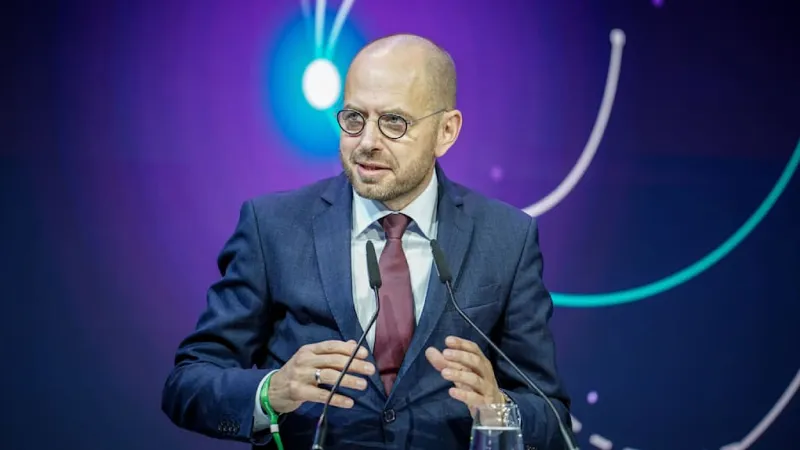
BERLIN - The chief executive of Siemens Energy, a prominent DAX-listed German conglomerate, has issued a forceful warning against the economic policies proposed by the Alternative for Germany (AfD) party. His comments, made shortly before an upcoming election, characterized the party's economic message as dramatically false and expressed significant apprehension regarding potential governance under an AfD absolute majority.
The leader of the energy technology giant underscored the profound risks he perceives for Germany's industrial sector and its global competitive standing should the AfD's protectionist and anti-European Union stances gain traction. This intervention marks a significant entry by a major corporate figure into the heated political discourse surrounding the far-right party.
Siemens Energy, a crucial player in the global energy transition, employs thousands and contributes substantially to Germany's export-oriented economy. The company's leadership frequently engages with international partners and markets, giving its warnings particular weight concerning potential disruptions to trade and investment.
The AfD's economic policy platform generally advocates for stricter border controls, a more nationalistic approach to trade, and a skeptical stance on European integration. Critics argue these policies could isolate Germany, hindering its access to crucial markets, skilled labor, and technological advancements.
Such a shift in policy, according to analysts, could profoundly impact the country's attractiveness for foreign investment and the stability of its domestic business environment. Major corporations like Siemens Energy rely on open markets and predictable regulatory frameworks to thrive.
The concerns articulated by the Siemens Energy chief resonate with broader apprehension within Germany's business community, which largely benefits from and advocates for European unity and global trade. The party's lead candidate, Siegmund, has himself fueled doubts, raising questions about the practicalities and implications of his party ruling with an absolute majority.
This corporate warning comes amidst a volatile political landscape in Germany, where the AfD has seen a surge in popularity in various regional polls, positioning itself as a significant contender in upcoming state and federal elections. The party's rise has prompted intense debate across all sectors of German society.
Chancellor Scholz recently asserted that the AfD would not ruin the nation's future, a sentiment echoed by many establishment figures. However, the consistent messaging from business leaders underscores a growing anxiety over the practical economic consequences of an AfD-led government.
The potential for an AfD-dominated government to implement its more radical proposals has been a recurring theme. Questions have also arisen regarding AfD governance and the immunity of German states to federal funding cuts, highlighting the complex legal and financial ramifications.
A drastic departure from current economic frameworks could jeopardize Germany's position as an industrial powerhouse and a global leader in innovation. The nation's robust economy has long been predicated on its open market policies and strong international partnerships.
The Siemens Energy executive's statement serves as a stark reminder of the high stakes involved in the ongoing political discussions. The business world closely monitors electoral outcomes, anticipating their impact on regulatory environments, trade relations, and overall economic stability.
His remarks reinforce the notion that electoral decisions have tangible, far-reaching consequences for corporations, employment, and the overall prosperity of a nation. The debate over Germany's economic future, increasingly tied to the political trajectory of parties like the AfD, continues to intensify.