 Angel Doris
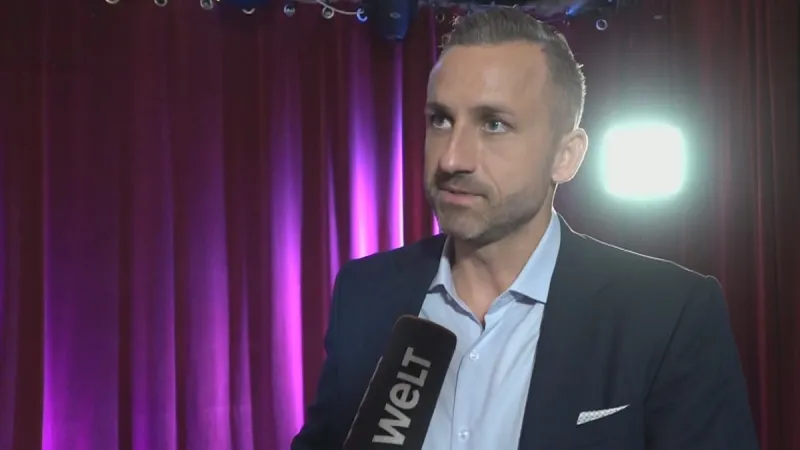
Ulrich Siegmund, a prominent politician from the far-right Alternative for Germany (AfD) party, has emphatically stated that his party finds no potential coalition partners within the current German parliamentary landscape. Siegmund delivered sharp criticism towards the center-right Christian Democratic Union (CDU), asserting that any significant political shift in Germany could only be achieved through a sole AfD government, signaling deepening rifts in the nations political discourse regarding governance and future alliances.
Siegmunds remarks underscore a growing sentiment within the AfD regarding its isolated position in German federal politics. He expressed frustration with established parties, specifically questioning the viability of working alongside the CDU.
The AfD politician was quoted saying, "How am I supposed to save this country with these people?" a direct jab at the political establishment and particularly the CDU. This statement highlights the profound ideological chasm Siegmund perceives between his party and potential partners.
This latest declaration reinforces the AfDs long-standing position of often being shunned by other mainstream parties due to its controversial policies and rhetoric. The party has consistently struggled to form alliances, a key requirement for governing in Germanys proportional representation system.
The CDU, under various leaderships, has maintained a firm stance against forming coalitions with the AfD, often citing fundamental disagreements on democratic values, migration policy, and European integration. This has created an effective cordon sanitaire around the AfD.
Siegmunds call for an AfD-led sole government represents a significant departure from conventional coalition politics in Germany. This vision suggests a desire for uncontested power to implement the partys agenda without compromise.
Achieving a sole government in Germany is an exceedingly difficult prospect, typically requiring an absolute majority, which no single party has managed in decades. The German political system is inherently designed for coalition building.
Despite these challenges, the AfD has seen significant electoral gains in recent years, particularly in eastern German states. This surge has contributed to the increasing complexity of coalition formations at both regional and federal levels. For more context, see Saxony's AfD Surge Signals Germany's Urgent Political Crossroads.
Siegmunds criticism of the CDU is not new. The AfD frequently targets the center-right party for what it perceives as a shift towards centrist policies, particularly regarding immigration and economic issues, arguing the CDU has abandoned its conservative roots.
The dynamic between the CDU and the AfD has been a defining feature of German politics over the past decade. While the CDU has lost some traditional conservative voters to the AfD, it has largely resisted calls to engage in formal cooperation. This was notably apparent in past electoral analyses, such as Pollsters Fumble Saxony-Anhalt Election: CDU Crushes AfD Expectations.
Siegmunds statements further solidify the perception of an increasingly fragmented and polarized German political landscape, where consensus-building appears more challenging than ever.
As Germany approaches future federal elections, these declarations by leading AfD figures like Siegmund will likely shape the discourse around coalition possibilities and the long-term viability of grand coalitions or new alliances.
The sentiment expressed by Siegmund reflects a broader frustration among some voters with the perceived inability of established parties to address pressing national issues effectively, fueling support for alternative political forces.
Ulrich Siegmund himself has been a vocal proponent of the AfDs more nationalist and conservative wing, often taking strong stances that resonate with the partys core base. His political trajectory was highlighted in Ulrich Siegmund: AfD's Populist Surge Ignites Saxony-Anhalt Election Race.
Critics argue that rhetoric emphasizing a sole government by one party, particularly one that has faced scrutiny over its democratic credentials, could pose challenges to the foundational principles of Germanys consensus-driven democracy.
The situation in Germany also resonates with broader trends across Europe, where populist and far-right parties are gaining ground and challenging traditional political alliances, leading to more complex government formations.
Political analysts suggest that unless the AfD moderates its stance or other parties significantly shift their positions, the likelihood of the AfD participating in a federal coalition government remains remote, despite its electoral strength.
Siegmunds uncompromising remarks underline the profound political deadlock concerning the AfDs integration into mainstream governance, posing a critical question for the future direction of German politics.