 Robert Andrison
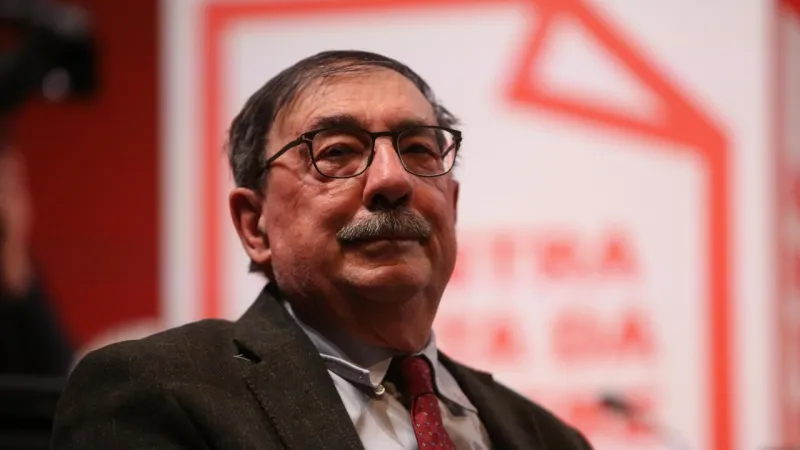
ROME – Fabio Mussi, a pivotal figure in Italian politics who served as a minister in Romano Prodi's government and was a leading member of Sinistra Italiana Avs, has died, prompting tributes from across the political spectrum. His passing marks the loss of a seasoned intellectual and dedicated public servant whose career spanned decades at the heart of Italy's public life.
Mussi, who held the crucial portfolio of Minister of University and Research during Romano Prodi's second cabinet from 2006 to 2008, was renowned for his deep understanding of public policy and his commitment to educational reform. His tenure was marked by efforts to modernize Italy's higher education system and foster greater innovation within its research institutions.
Roberto Fratoianni, a prominent figure within Sinistra Italiana Avs and a long-time political associate, offered a heartfelt tribute to Mussi. Fratoianni remembered him as "a refined and curious intellectual" whose profound insights and unwavering principles consistently enriched political discourse and policy-making. This sentiment resonated deeply with many who knew Mussi's work.
Born in 1944, Fabio Mussi began his political journey early, becoming an influential voice within the Italian Communist Party (PCI) before its dissolution. He navigated the complex transitions of Italian left-wing politics, adapting his vision while remaining steadfast in his core democratic socialist beliefs. His trajectory reflected the broader evolution of the Italian Left.
His parliamentary career was extensive, serving multiple terms in both the Chamber of Deputies and the Senate. Through these roles, Mussi consistently advocated for social justice, equitable access to education, and robust public services, articulating a vision for a more inclusive and progressive Italy. He was a vocal proponent of European integration.
Beyond his ministerial duties and legislative work, Mussi was also a respected academic and journalist, contributing extensively to intellectual debates through essays and commentaries. His analytical prowess and ability to dissect complex issues made him a sought-after voice on matters of both domestic and international policy.
The political landscape shifted considerably throughout Mussi's career, from the Cold War era to the challenges of the 21st century. He witnessed and participated in transformative moments, always maintaining a critical yet constructive perspective on the trajectory of Italian society and its place in the world.
As a leader within Sinistra Italiana Avs, he played a vital role in shaping the party's platform and guiding its strategic direction. His experience and institutional knowledge were invaluable assets, particularly in navigating the fragmented and often tumultuous nature of Italian coalition politics.
His death leaves a significant void not only within Sinistra Italiana Avs but across the broader Italian political sphere, where he was respected by allies and adversaries alike for his integrity and intellectual rigor. Colleagues remember him for his calm demeanor, his ability to foster dialogue, and his deep commitment to democratic processes.
Fabio Mussi's legacy will endure through his policy contributions, his prolific writings, and the countless individuals he influenced through his mentorship and example. He championed the belief that politics, at its best, should be a vehicle for thoughtful engagement and societal betterment, principles he upheld throughout his distinguished career.