 Debby Wijaya
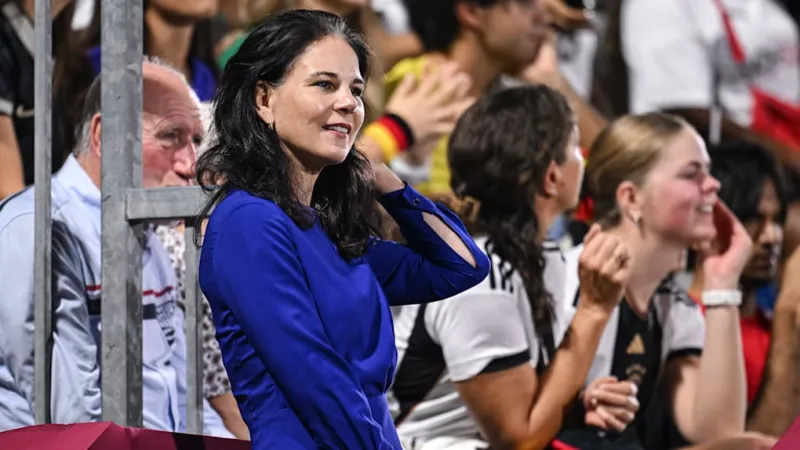
In New York, German Foreign Minister Annalena Baerbock delivered a stern rebuke to the Federation Internationale de Football Association (FIFA) this week, publicly denouncing the organization's controversial World Cup entry policies. Speaking at the German House of Soccer, where global football dignitaries convene, Baerbock unequivocally stated that FIFA must address and rectify the criticized regulations, underscoring the political dimension of the international sporting spectacle.
The high-profile visit occurred amidst the ongoing World Cup, a tournament that draws immense global attention not only for its athletic contests but also for its broader social, economic, and political implications. The German House of Soccer serves as a significant hub for discussions, networking, and cultural exchange, attracting thousands of visitors, including football stars, high-ranking officials, and influential politicians.
Foreign Minister Baerbock's comments directly targeted what she termed FIFA's flawed entry protocols, emphasizing the need for greater transparency and fairness in the administration of such a universally watched event. The specific details of the criticized policies were not immediately elaborated upon, but her forceful declaration highlighted systemic concerns within the sport's highest governing body.
“These policies,” Baerbock asserted, “must be addressed by FIFA.” Her statement echoes a growing sentiment among international observers and governmental bodies that major sporting organizations bear a responsibility extending beyond the field of play, encompassing human rights, labor practices, and equitable access.
Germany has historically been vocal regarding ethical considerations surrounding major international sporting events, often advocating for stronger adherence to democratic principles and human rights standards from host nations and governing bodies alike. Baerbock's intervention aligns with this consistent diplomatic posture, signaling a firm stance against perceived organizational shortcomings.
The World Cup, while a celebration of athletic prowess, inevitably becomes a stage for geopolitical discourse. The intersection of sports and international relations means that decisions made by entities like FIFA are subject to intense scrutiny from governments, civil society, and the global media. This scrutiny is amplified when policies affect broad segments of the public or carry significant economic ramifications.
FIFA, as the global governing body for football, has faced numerous controversies over the years, ranging from allegations of corruption in host nation selections to concerns over workers' rights in construction for tournament infrastructure. Baerbock's recent criticism adds another layer to the persistent calls for reform and accountability within the organization.
The public nature of her condemnation, delivered at a prominent World Cup gathering point, ensures that her message reaches a wide audience of stakeholders, from football fans to political decision-makers. Such a public challenge from a leading European diplomat could exert considerable pressure on FIFA to review and potentially revise its administrative practices.
While the immediate impact remains to be seen, diplomatic interventions of this nature often prompt internal discussions and external public relations efforts from the targeted organization. The onus now falls on FIFA to respond to Baerbock's pointed remarks and demonstrate a commitment to addressing the issues raised.
The incident underscores the evolving landscape of international sports, where political leaders increasingly leverage their platforms to advocate for principles of good governance and human dignity within global spectacles. The call for FIFA to address its entry policies is a reminder that even the most popular global events are not immune to critical oversight and demands for ethical leadership.