 Chris Robert
ROME – Mojtaba, the influential son of a prominent Iranian figure, has publicly issued stern revenge threats targeting a formidable list of global leaders, including Italian Prime Minister Giorgia Meloni, President Donald Trump, and Israeli Prime Minister Benjamin Netanyahu. These escalating threats stem from a declared intent to avenge his father, intensifying geopolitical tensions and prompting swift international condemnation and expressions of solidarity.
The specific pronouncements by Mojtaba have cast a shadow over already strained diplomatic relations. The inclusion of three such prominent international figures underscores the gravity of the Iranian official's declarations, which were circulated through various channels, signaling a hardened stance from certain factions within the Iranian leadership.
In Italy, Foreign Minister Antonio Tajani swiftly condemned the threats, emphasizing that Prime Minister Meloni remains unintimidated by such rhetoric. “We do not allow ourselves to be intimidated by anyone,” Tajani stated, reaffirming the government's steadfast position. Expressions of solidarity poured in for the Italian premier from political allies and counterparts across the European Union.
President Donald Trump, facing the Mojtaba revenge threats, has not yet issued a direct public statement concerning these specific pronouncements. However, the United States has a documented history of firm responses to perceived provocations from Tehran, often involving diplomatic pressures and economic sanctions. The situation adds another layer of complexity to the already intricate US-Iran dynamic.
The threats reverberate through the Middle East, particularly impacting Israel. Prime Minister Benjamin Netanyahu, a long-standing adversary of the Iranian regime, finds himself directly named in Mojtaba's retribution pledge. This development further heightens regional anxieties and amplifies calls for robust security measures and international vigilance against state-sponsored aggression.
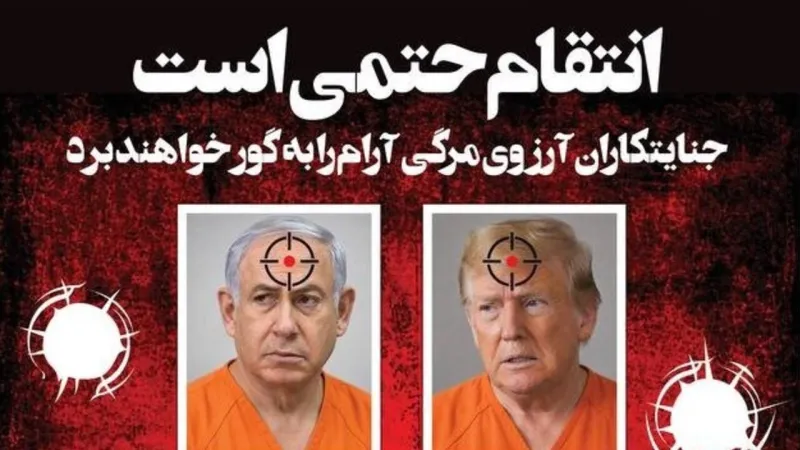
Iranian state media has, in separate instances, amplified such sentiments, illustrating the extent of anti-Western and anti-Israeli rhetoric within certain official narratives. Reports from various outlets, including an Iran Daily Blacklist, have depicted these global leaders in a negative light, at times portraying them as prisoners, further fueling the perception of an active threat matrix.
In an effort to de-escalate tensions, American officials have engaged in quiet diplomatic efforts with Iranian counterparts. Recent reports indicate that US Officials Engage Iran in Oman, a neutral ground, amidst these escalating revenge threats. Such engagements typically aim to establish backchannels for communication and prevent miscalculations that could lead to broader conflict.
Mojtaba's pronouncements carry particular weight due to his lineage and reported influence within Iran's political and military establishment. While not holding a formal public office, his proximity to the highest echelons of power grants his statements considerable unofficial authority, making his threats difficult to dismiss as mere rhetoric.
Analysts suggest these threats serve multiple purposes for Iran's hardline elements: signaling resolve to internal audiences, attempting to deter perceived adversaries, and leveraging public sentiment for geopolitical maneuvering. The timing of such declarations often aligns with internal political dynamics or external pressures on the regime.
The broader context of these Mojtaba revenge threats includes a long-standing history of animosity between Iran and the United States, as well as Iran and Israel. Incidents involving proxy conflicts, cyber warfare, and targeted assassinations have characterized this complex relationship for decades, frequently leading to cycles of escalation and retaliation.
International bodies and diplomatic experts have consistently called for restraint and adherence to international law in the face of such inflammatory language. The risk of unintended consequences remains high, with each public threat or perceived provocation having the potential to trigger a disproportionate response.
The inclusion of Italian Prime Minister Meloni in this perceived blacklist indicates a widening scope of Iranian grievances beyond the immediate US-Israel axis. It suggests an expanded definition of accountability in Tehran's narrative, encompassing European leaders who align closely with Western foreign policy objectives.
Ultimately, the impact of Mojtaba's threats will be measured not only by the immediate reactions but also by the long-term diplomatic and security implications for the targeted nations. The international community watches closely for any tangible actions that might follow these grave pronouncements, hoping for a path toward de-escalation rather than increased confrontation.
This situation further underscores the volatile nature of Middle Eastern geopolitics and the continuous challenges faced by global leaders in navigating complex power dynamics and ideological divides. The call for revenge, amplified by a figure of Mojtaba's standing, ensures sustained scrutiny on Iran's intentions and the responses of the affected nations.